AI Kids Room Designer - Fun, Safe, and Stylish Children's Rooms (2026)
Article Contents
- Why Kids Rooms Are So Hard to Design
- What Is an AI Kids Room Designer?
- Kids Room Design by Age (AI Optimizes for Each Stage)
- Nursery (0-2 Years): Safe Sleep Haven
- Toddler (2-5 Years): Exploration Station
- Early Elementary (5-8 Years): Homework & Play Balance
- Tween (9-12 Years): Identity Emerging
- Teen (13-18 Years): Young Adult Space
- Special Considerations for Kids Rooms
- Safety Features AI Prioritizes
- Storage Solutions by Age
- Shared Room Strategies
- How to Use AI for Kids Room Design
- Step 1: Photograph Current Room
- Step 2: Upload to HouseGPTs
- Step 3: Specify Age and Needs
- Step 4: Generate Multiple Options
- Step 5: Involve Your Kid (If Age-Appropriate)
- Budget Kids Room Makeovers Using AI
- The $300 Toddler Room Refresh:
- The $800 Elementary Room Makeover:
- The $1,500 Teen Room Complete Redesign:
- Common Kids Room Mistakes AI Prevents
- 1. Overtheming
- 2. Adult Furniture in Kid Sizes
- 3. No Storage Planning
- 4. Ignoring Growth
- 5. No Work Space
- Real Kids Room Transformation
- The Challenge:
- The AI Process:
- Changes Made:
- The Result:
- Transform Your Child's Room Today
- Your Action Plan:
- Related Kids Room Design Resources
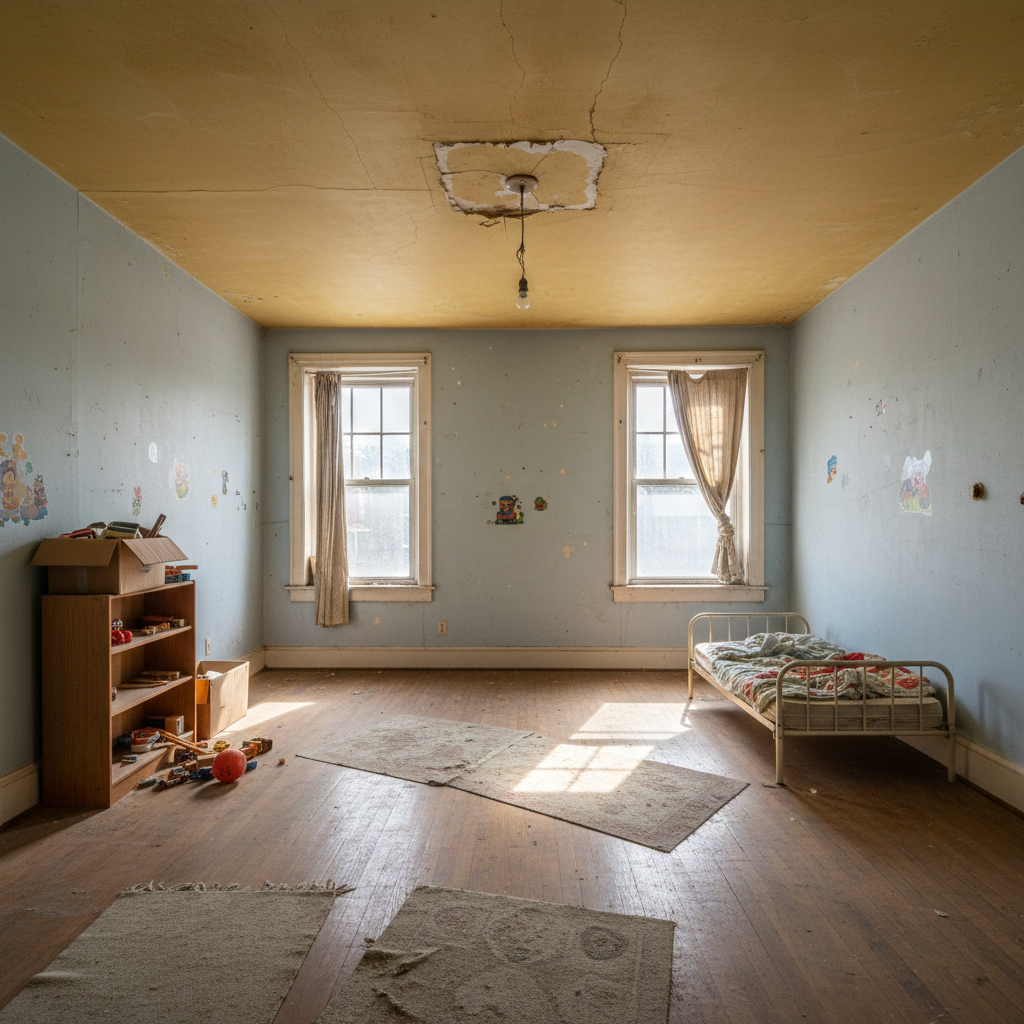
The Challenge: Before
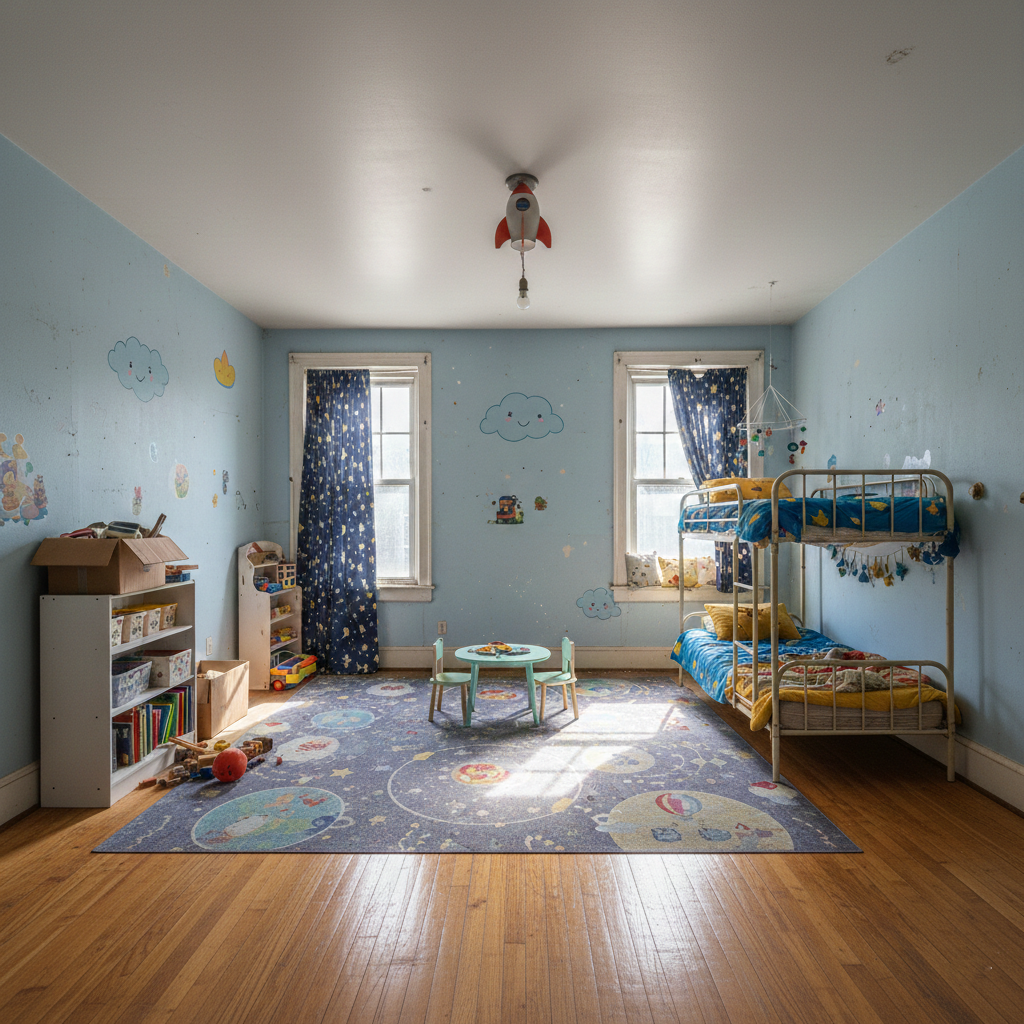
The Transformation: After (AI Generated)
AI Kids Room Designer - Fun, Safe, and Stylish Children's Rooms (2026)
Designing a kids room is different from any other space in your home. It needs to be fun enough to spark imagination, safe enough for rough play, flexible enough to grow with them, and—let's be honest—stylish enough that YOU don't hate walking in there. AI kids room designers solve this by showing you age-appropriate designs that balance all these needs in 30 seconds.
Why Kids Rooms Are So Hard to Design
Parents face unique challenges when designing children's spaces:
- They outgrow it fast: Nursery themes become irrelevant in 3 years
- Safety is non-negotiable: Sharp corners, heavy furniture, small parts all dangerous
- It gets destroyed: Crayons on walls, stickers everywhere, mystery stains
- Storage is never enough: Toys multiply exponentially
- Budget constraints: Why spend thousands on furniture they'll outgrow?
- Style vs. function: Cute doesn't always mean practical
- Kid preferences change: They love dinosaurs this month, astronauts next
- Shared rooms: Two kids, different ages, one small room
The biggest mistake parents make is designing for THIS moment instead of the next 5-8 years. AI kids room designers show you designs that work NOW and adapt as they grow.
What Is an AI Kids Room Designer?
AI kids room designers create age-appropriate bedroom and playroom designs optimized for:
- Safety: Rounded furniture, secured anchors, non-toxic finishes
- Development: Stimulating colors and layouts appropriate to age
- Storage: Maximum toy and clothing organization
- Flexibility: Designs that grow with your child
- Durability: Surfaces that withstand kids being kids
- Style: Looking good to parents AND kids
Upload a photo of your child's current room, specify their age, and get professional designs in 30 seconds showing exactly what's possible.
Design the Perfect Kids Room
Upload your child's room photo and get 2 free AI designs optimized for their age and needs.
Kids Room Design by Age (AI Optimizes for Each Stage)
Nursery (0-2 Years): Safe Sleep Haven
Primary Needs:
- Safety first: No loose bedding, secured furniture, soft edges
- Soothing environment: Calm colors, blackout shades, white noise
- Parent-friendly: Changing station, nursing chair, storage nearby
- Simple and cleanable: Less is more, easy to wipe down
AI-Recommended Elements:
- Crib with secure mattress (no bumpers, minimal bedding)
- Comfortable glider or rocking chair
- Changing table with storage drawers
- Soft lighting with dimmer
- Dresser with top changing pad area
- Blackout curtains or shades
- Simple wall art (not above crib)
- Rug for soft play area
Color Psychology:
- Best: Soft blues, greens, warm grays, cream
- Avoid: Bright reds, oranges (too stimulating)
- Why: Calm colors promote better sleep
AI Prompt Example:
"Nursery for newborn, soft sage green walls, modern crib, comfortable nursing chair, organized storage, calming and safe"
Toddler (2-5 Years): Exploration Station
Primary Needs:
- Toddler bed transition: Low bed, easy to get in/out
- Play space: Floor space for toys and movement
- Accessible storage: Bins they can reach and use
- Stimulating but not overwhelming: Color and activity without overstimulation
- Safety proofing: Outlet covers, anchored furniture, no small parts
AI-Recommended Elements:
- Toddler bed or twin bed with safety rails
- Low toy storage cubes or bins
- Small table and chairs for activities
- Large rug for play area
- Wall-mounted bookshelf (secured)
- Dress-up storage or costume hooks
- Growth chart on wall
- Themed but not character-based decor
Color Psychology:
- Best: Primary colors (red, blue, yellow) in moderation, bright accents
- Accent with: Rainbows, animals, shapes
- Why: Stimulates learning and creativity
AI Prompt Example:
"Toddler bedroom, 3 years old, twin bed with safety rail, low toy storage, activity table, playful but not babyish, primary colors"
Early Elementary (5-8 Years): Homework & Play Balance
Primary Needs:
- Desk space: Homework station is essential
- Display areas: Show off artwork and achievements
- Growing independence: They want input on design
- Storage evolution: Less toys, more books and hobbies
- Sleep quality: Better sleep habits require calm environment
AI-Recommended Elements:
- Twin or full bed (no more toddler bed)
- Desk with good lighting
- Bookshelf (they're reading chapter books now)
- Cork board or magnetic board for art display
- Dresser with mirror
- Toy storage but less prominent
- Bean bag or reading nook
- Their interests reflected in decor (sports, art, animals)
Color Psychology:
- Best: Saturated colors they choose, accent walls
- Involve them: Let them pick 2-3 color options
- Why: Ownership increases room pride and care
AI Prompt Example:
"Kids bedroom, 7 years old, loves soccer, desk for homework, bookshelf, display area for trophies, blue and green color scheme, big kid room"
Tween (9-12 Years): Identity Emerging
Primary Needs:
- Personal expression: Room reflects their developing identity
- Privacy starts: Want space from siblings/parents
- Study demands increase: Serious homework station needed
- Social space: Room for friends to hang out
- Technology integration: Charging stations, gaming setup
AI-Recommended Elements:
- Full or queen bed (adult-sized now)
- Larger desk with good chair
- Seating for friends (bean bags, floor cushions)
- Organized closet system
- Gallery wall with photos and posters
- String lights or cool lighting
- Charging station
- Hobby storage (art supplies, sports gear, collections)
Color Psychology:
- Best: Let them choose (within reason)
- Trending: Teal, coral, navy, forest green, purple
- Why: Self-expression crucial at this age
AI Prompt Example:
"Tween bedroom, 11 year old girl, loves art, gallery wall, desk for homework and crafts, seating area for friends, teal and gold colors, mature but age-appropriate"
Teen (13-18 Years): Young Adult Space
Primary Needs:
- Adult aesthetic: No "kids room" elements
- Serious study space: College prep demands focus
- Privacy paramount: Their sanctuary
- Storage for everything: Clothes, tech, sports, hobbies
- Longevity: Design should work through college years
AI-Recommended Elements:
- Queen bed with quality bedding
- Substantial desk with monitor space
- Comfortable desk chair (ergonomic)
- Full-length mirror
- Organized closet with hanging and shelving
- Lounge seating (for reading, gaming, friends)
- Good lighting (task + ambient)
- Tech setup (charging, cable management)
- Personal style reflected (minimalist, boho, urban, etc.)
Color Psychology:
- Best: Sophisticated palettes (navy + white, gray + blush, black + wood)
- Trending: Minimalist, industrial, boho, Scandinavian
- Why: Want to be treated as adults
AI Prompt Example:
"Teen bedroom, 16 year old, needs serious study space, minimalist modern style, gray and white with wood accents, adult aesthetic, organized and functional"
Special Considerations for Kids Rooms
Safety Features AI Prioritizes
For All Ages:
- Furniture anchoring: Dressers, bookcases secured to walls
- Outlet covers: Especially for toddlers
- Window safety: Cordless blinds, window guards above first floor
- No sharp corners: Rounded furniture or corner guards
- Non-toxic everything: Paint, finishes, materials
For Younger Kids:
- No small parts that could be choking hazards
- Low furniture (can't fall from high places)
- Soft edges on all furniture
- Secured artwork (not above crib or bed)
- No long cords or blind pulls
Storage Solutions by Age
Nursery/Toddler Storage:
- Low open bins for toys (they can see and reach)
- Dresser with changing pad on top
- Closet with low hanging rod
- Basket for books
Elementary Storage:
- Toy storage transitioning to hobby storage
- Bookshelf (reading takes off)
- Under-bed storage for seasonal items
- Desk with drawers for school supplies
Teen Storage:
- Organized closet system (more clothes than toys)
- Shelving for collections
- Storage for sports equipment
- Tech storage (cables, chargers, devices)
Shared Room Strategies
AI can show you how to make shared rooms work:
Same Age Siblings:
- Bunk beds or twin beds
- Color code each side (blue for one, green for other)
- Separate storage for each child
- Shared play space in middle
Different Ages:
- Loft bed for older kid (study space underneath)
- Toddler bed for younger
- Visual separation (curtain, bookshelf divider)
- Quiet zone for homework vs. play zone
AI Prompt for Shared Room:
"Shared kids bedroom, 6 year old and 10 year old, two twin beds, separate storage for each, homework desk for older child, play area for younger, organized and fair"
How to Use AI for Kids Room Design
Step 1: Photograph Current Room
- Clear out as much clutter as possible (move toys temporarily)
- Show windows, doors, closet
- Include current furniture even if you plan to replace it
- Take photos from multiple angles
Step 2: Upload to HouseGPTs
- Go to HouseGPTs.com/dashboard/interior
- Upload room photo
- Select "Bedroom" as room type
- Add specific requirements
Step 3: Specify Age and Needs
Be specific in your AI prompt:
- "5 year old boy, loves dinosaurs, needs desk for homework, organized toy storage"
- "Nursery for newborn, calming colors, safe and functional, nursing chair"
- "Teen girl, 15 years old, wants boho style, needs study space and friend hangout area"
- "Shared room, 3 year old and 7 year old siblings, bunk beds, separate storage for each"
Step 4: Generate Multiple Options
Test different approaches:
- Design 1: Themed but flexible (nautical, space, garden)
- Design 2: Neutral with accent colors (grows with them)
- Design 3: Their current interest reflected (sports, art, animals)
Step 5: Involve Your Kid (If Age-Appropriate)
For kids 5+, show them the AI designs:
- "Which room makes you most excited?"
- "What do you like about this one?"
- "Is there anything you'd change?"
Giving them input increases their pride in and care for the space.
Budget Kids Room Makeovers Using AI
The $300 Toddler Room Refresh:
| Item | Cost |
|---|---|
| Paint (1-2 walls accent) | $40 |
| Low toy storage bins (4) | $80 |
| Area rug | $80 |
| Wall decals or art | $40 |
| Bedding set | $60 |
| Total | $300 |
The $800 Elementary Room Makeover:
- New twin bed frame: $200
- Desk and chair: $180
- Bookshelf: $100
- Storage bins and organization: $100
- Bedding and curtains: $120
- Paint and decor: $100
- Total: $800
The $1,500 Teen Room Complete Redesign:
- Queen bed frame: $300
- Quality desk and ergonomic chair: $400
- Dresser: $250
- Lighting upgrades: $150
- Organized closet system: $200
- Bedding and textiles: $150
- Paint and decor: $100
- Total: $1,550
AI advantage: See exactly what the finished room will look like before spending. No buying furniture that doesn't fit or colors that don't work.
Common Kids Room Mistakes AI Prevents
1. Overtheming
Mistake: Full Disney princess theme with character bedding, wall decals, curtains, rug.
Why it's wrong: They'll hate it in 2 years and you just spent $1,000.
AI solution: Shows you how to incorporate interests through easily changeable elements (pillows, art, accessories) not permanent fixtures.
2. Adult Furniture in Kid Sizes
Mistake: Buying child-sized versions of adult furniture.
Why it's wrong: They outgrow it quickly, then you buy again.
AI solution: Shows you full-sized furniture that works now AND when they're teenagers.
3. No Storage Planning
Mistake: Beautiful room with nowhere to put the 500 toys.
Why it's wrong: Room is instantly messy, defeats the design purpose.
AI solution: Prioritizes storage in every design so the room stays organized.
4. Ignoring Growth
Mistake: Designing for a 4-year-old with no plan for when they're 10.
Why it's wrong: Complete redesign needed in 3-4 years (expensive).
AI solution: Shows you flexible designs with neutral bases and changeable accents.
5. No Work Space
Mistake: No desk for kids 5+ who need homework space.
Why it's wrong: They do homework at kitchen table = chaos.
AI solution: Always includes appropriate work surfaces for age.
Real Kids Room Transformation
The Challenge:
Emma's 8-year-old daughter had outgrown her toddler room but still slept in a toddler bed. The room was covered in baby princess decor, had zero homework space, and toy storage was overflowing.
"She was embarrassed to have friends over," Emma said.
The AI Process:
- Uploaded current room photo
- Specified: "8 year old girl, loves art and reading, needs desk, more mature style"
- Generated 3 designs showing different approaches
- Daughter chose the teal and gold option
- Implemented over 2 weekends
Changes Made:
- Replaced toddler bed with twin bed ($180)
- Added desk with good lamp ($220)
- Painted accent wall teal ($35 DIY)
- New bookshelf for chapter books ($90)
- Toy storage bins replaced with art supply organization ($60)
- Gallery wall with cork board for her art ($50)
- New bedding (teal and gold) ($70)
- Total: $705
The Result:
"She's so proud of her room now. She shows it to everyone who visits. The AI design helped me see that we didn't need to spend thousands—just update the key pieces and let her personality shine. Best money I've spent."
Transform Your Child's Room Today
Your child spends more time in their bedroom than any other room in your home. It should be a space that supports their development, reflects their personality, and grows with them through the years.
Your Action Plan:
- Today: Take photos of your child's current room (5 minutes)
- Today: Upload to HouseGPTs and generate 2 free designs (5 minutes)
- This week: Show designs to your child (if age-appropriate) and decide together
- This weekend: Start with free changes (declutter, rearrange)
- This month: Buy key pieces based on AI design
Design the Perfect Kids Room
Get 2 free professional AI kids room designs optimized for your child's age and interests. Safe, fun, and stylish.
Related Kids Room Design Resources
Ready for Your Own AI Redesign?
Start Designing with AI →FAQs about AI Kids Room Designer - Fun, Safe, and Stylish Children's Rooms (2026)
Everything you need to know
Can AI design a kids room?
Yes. AI kids room designers create age-appropriate bedroom designs optimized for safety, development, storage, and style. Upload a photo of your child's room, specify their age and interests, and receive professional designs in 30 seconds showing furniture placement, colors, storage solutions, and decor that works for their current age and grows with them.
What is the best layout for a kids bedroom?
Best kids bedroom layouts depend on age: Toddlers need large floor play space with bed against wall and low toy storage. Elementary kids need desk space for homework plus play area. Teens need substantial desk, comfortable bed, and seating for friends. AI designs show optimal furniture placement for your child's specific age and room dimensions.
How do you design a kids room that grows with them?
Design kids rooms to grow by using neutral walls and full-sized furniture, then adding changeable accent elements like bedding, art, and accessories that reflect current interests. Avoid character themes and child-sized furniture. AI shows you flexible base designs where you can swap pillows, art, and decor as interests change without redesigning the entire room.
What colors are best for kids bedrooms?
Best colors vary by age: Nursery - soft blues, greens, warm grays for calm sleep. Toddler - primary colors for stimulation. Elementary - saturated colors they choose. Teen - sophisticated palettes they select. AI generates designs with age-appropriate color psychology while letting you test different options in your actual room before painting.
How much does it cost to redesign a kids room?
Kids room redesigns range from $300-1,500 depending on age and extent. Toddler refresh: $300 (paint, storage, rug, decor). Elementary makeover: $600-800 (bed, desk, storage, paint). Teen redesign: $1,200-1,500 (adult-sized furniture, organized closet, study space). AI prevents costly mistakes by showing exactly what works before you buy anything.
How do you organize a small kids bedroom?
Organize small kids bedrooms using vertical space (wall-mounted shelves, loft beds), under-bed storage, multi-functional furniture (bed with drawers, ottoman storage), and over-door organizers. Keep only current-age toys visible, rotate seasonally. AI shows you space-maximizing storage solutions and furniture arrangements specific to your room's dimensions.
What safety features should kids bedrooms have?
Essential kids bedroom safety features: furniture anchored to walls (especially dressers and bookcases), outlet covers for toddlers, cordless window blinds, rounded furniture corners or guards, non-toxic paint and finishes, no small choking hazards for young children, and no long cords. AI designs prioritize age-appropriate safety while maintaining style.
How do you design a shared kids bedroom?
Design shared kids bedrooms by giving each child separate defined space: bunk beds or twin beds, color-coded sides (blue for one, green for other), individual storage for each child, and visual separation if different ages (curtain, bookshelf divider). Include shared play space and separate study zones if age-appropriate. AI shows optimal layouts for your specific room size and children's ages.