9 Best Small Space Interior Design Tricks That Actually Work
Article Contents
- 1. Take Furniture Off the Floor to Free Up Visual Space
- 2. Choose Multi-Functional Furniture Over Single-Purpose Pieces
- 3. Use Mirrors to Bounce Light and Create Depth
- 4. Build Storage Vertically, All the Way to the Ceiling
- 5. Stick to a Light, Consistent Color Palette
- 6. Scale Furniture to the Room, Not the Showroom
- 7. Let Curtains and Rugs Trick the Eye
- 8. Define Zones Without Adding Walls
- 9. Edit Ruthlessly — Every Item Should Earn Its Place
- A Few Things to Keep in Mind
9 Best Small Space Interior Design Tricks That Actually Work
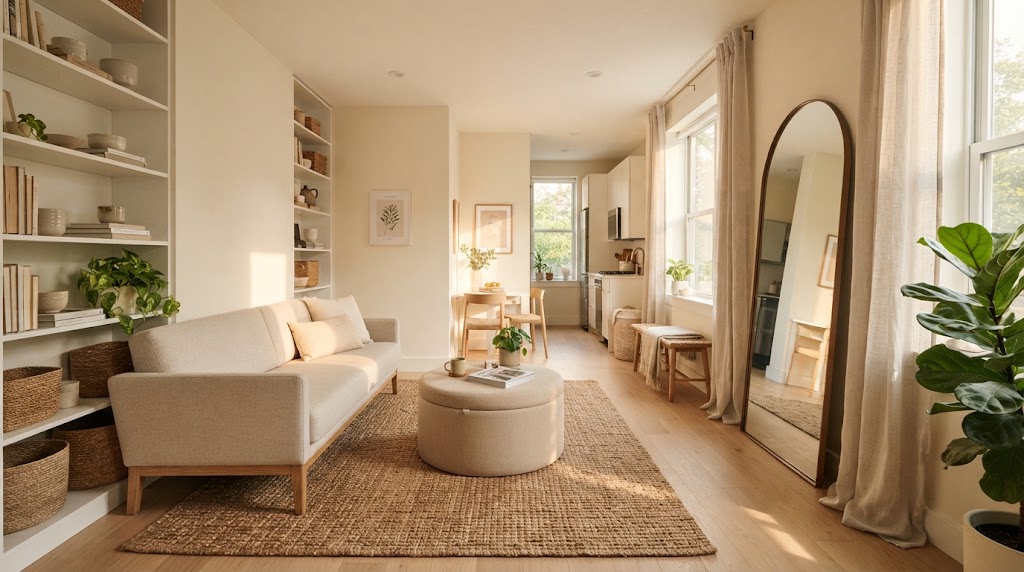
Living in a small space doesn't mean giving up on good design — it just means every decision has to earn its keep. The most effective small-space tricks aren't about cramming in more furniture or fewer belongings; they're about making the room work harder, look brighter, and feel less boxed in. Below are 9 small space interior design tricks that actually work, drawn from principles professional designers rely on again and again.
1. Take Furniture Off the Floor to Free Up Visual Space
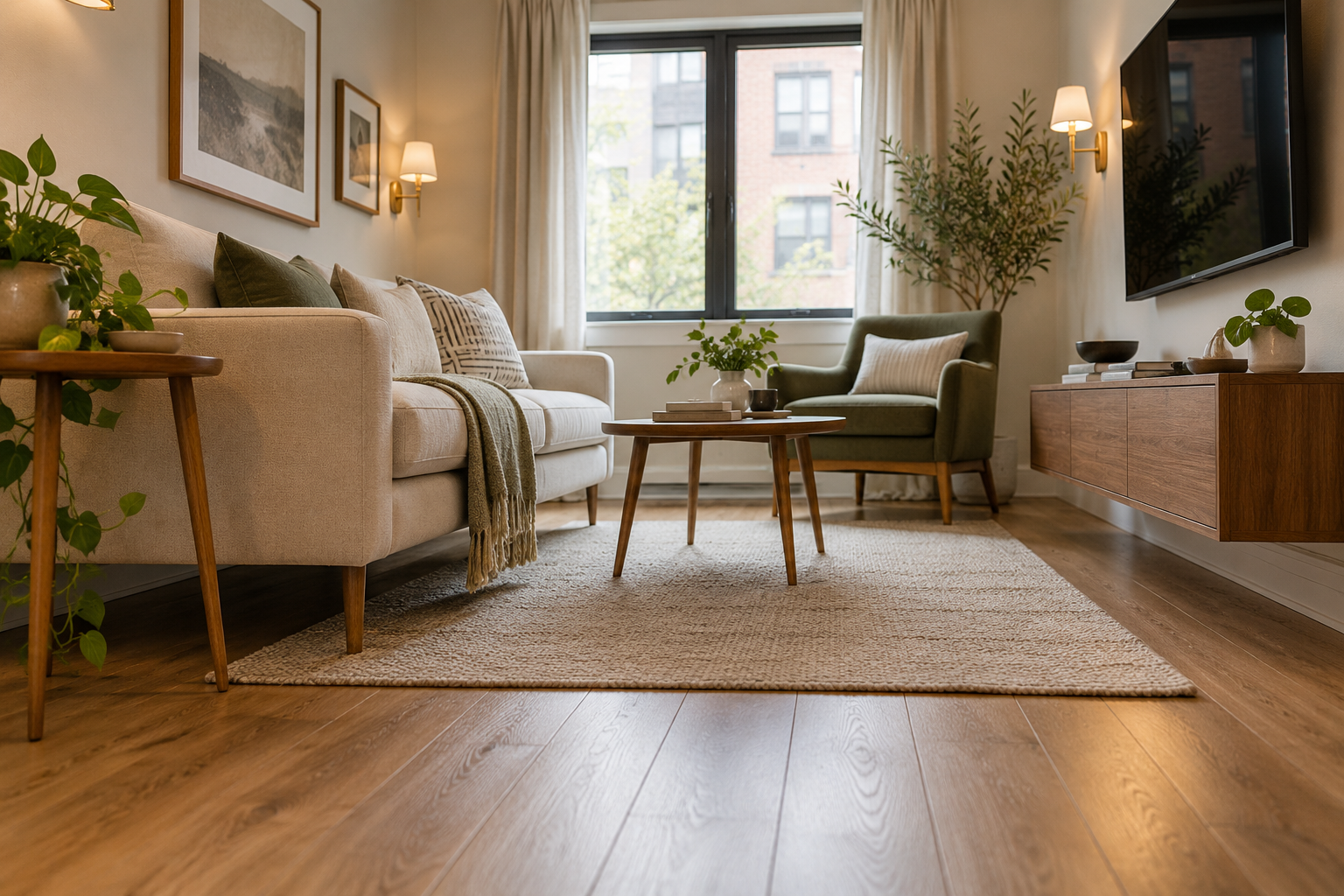
The amount of visible floor you can see has an outsized effect on how big a room feels — more than the room's actual square footage. Furniture that sits directly on the floor, like a low bookcase or a bulky sofa with a skirted base, visually eats up that space. Swapping in pieces with slim, exposed legs lets light and sightlines pass underneath, which reads as more open room.
How to apply it:
Choose sofas, chairs, and side tables with visible legs instead of solid bases.
Replace floor lamps with pendant or wall-mounted lighting wherever possible.
Mount a TV on the wall instead of placing it on a console or stand.
Best for: Living rooms and bedrooms where floor space is at a premium.
2. Choose Multi-Functional Furniture Over Single-Purpose Pieces
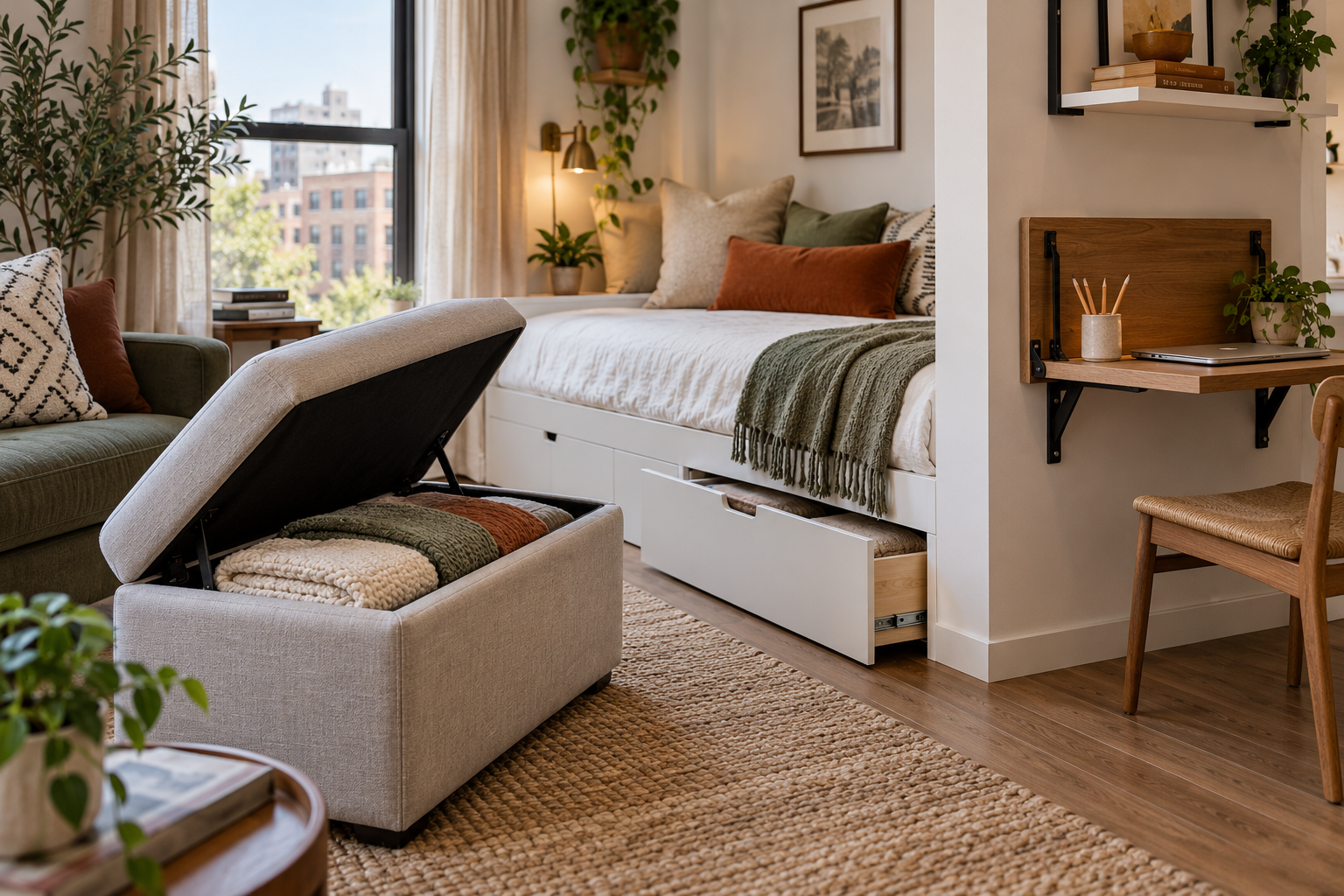
In a small space, a piece of furniture that does only one job is a luxury you may not be able to afford. A storage ottoman, a bed with built-in drawers, or a dining table that folds down against the wall all let one object cover multiple needs — seating, storage, and workspace — without adding to the room's footprint.
How to apply it:
Look for ottomans, benches, and coffee tables with hidden storage compartments.
Consider a fold-down or extendable dining table for a room that doubles as a workspace.
A daybed or sleeper sofa can turn a home office into an occasional guest room.
Best for: Studio apartments and any room that has to serve more than one purpose.
3. Use Mirrors to Bounce Light and Create Depth
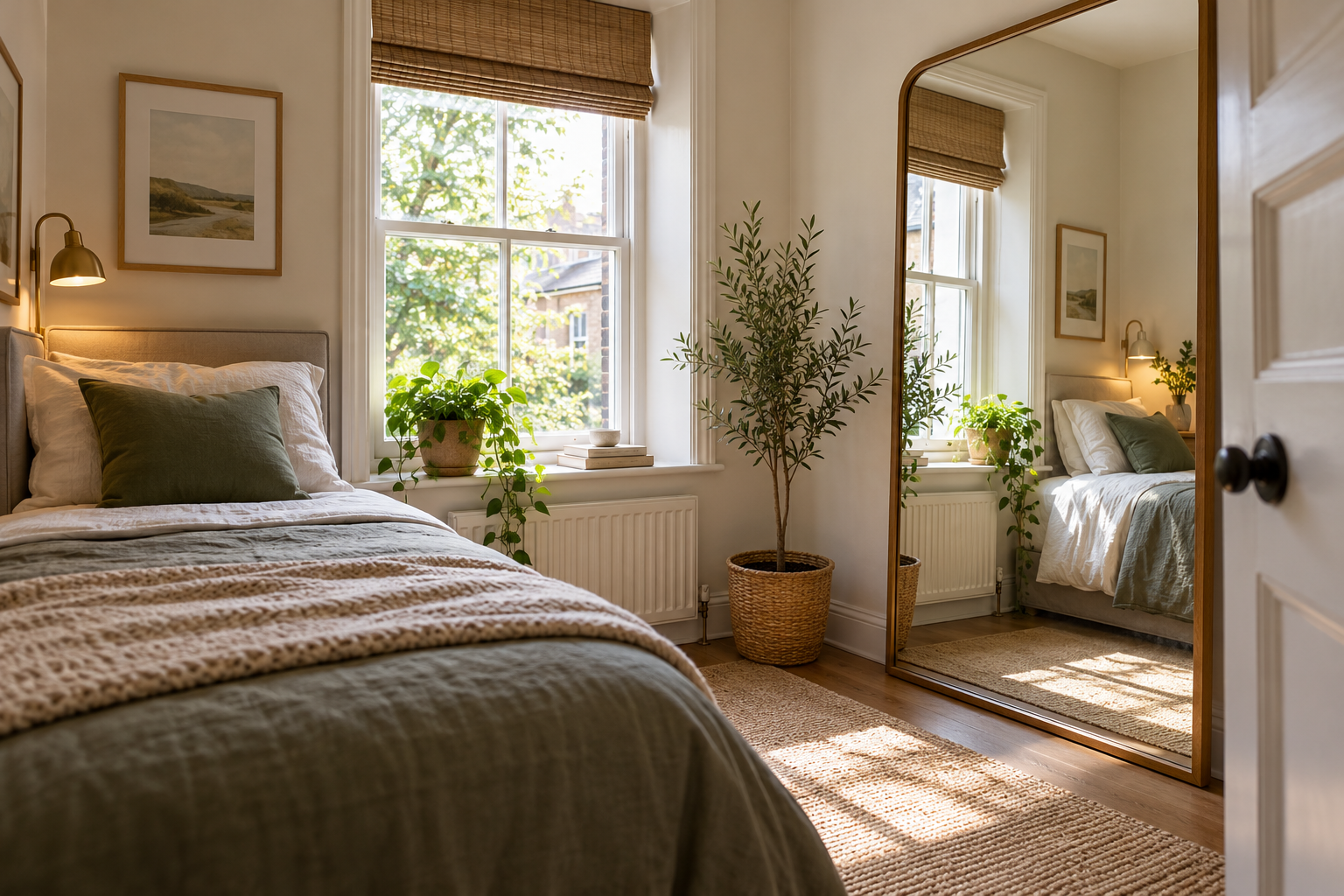
A well-placed mirror doesn't just make a room look bigger visually — it also reflects and redistributes natural light, which is often the real limiting factor in a small space. A tall mirror positioned to catch light from a window can noticeably brighten a room and create the illusion of an extra few feet of depth.
How to apply it:
Position a large mirror directly across from a window, not beside it, to reflect the most light.
A mirrored wardrobe or closet door does double duty as storage and a light-bouncing surface.
Lean an oversized floor mirror against a wall for an easy, renter-friendly upgrade.
Best for: Dim rooms, entryways, and small bedrooms with limited natural light.
4. Build Storage Vertically, All the Way to the Ceiling
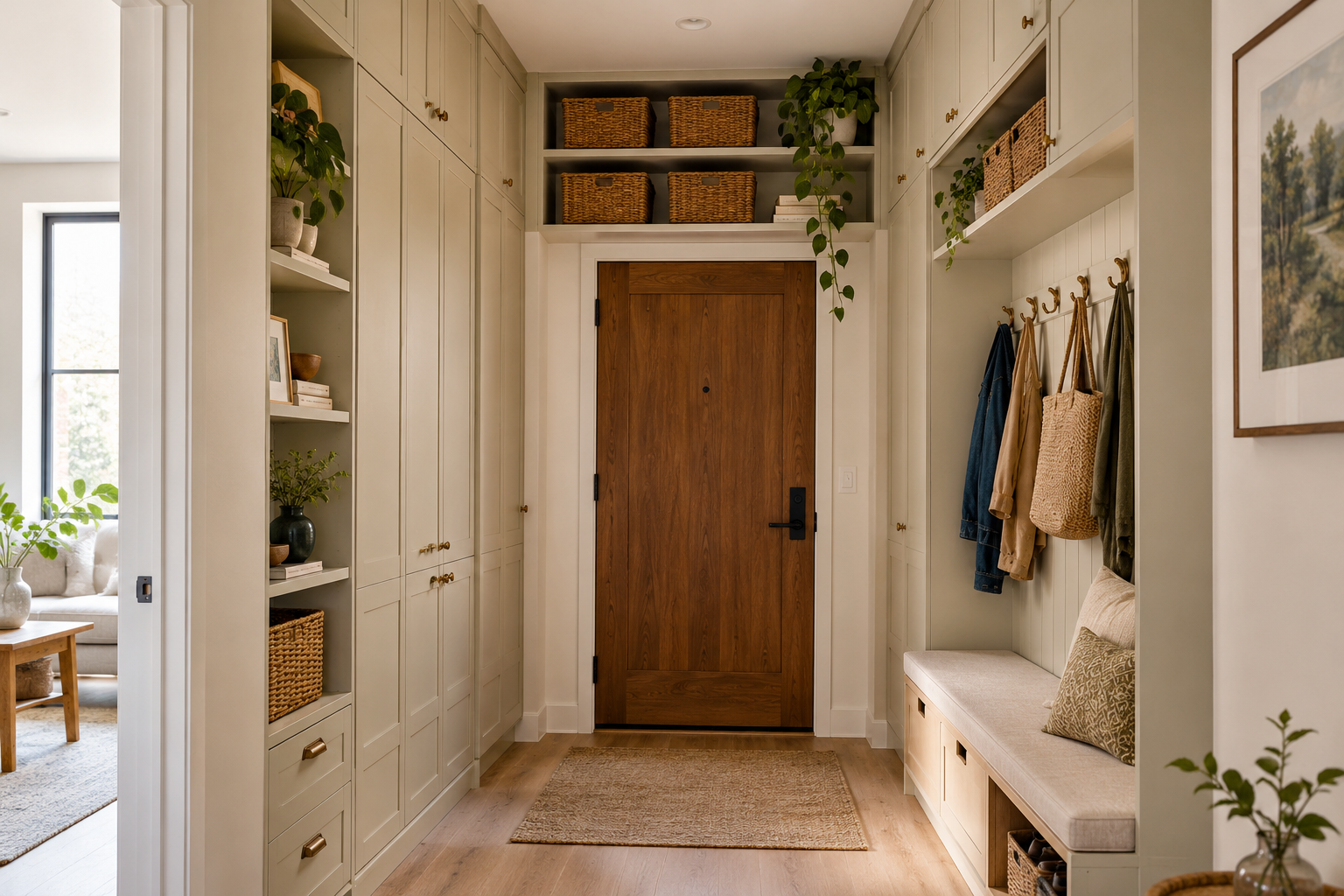
When floor space runs out, the walls and ceiling become the next best resource. Shelving, cabinetry, and storage that extend upward instead of outward add real capacity without shrinking the usable floor area — and tall storage draws the eye upward, which can make ceilings feel higher than they are.
How to apply it:
Install shelving that reaches close to the ceiling rather than stopping at eye level.
Use the space above doorways and closets for baskets or bins holding seasonal items.
Add hooks, pegboards, or slim wall-mounted racks for anything currently sitting on a counter or floor.
Best for: Kitchens, closets, bathrooms, and entryways with limited square footage.
5. Stick to a Light, Consistent Color Palette
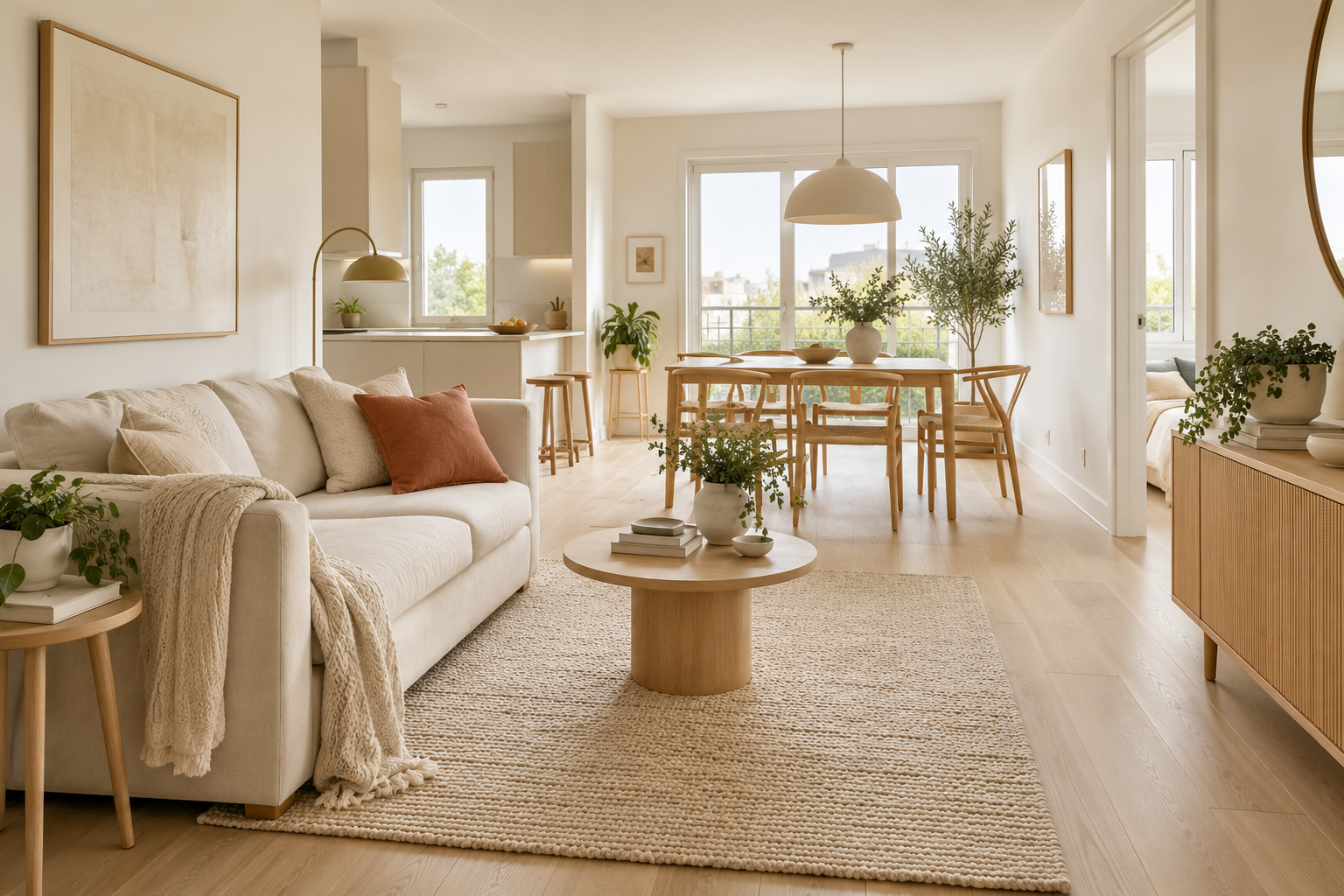
Color has a real, measurable effect on how spacious a room feels. Light, cohesive tones — on walls, floors, and larger furniture — reflect more light and reduce the visual "stops" that make a room feel chopped up and smaller than it is. A patchwork of strongly contrasting colors, by contrast, tends to break a small room into visually separate, cramped-feeling sections.
How to apply it:
Keep walls, trim, and large furniture within a similar light tonal range.
Reserve bold colors for small accents — a pillow, a piece of art, a single accent wall — rather than large surfaces.
Carry the same flooring or a similar rug tone between adjoining small rooms to make them feel connected rather than divided.
Best for: Any small space, but especially open-plan apartments and connected rooms.
6. Scale Furniture to the Room, Not the Showroom
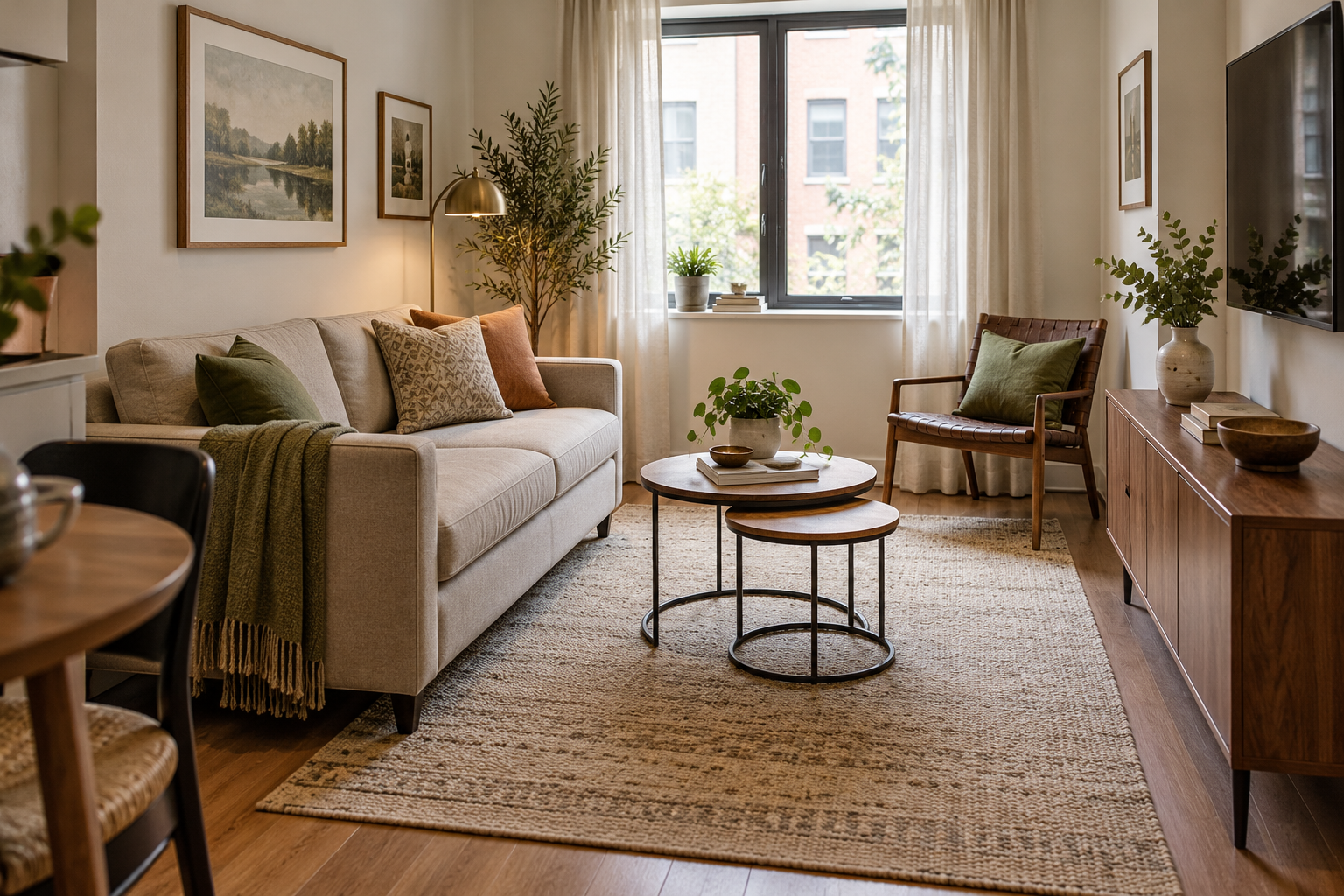
Furniture that looks reasonably sized in a spacious showroom can overwhelm a small room entirely. Oversized sofas, deep sectionals, and heavy case pieces are one of the most common reasons a small space feels cramped, regardless of how well it's decorated otherwise.
How to apply it:
Measure your room and doorways before buying, and look for furniture designed specifically for small or apartment-sized spaces.
Choose one or two slightly smaller "anchor" pieces rather than several medium ones — fewer, well-scaled items read as more intentional.
Armless or track-arm sofas take up noticeably less visual and physical space than boxy, overstuffed versions.
Best for: Living rooms and bedrooms where one oversized piece dominates the room.
7. Let Curtains and Rugs Trick the Eye
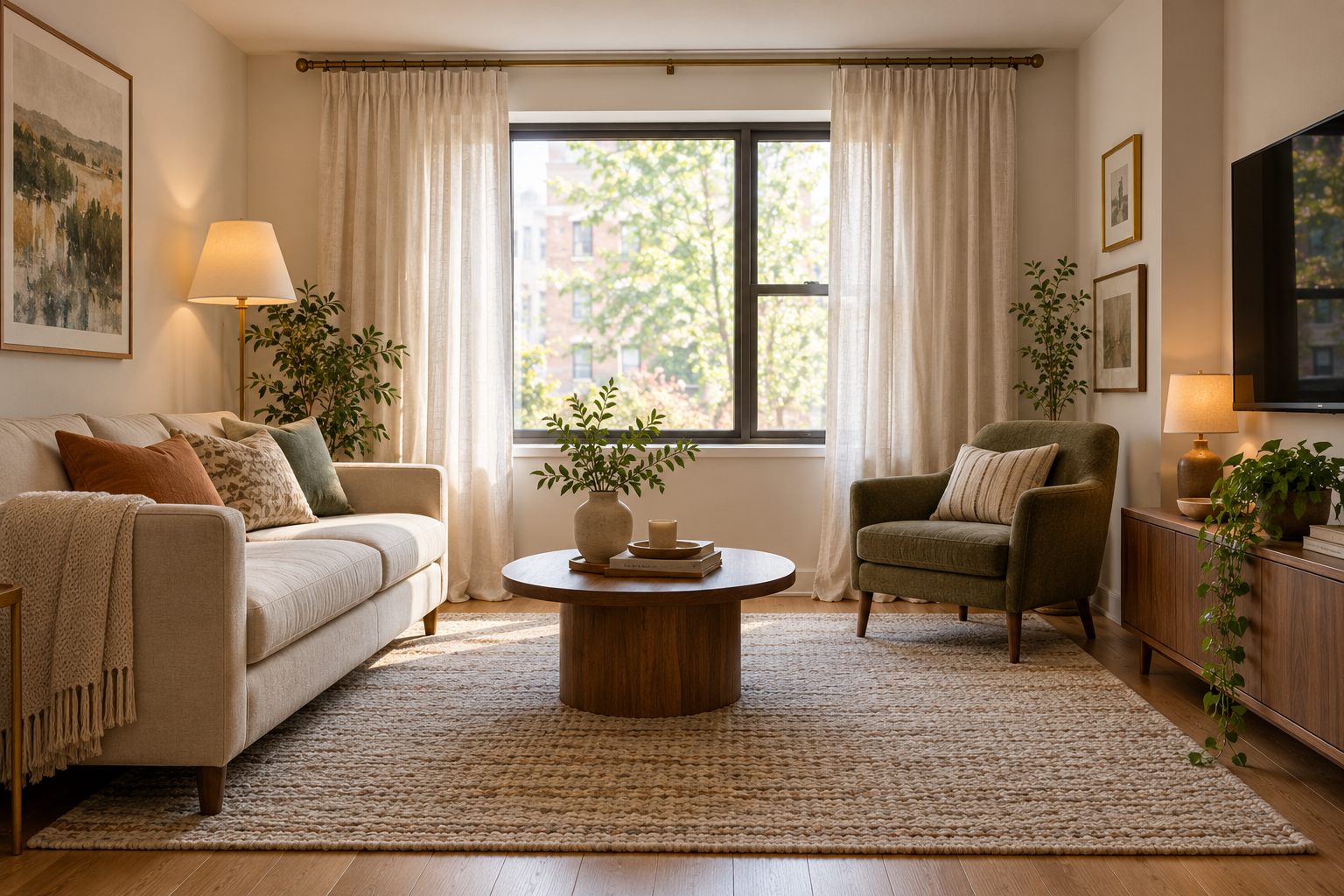
Soft furnishings are an inexpensive way to manipulate how a room's proportions read. Curtains hung higher and wider than the window frame draw the eye upward and outward, making ceilings feel taller and windows feel larger. A rug sized to fit under all the furniture in a seating area, rather than a small one floating in the middle, makes the whole zone feel more grounded and spacious.
How to apply it:
Mount curtain rods close to the ceiling, extending a few inches beyond the window frame on each side.
Choose a rug large enough that at least the front legs of your furniture sit on it.
Floor-length curtains in a light, unpatterned fabric keep the look airy rather than heavy.
Best for: Living rooms and bedrooms with standard or lower ceilings.
8. Define Zones Without Adding Walls
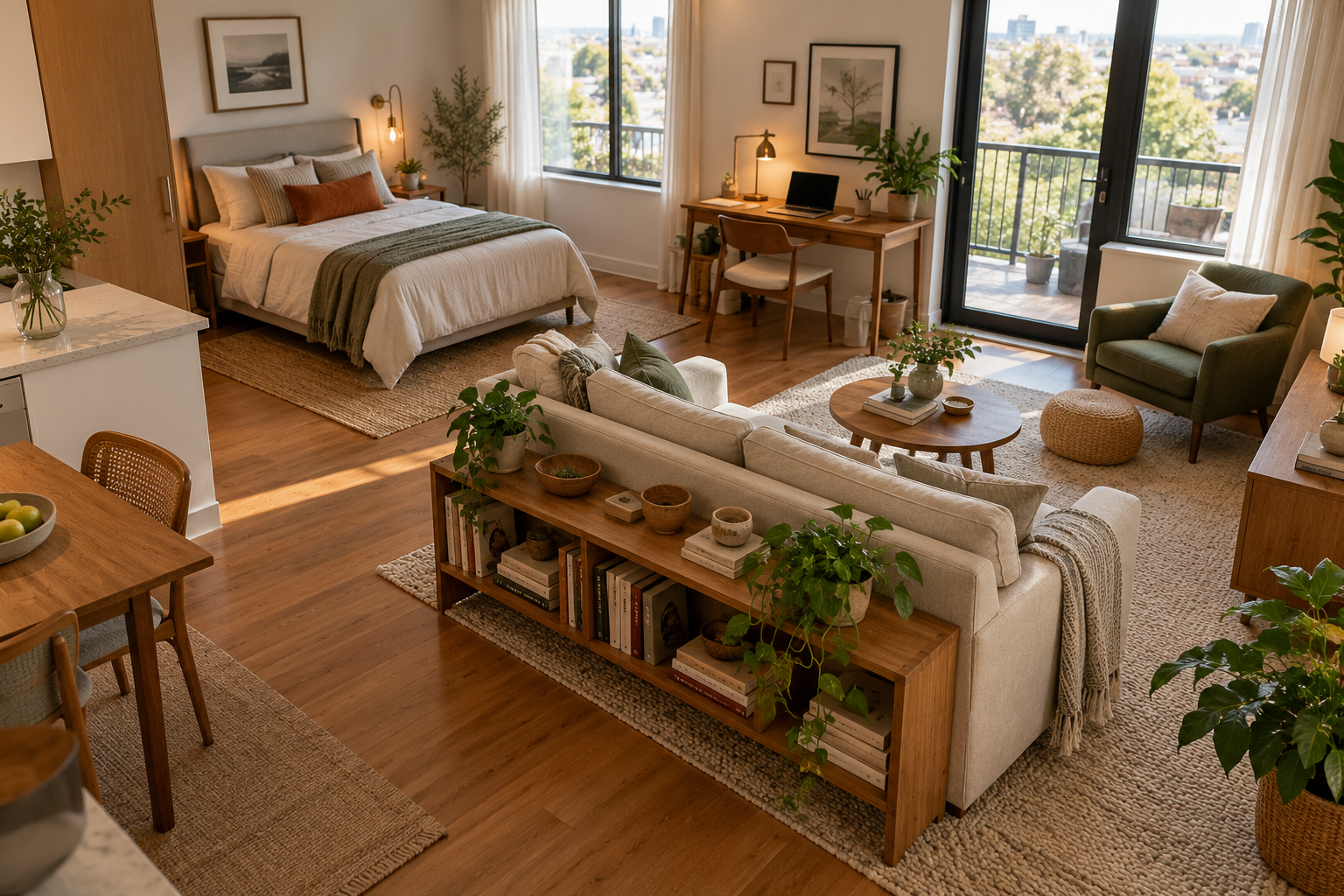
Open-plan small spaces — studio apartments especially — often benefit from having distinct "zones" for sleeping, working, and relaxing, even without physical walls to separate them. Visual cues alone can create that separation while keeping the room feeling open, and light doesn't get blocked.
How to apply it:
Use a rug to mark the boundary of a seating or sleeping area within a larger room.
Position furniture, like a bookshelf or the back of a sofa, to act as a soft divider between zones.
Keep zoning furniture low and open-backed so sightlines and light can still travel across the room.
Best for: Studio apartments and open-concept small homes.
9. Edit Ruthlessly — Every Item Should Earn Its Place
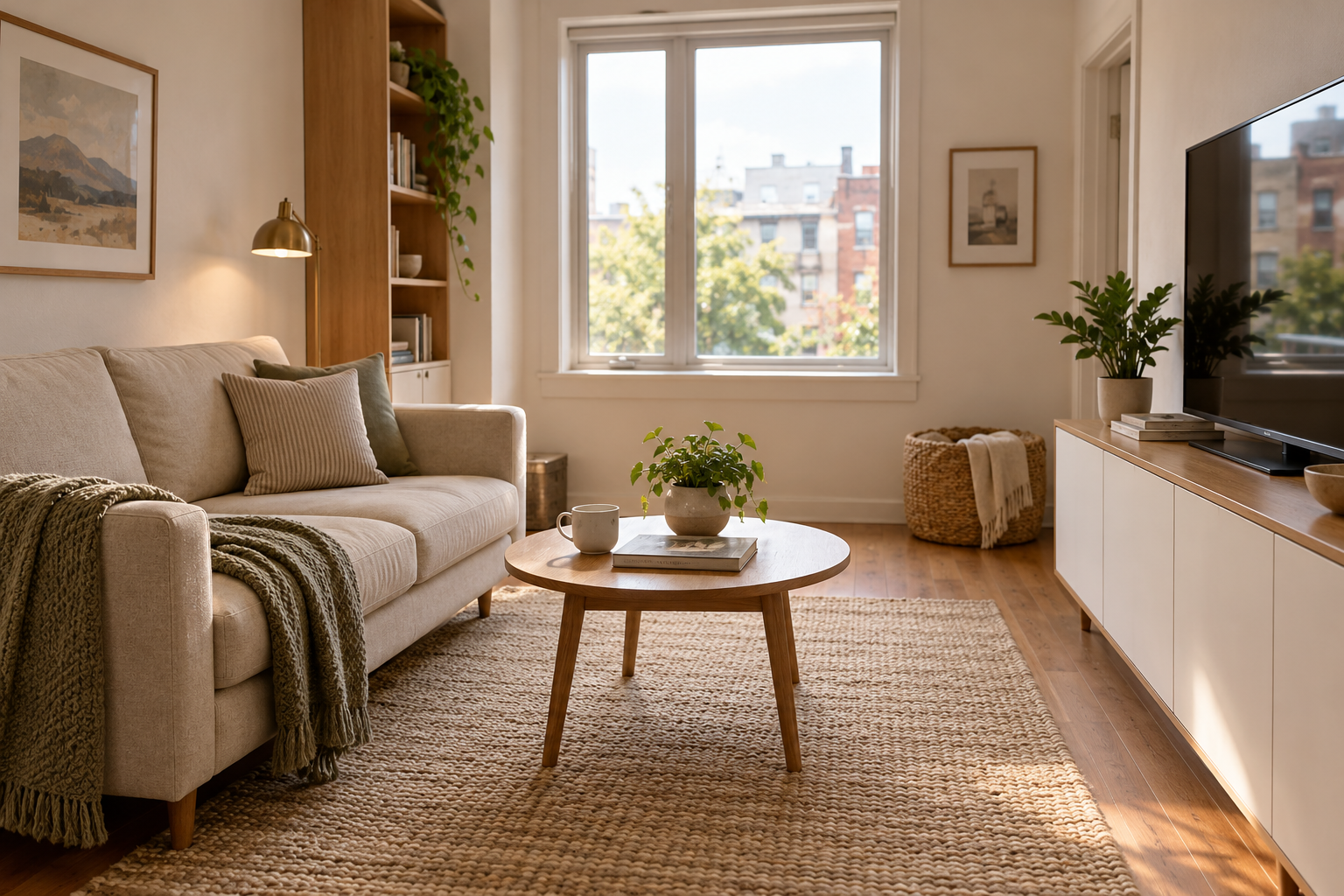
Perhaps the single biggest difference between a small space that feels chaotic and one that feels calm isn't the layout — it's the amount of stuff in it. In a small room, every object takes up a proportionally larger share of visual and physical space, so anything purely decorative and non-functional has an outsized cost.
How to apply it:
Before buying anything for a small space, ask whether it serves a real function, not just a decorative one.
Rotate seasonal decor and books instead of keeping everything out and visible at once.
Do a regular pass to remove items that have drifted into the space without a clear purpose or home.
Best for: Every small space, as an ongoing habit rather than a one-time fix.
Also read AI Home Designer ideas
A Few Things to Keep in Mind
Light is the real constraint in most small spaces — prioritize natural and reflected light before anything else.
Function first. In a small room, decorative-only items carry a real cost in space that functional pieces don't.
Vertical space is free real estate. Most small rooms have untouched storage potential above eye level.
Consistency reads as calm. A cohesive color palette and consistent furniture scale do more for a small room than any single statement piece.
Small spaces reward intentional choices. A few well-considered swaps — in furniture, color, and storage — can make a modest room feel noticeably larger and far more livable, without a single wall coming down.
Ready for Your Own AI Redesign?
Start Designing with AI →FAQs about 9 Best Small Space Interior Design Tricks That Actually Work
Everything you need to know
What is the best way to make a small room look bigger?
Light comes first — natural light and reflected light from mirrors do more to open up a room than almost any other change. From there, light wall colors, furniture with visible legs, and vertical storage all contribute, while keeping clutter to a minimum ties everything together.
How do you decorate a small apartment without making it feel cluttered?
Choose multi-functional furniture so fewer pieces are doing more work, keep a light and consistent color palette, and regularly edit out items that aren't earning their place. Storage that goes vertical, rather than spreading across the floor, also helps keep surfaces clear.
Do small rooms need light colors, or can you use dark paint?
Light colors are the safer, more reliable choice for making a small room feel larger, since they reflect available light. That said, a dark, moody color on all four walls in a small room with good lighting and minimal furniture can sometimes read as cozy rather than cramped — it's a higher-risk choice that depends heavily on the room's light source and the level of contrast with the furniture.
What furniture works best in a small living room?
Furniture with exposed legs, armless or slim-profile sofas, and pieces that serve more than one function — like a storage ottoman or a nesting coffee table — tend to work best. Oversized sectionals and bulky, low-to-the-ground furniture are the most common culprits behind a small living room feeling overcrowded.
How can I add storage to a small space without built-ins?
Vertical, wall-mounted solutions are the most effective renter-friendly option: tall freestanding shelving, hooks, pegboards, and over-the-door organizers all add capacity without construction. Multi-functional furniture with hidden storage compartments is the next easiest upgrade.
Does a rug really make a small room look bigger?
Yes — but sizing matters. A rug that's too small and floats in the middle of the room tends to make the space feel choppier and smaller. A rug large enough for at least the front legs of your main furniture to sit on ties the room together and reads as more spacious.
What's the biggest mistake people make when decorating a small space?
Buying furniture that's scaled for a larger room. An oversized sofa or a deep sectional can dominate a small room's proportions no matter how well everything else is styled, so measuring carefully before buying is one of the highest-impact steps you can take.