How Much Does a Kitchen Remodel Cost? (2026 Price Guide)
Article Contents
- Kitchen remodel cost by scope
- Cost by kitchen size
- Where the money goes
- What makes a remodel cost more or less
- A worked example
- Costs people forget to budget for
- How long does a kitchen remodel take?
- Will a kitchen remodel pay for itself?
- 9 ways to lower the cost
- How to plan your budget step by step
- The bottom line
- Sources and notes
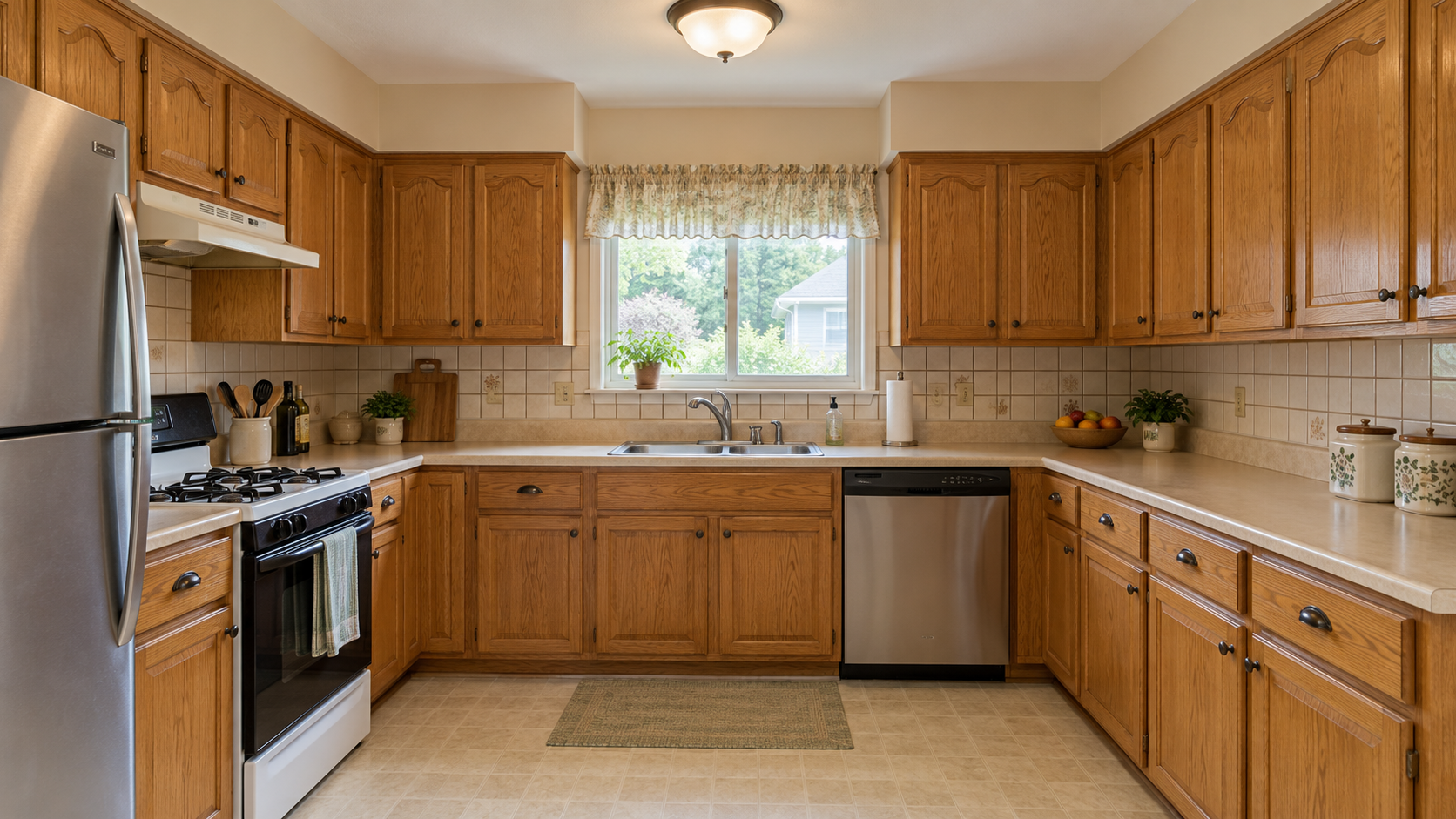
The Challenge: Before
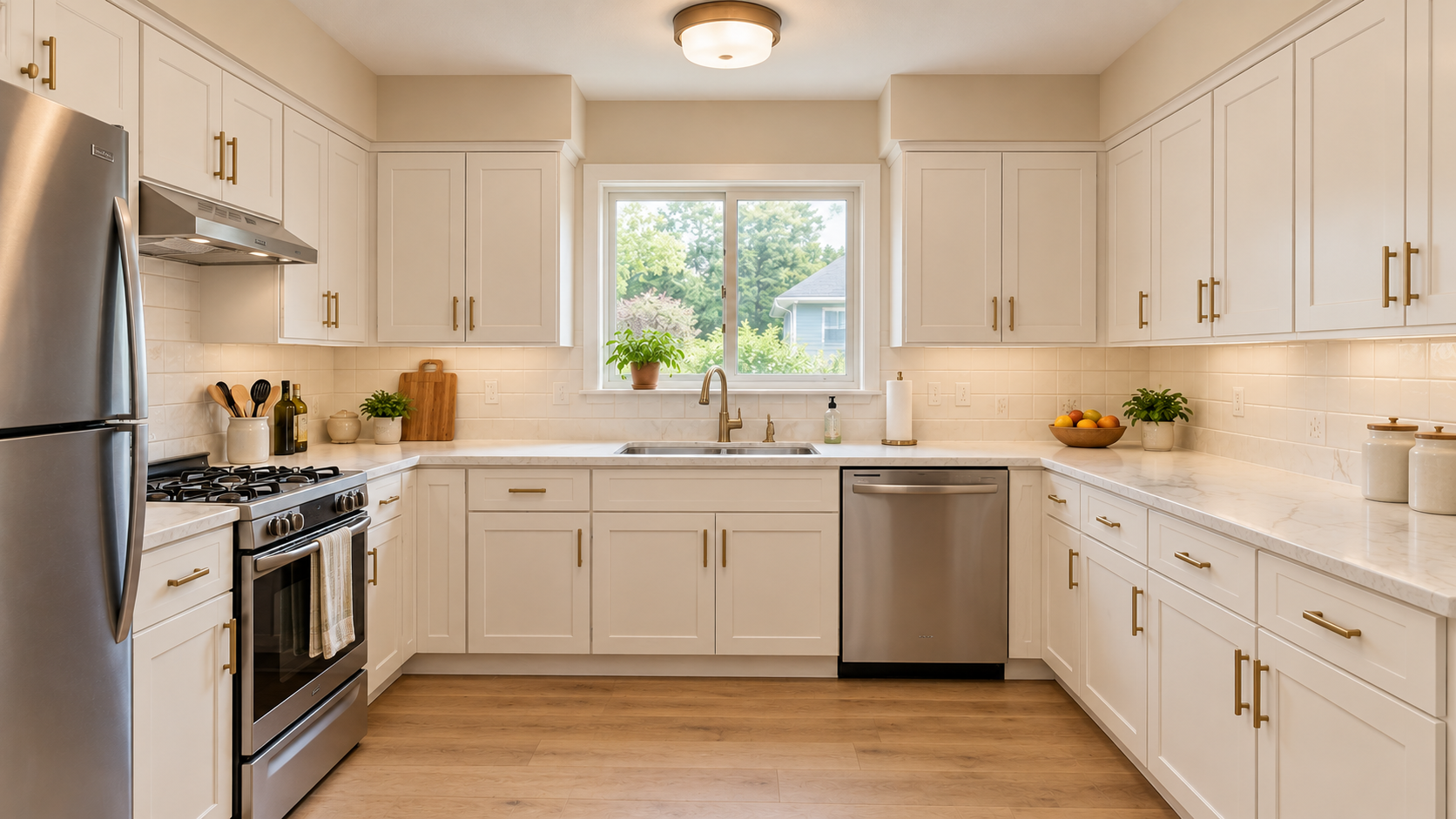
The Transformation: After (AI Generated)
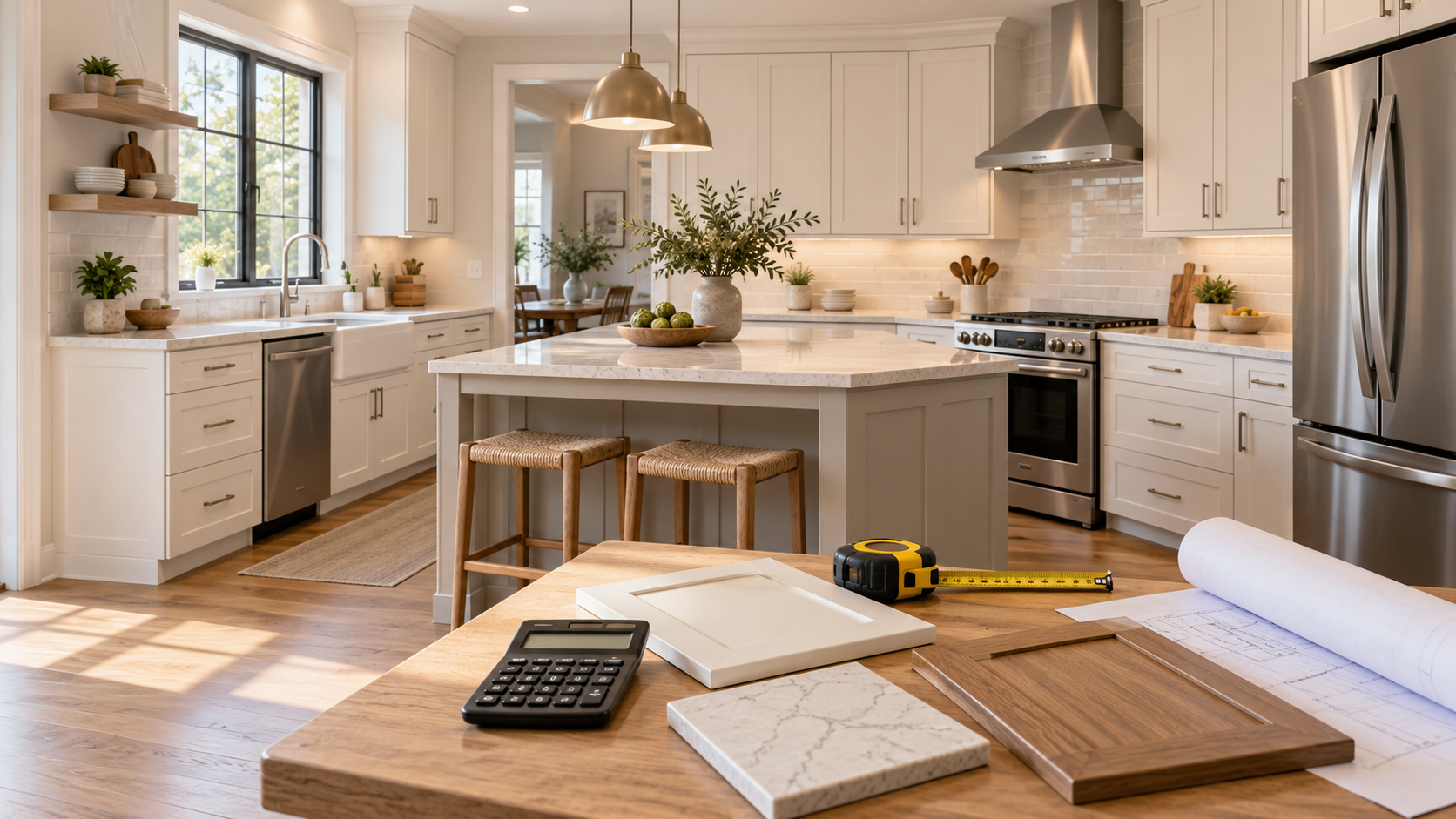
How Much Does a Kitchen Remodel Cost?
Quick answer: A kitchen remodel in the U.S. costs about $27,000 on average in 2026, and most homeowners spend between $15,000 and $45,000. A light refresh (paint, hardware, new counters) can come in around $10,000 to $25,000. A full mid-range remodel usually runs $25,000 to $60,000, and a high-end or custom kitchen starts above $60,000 and can pass $100,000. Your exact number depends on kitchen size, how much you change, the finishes you pick, and where you live. To get a figure for your own kitchen, try our kitchen remodel cost calculator.
Before you spend anything, see what the new kitchen could look like with the AI kitchen designer, then use our contractor quote comparison tool to check bids line by line.
Cost figures here are ranges pulled together from several 2026 cost guides and the Remodeling Magazine Cost vs. Value report, and written up in our own words. Prices vary by region and change often, so treat them as planning numbers and get local quotes.
Kitchen remodel cost by scope
How much you change matters more than any other factor. Most projects fall into one of three groups.
Type of remodel | What it usually covers | Typical cost |
|---|---|---|
Light refresh | Paint or refaced cabinets, new hardware, countertops, faucet, lighting | $10,000 to $25,000 |
Mid-range remodel | New cabinets, counters, backsplash, flooring, and some appliances in the same layout | $25,000 to $60,000 |
High-end or custom | Layout changes, custom cabinetry, premium appliances, stone counters, new plumbing and electrical | $60,000 to $100,000+ |
A light refresh keeps the layout and updates surfaces. It is the cheapest way to change how a kitchen looks and feels.
A mid-range remodel is the most common. You replace most of what you see but keep the plumbing and walls where they are, which keeps labor and surprises down.
A high-end remodel usually means moving things. Relocating a sink, gas line, or wall adds plumbing, electrical, and sometimes structural work, and the bill climbs quickly.
Cost by kitchen size
Bigger kitchens need more cabinets, counters, flooring, and labor hours. The average U.S. kitchen is roughly 160 to 180 square feet, and cost guides commonly put a typical full remodel for that size in the mid-$20,000s up to $40,000, depending on finishes.
Kitchen size | Typical mid-range cost |
|---|---|
Small (under 100 sq ft) | $15,000 to $35,000 |
Medium (100 to 200 sq ft) | $25,000 to $55,000 |
Large (200+ sq ft) | $40,000 to $80,000+ |
A quick way to estimate is to multiply your square footage by a cost per square foot. Mid-range projects often work out to roughly $100 to $250 per square foot, while luxury kitchens can run $600 or more. Small kitchens often cost more per square foot than large ones, because appliances, plumbing, and labor cost about the same regardless of size.
Where the money goes
The exact split varies, but a typical mid-range remodel looks roughly like this:
Item | Share of budget |
|---|---|
Cabinets and hardware | 25% to 30% |
Labor and installation | 20% to 35% or more |
Appliances | 10% to 15% |
Countertops | 8% to 10% |
Flooring | About 5% |
Backsplash, lighting, paint, plumbing fixtures, permits | The rest |
Cabinets are almost always the biggest line item, and the price spread is huge. Stock cabinets cost far less than semi-custom or custom ones.
Labor stays high because skilled electricians, plumbers, and carpenters are in short supply in many areas. Some guides put labor as high as 40% to 60% of a full remodel in expensive markets.
Appliances can run from about $2,000 for a basic package to well over $10,000 for a premium one.
Countertops average around $3,000 for many homes, but stone and quartz in a large kitchen cost much more.
What makes a remodel cost more or less
Location. The same job can cost 30% to 60% more in an expensive city than in a lower-cost area. In some high-cost regions, mid-range remodels average well above the national figure.
Layout changes. Keeping the sink, stove, and fridge where they are is the best way to hold costs down.
Cabinet choice. Moving from stock to custom can double your cabinet spend. Refacing or painting what you have costs a fraction of replacing it.
Materials. Laminate and butcher block cost far less than quartz or marble. Vinyl plank costs far less than hardwood or tile.
Age and condition of the house. Older homes tend to hide outdated wiring, plumbing, or subfloor problems that only appear once walls are open.
Tariffs and supply. A tariff on imported cabinets has pushed up some cabinet prices in 2026, and rules have been changing. Ask your supplier what applies to your order and lock in pricing early.
A worked example
Take a 150-square-foot kitchen in a typical mid-cost market, with the layout kept the same.
Item | Estimated cost |
|---|---|
Semi-custom cabinets and hardware | $9,000 |
Quartz countertops | $4,000 |
Mid-range appliance package | $5,500 |
Flooring | $1,800 |
Backsplash | $1,200 |
Lighting and electrical updates | $2,000 |
Plumbing fixtures and sink | $1,500 |
Labor and installation | $8,000 |
Permits, disposal, paint | $1,500 |
Subtotal | $34,500 |
Contingency (10% to 15%) | $3,500 to $5,200 |
Total budget | about $38,000 to $40,000 |
That example is a planning illustration, not a quote. Your numbers will differ, but the structure shows why setting aside a buffer matters.
Costs people forget to budget for
A contingency fund. Set aside 10% to 20% for surprises like rot, wiring problems, or code upgrades.
Temporary kitchen costs. Eating out and a basic setup for four to ten weeks adds up.
Permits and inspections. Fees vary widely by city, and some work needs them by law.
Disposal and demolition. Removing old cabinets and flooring is rarely free.
Design fees. A designer may charge a flat fee or a percentage of the project.
Delays. Cabinets and appliances can take weeks to arrive, and every extra week extends your costs.
How long does a kitchen remodel take?
Many mid-range remodels take around 6 to 10 weeks from demolition to finish, once materials are ready. Ordering cabinets can add several weeks before work starts, and layout changes or structural work take longer. Ask your contractor for a written schedule and what happens if materials arrive late.
Will a kitchen remodel pay for itself?
Partly. Cost vs. Value studies have repeatedly found that smaller kitchen updates recover a high share of their cost at resale, often most or all of it, while large high-end remodels recover less. Exact percentages change from year to year and by market, so ask a local agent what buyers in your area expect. In general, a smart mid-range update gives better value than an expensive custom kitchen in an ordinary neighborhood.
9 ways to lower the cost
Keep the layout. Moving plumbing and gas lines is expensive.
Reface or paint cabinets if the boxes are in good shape.
Mix price levels. Spend on the countertop or range you will notice, and save on the rest.
Choose stock or semi-custom cabinets instead of fully custom.
Buy appliances in a package or during sales.
Do easy jobs yourself, such as painting, hardware, and demolition prep, but leave plumbing, gas, and electrical to licensed pros.
Get at least three written quotes and compare them line by line, not just the totals.
Plan before you buy. Visualizing the kitchen first helps you avoid expensive changes midway. See how to use AI for a kitchen remodel to test layouts and finishes before spending.
Be flexible on timing. Contractors are sometimes cheaper and quicker in slower seasons.
If your kitchen is small, these small kitchen layout ideas can help you get more from the space without moving walls.
How to plan your budget step by step
Decide your scope: refresh, mid-range, or full remodel.
Measure your kitchen and use a square-foot estimate to set a rough range.
Set a firm budget and add 10% to 20% for the unexpected.
Pick your must-haves such as storage, an island, or a new range, and your nice-to-haves.
Preview your options. Upload a photo to the AI kitchen designer to try layouts, colors, and cabinet styles.
Collect quotes from at least three licensed contractors and compare them with the quote comparison tool.
Confirm the schedule, payment plan, and what is included in writing before work begins.
The bottom line
Expect to spend about $15,000 to $45,000 for a typical kitchen remodel, with the total depending mostly on scope, cabinets, labor, and where you live. Keep the layout, choose finishes carefully, add a buffer, and compare at least three itemized quotes. Before you commit, get a rough number with the kitchen remodel cost calculator and preview the result with the AI kitchen designer.
Sources and notes
Figures were compared across 2026 cost guides from Fixr, Block Renovation, USA Cabinet Store, Cabinet Select, and Inch Calculator, along with the Remodeling Magazine Cost vs. Value report. Estimates differ between sources, so this guide uses broad ranges. This article is general information, not a quote or professional advice.
Ready for Your Own AI Redesign?
Start Designing with AI →FAQs about How Much Does a Kitchen Remodel Cost? (2026 Price Guide)
Everything you need to know
How much does a kitchen remodel cost on average?
About $27,000 nationally in 2026, with most homeowners spending between roughly $15,000 and $45,000. Small refreshes cost less, and high-end remodels cost far more.
How much does a small kitchen remodel cost?
A small kitchen usually costs about $15,000 to $35,000 for a mid-range remodel, and less for a light refresh. Small kitchens cost more per square foot than large ones.
How much does a kitchen remodel cost per square foot?
Mid-range projects often run roughly $100 to $250 per square foot, and luxury kitchens can reach $600 or more. Use the figure as a rough guide only.
What is the most expensive part of a kitchen remodel?
Cabinets, followed closely by labor. Appliances and countertops come next.
Is it cheaper to reface or replace cabinets?
Refacing or painting is usually much cheaper, as long as the cabinet boxes are sound and you are keeping the layout.
How much should I set aside for surprises?
Plan on 10% to 20% of your budget. Older homes need the higher end.
How long does a kitchen remodel take?
Often 6 to 10 weeks of work, plus extra weeks for ordering materials and any permits.
Can I see my kitchen redesigned before I buy anything?
Yes. Upload a photo to the AI kitchen designer to see your kitchen in different styles and layouts for free to start.
Does a kitchen remodel add value to my home?
Usually yes, though you rarely recover 100% of a large remodel. Mid-range updates tend to return the most relative to what you spend.