A direction for your next space
Farmhouse Bathroom with Floating Vanity
About this design
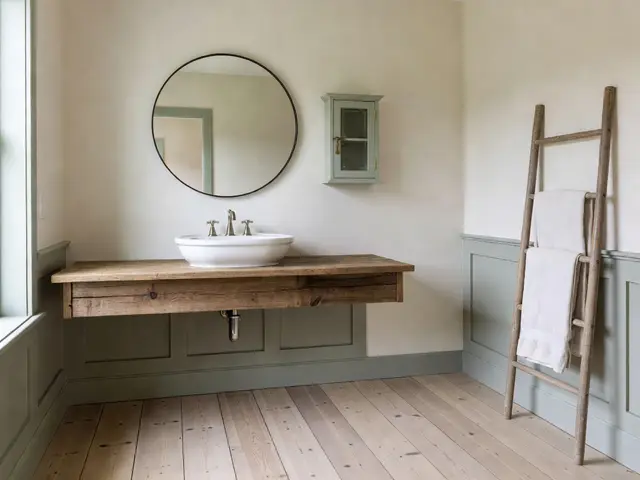
This bathroom centers on a floating vanity made from thick reclaimed or distressed wood, supporting a white vessel sink with traditional three-hole faucet hardware. A slim black-framed round mirror hangs directly above. The walls divide into upper ivory plaster and lower sage green wainscoting, while wide-plank pale oak flooring runs throughout. A small wall-mounted cabinet in matching sage and a wooden ladder towel rack complete the simple, uncluttered layout.
Design this look with your photo ↗Your room photo + this reference. Review the studio allowance before generating.
What stands out
- The floating vanity reveals open floor beneath, making the modest footprint feel larger while showcasing the wood grain and handcrafted character of the thick timber countertop.
- Sage green wainscoting wraps the lower walls and continues across cabinetry, grounding the airy ivory upper walls and adding farmhouse color without overwhelming the space.
- A leaning ladder towel rack in natural wood provides practical storage while reinforcing the rustic aesthetic and keeping towels within easy reach beside the tub.
- The vessel sink sits atop the wood counter rather than cutting into it, preserving the timber surface and offering straightforward installation on a floating mount.
Make it work in your space
In a smaller bathroom, reduce the vanity width but maintain the floating installation to preserve floor visibility. Skip the wall cabinet if space is tight and rely solely on the ladder rack for towel storage. For budget savings, use new pine or poplar stained to mimic reclaimed wood rather than salvaged timber. Standard drop-in sinks cost less than vessel styles and still pair well with wood counters. Paint existing lower walls instead of installing new paneling.
Check wall support and plumbing positions before selecting a wall-mounted vanity.
Materials and finishes
- Reclaimed wood countertop
- Look for thick planks with visible knots, grain variation, and natural imperfections. A matte or low-sheen finish protects the surface while preserving the raw, weathered appearance.
- Painted tongue-and-groove paneling
- Choose real wood boards rather than composite for authentic texture. Soft green or gray tones work best when applied in a matte or eggshell finish.
- Wide-plank pale oak flooring
- Select boards at least six inches wide with visible knots and color variation. A light stain or natural finish keeps the room feeling open and casual.
- Black metal mirror frame
- Thin metal frames in matte black or oil-rubbed bronze add definition without heaviness. Round shapes soften the angular lines of vanities and cabinetry.
- White vessel sink
- Porcelain or vitreous china provide durability and traditional farmhouse appeal. Choose a rounded basin shape that sits comfortably on the wood without requiring undermount cutting.
More Farmhouse Bathroom Ideas
Your questions, answered
How do you secure a floating wood vanity to support a sink and countertop weight?
Mount a heavy-duty wall cleat or steel bracket directly into wall studs, typically using lag bolts rated for several hundred pounds. The vanity cabinet or countertop then attaches to this hidden framework. For solid wood slabs, a steel angle bracket spanning at least two studs provides adequate support for the combined weight of the timber, sink, and water use. Confirm your wall construction can handle the load before installation.
How do I try this look in my own space?
Choose Design this look and upload your own photo in the studio. This concept is loaded separately as a reference, and its design direction is included in the editable brief. Review your options before generating.
Can I buy the exact furniture and materials shown?
This is an AI-generated concept, not a catalog of real products. Use the image to compare shapes, colors, and materials, then verify dimensions and finishes with actual suppliers.