A direction for your next space
Luxury Bathroom with Floating Vanity
About this design
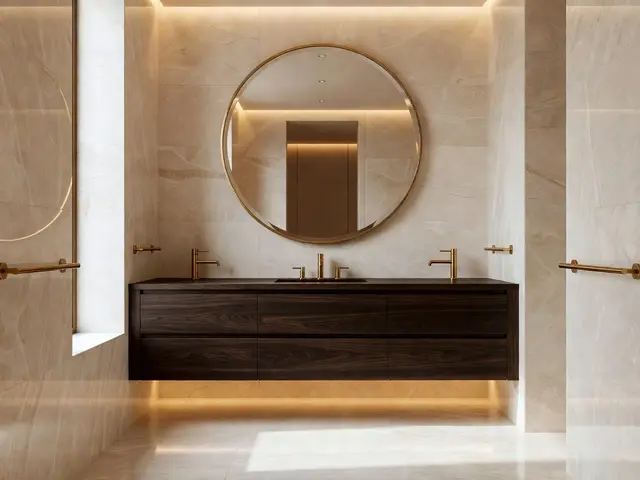
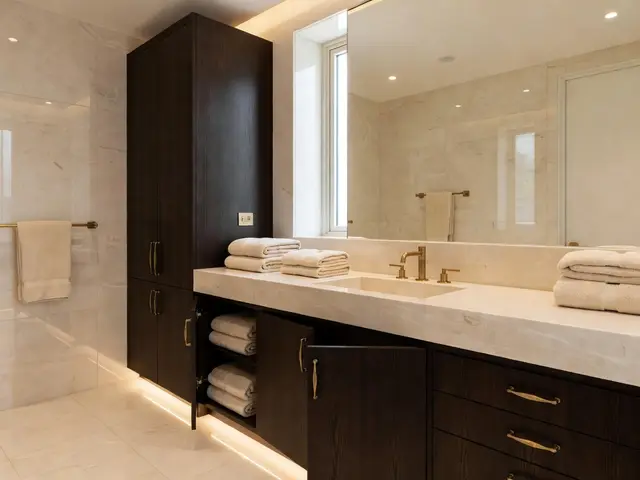
This bathroom centers on a wall-mounted double vanity in dark espresso wood, paired with a large circular mirror framed in brushed brass. Warm-toned stone tiles with subtle veining cover the walls, creating a continuous envelope that extends from floor to ceiling. Recessed lighting runs along the top of the walls and beneath the floating vanity, casting soft amber light across polished surfaces. Glass shower enclosures flank the vanity on both sides, fitted with horizontal brass grab bars that echo the warm metal finish.
Design this look with your photo ↗Your room photo + this reference. Review the studio allowance before generating.
What stands out
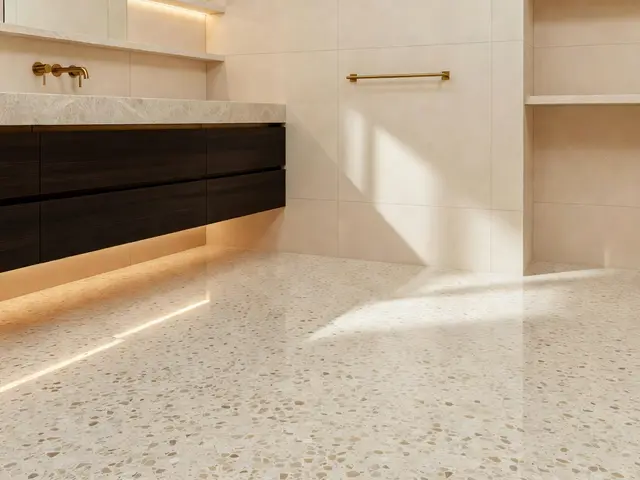
- The floating vanity hovers several inches above the floor with integrated lighting beneath, visually expanding the room while creating a signature glow that emphasizes the luxury aesthetic.
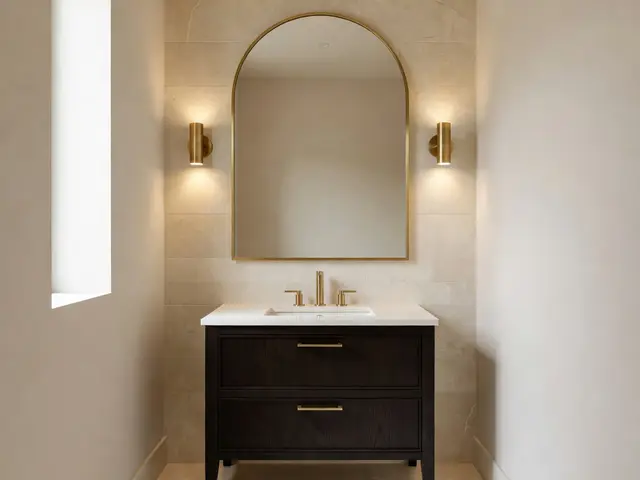
- Brushed brass faucets mounted directly to the wall eliminate deck clutter and align with the minimalist design, their warm metal finish coordinating with the mirror frame and shower hardware.
- Large-format stone tiles with cream and beige veining minimize grout lines and create visual continuity, while their polished finish reflects the layered lighting throughout the space.
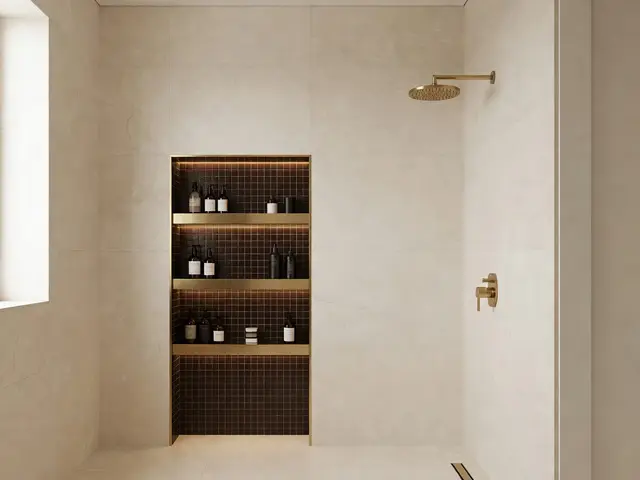
- Recessed cove lighting runs horizontally along the wall perimeter and within a shallow niche behind the mirror, providing ambient illumination without visible fixtures or harsh shadows.
Make it work in your space
Keep the floating vanity and under-cabinet lighting, which create the signature look without requiring extensive square footage. In smaller bathrooms, use a single sink rather than double basins, and reduce the vanity width to 48 or 60 inches. Replace full stone walls with large-format porcelain tiles that mimic natural stone at lower cost. Skip the cove lighting around the entire perimeter and focus LED strips only beneath the vanity and behind the mirror for impact where it matters most.
Check wall support and plumbing positions before selecting a wall-mounted vanity.
Materials and finishes
- Dark stained wood veneer
- Look for consistent grain patterns and durable finishes that resist moisture damage. Consider engineered wood products designed specifically for bathroom humidity levels.
- Polished stone tile
- Select tiles with minimal variation if you want a calm backdrop, or choose book-matched slabs for dramatic veining. Verify slip resistance ratings for floor applications.
- Brushed brass faucets
- Choose finishes labeled as PVD or living finish for durability. Brushed surfaces hide water spots better than polished versions and suit contemporary settings.
- Frameless glass enclosures
- Specify tempered glass with at least three-eighths inch thickness for stability. Clear glass requires frequent cleaning but maintains the open sightlines shown here.
- LED strip lighting
- Select warm white temperatures around 2700-3000K for flattering skin tones. Dimmable drivers allow you to adjust intensity for different times of day.
More Luxury Bathroom Ideas
Your questions, answered
How much clearance do you need under a floating bathroom vanity?
Most floating vanities sit 6 to 12 inches above the finished floor. Eight to ten inches works well for hiding LED strips while maintaining proportions that look intentional rather than awkward. Ensure the mounting system can support the vanity weight plus countertop, sinks, and typical use. Anchor into solid blocking installed between wall studs during framing, or use heavy-duty toggle bolts rated for the total load in existing construction.
How do I try this look in my own space?
Choose Design this look and upload your own photo in the studio. This concept is loaded separately as a reference, and its design direction is included in the editable brief. Review your options before generating.
Can I buy the exact furniture and materials shown?
This is an AI-generated concept, not a catalog of real products. Use the image to compare shapes, colors, and materials, then verify dimensions and finishes with actual suppliers.