A direction for your next space
Luxury Bedroom with Textured Accent Wall
About this design
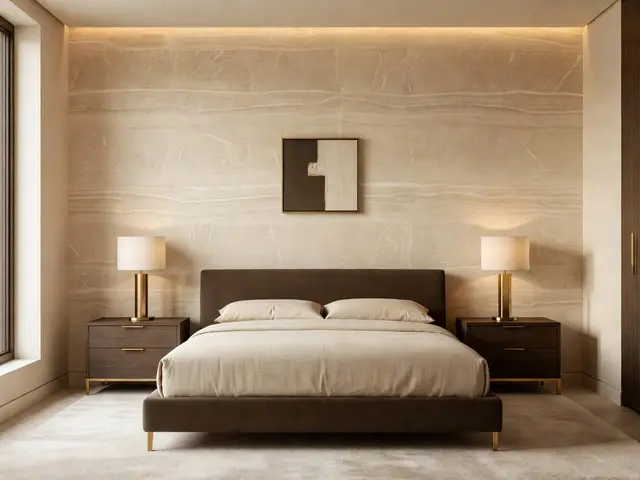
This bedroom centers on a single feature wall clad in horizontal stone slabs with soft veining in cream and beige tones. A dark brown upholstered bed with low brass legs sits against this backdrop, flanked by matching nightstands in the same espresso finish. Recessed lighting runs along the ceiling perimeter, creating a warm glow that highlights the stone texture. White table lamps with cylindrical brass bases provide task lighting. A geometric abstract artwork in dark and light tones hangs above the bed.
Design this look with your photo ↗Your room photo + this reference. Review the studio allowance before generating.
What stands out
- The horizontal stone slabs show subtle linear veining that catches light differently throughout the day, adding depth without pattern repetition or visual clutter.
- Brushed brass legs on the platform bed and lamp bases introduce warm metal accents that bridge the gap between the dark furniture and pale stone wall.
- The recessed cove lighting creates an indirect wash across the textured wall surface, emphasizing the stone grain while avoiding harsh shadows or glare.
- Espresso nightstands with horizontal drawer pulls maintain clean lines and ample surface space for bedside essentials while visually grounding the lighter wall treatment.
Make it work in your space
Focus the budget on the feature wall behind the bed rather than treating all four walls. Skip the stone and use specialty plaster with horizontal trowel marks for similar texture at lower cost. Choose a simple upholstered headboard instead of a full platform bed frame. Replace built-in cove lighting with plug-in LED strips mounted behind a narrow crown molding. In smaller rooms, stop the feature wall treatment at the edges of the bed rather than extending it wall to wall, which preserves the focal point while reducing material costs.
View a large texture sample under your actual bedside lighting before covering the wall.
Materials and finishes
- Horizontal stone slab cladding
- Select large-format slabs with consistent but not identical veining. The horizontal orientation emphasizes room width and requires careful planning for electrical outlets and switch placement.
- Upholstered platform bed frame
- Look for tight upholstery without tufting or pleating. Darker fabrics hide wear better in high-contact areas, and removable covers simplify maintenance over the years.
- Brushed brass metal legs
- Choose finishes with a matte or satin sheen rather than high polish. Brushed brass develops a living patina over time that adds character without appearing tarnished.
- Wood veneer nightstands
- Ensure the grain direction and color match across all furniture pieces. Veneer quality varies widely, so check edge banding and drawer construction before purchasing.
- Recessed cove lighting
- This requires ceiling depth for installation and works best with LED strips on dimmers. Plan the layout during framing or renovation to accommodate wiring and control placement.
More Luxury Bedroom Ideas
Your questions, answered
How do you clean and maintain a textured stone accent wall in a bedroom?
Dust the surface monthly with a microfiber cloth or soft brush attachment on a vacuum to prevent buildup in the textured grooves. For deeper cleaning, use a barely damp cloth with water only, avoiding acidic or abrasive cleaners that can etch natural stone. Seal the stone annually if it is porous marble or limestone to prevent staining from accidental splashes or hand contact near light switches.
How do I try this look in my own space?
Choose Design this look and upload your own photo in the studio. This concept is loaded separately as a reference, and its design direction is included in the editable brief. Review your options before generating.
Can I buy the exact furniture and materials shown?
This is an AI-generated concept, not a catalog of real products. Use the image to compare shapes, colors, and materials, then verify dimensions and finishes with actual suppliers.