A direction for your next space
Luxury Exterior with Covered Entry
About this design
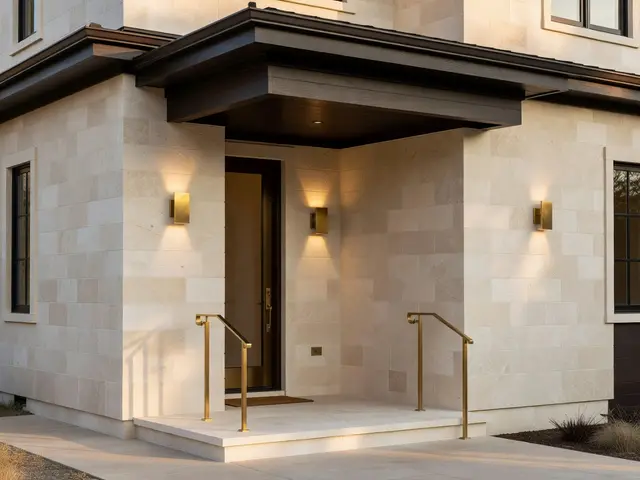
This covered entry creates a sheltered transition zone defined by a deep, flat-roofed overhang finished in dark espresso. The facade is clad in large-format cream-colored stone panels with subtle veining and variation. A single dark brown door is flanked by three wall sconces that cast upward and downward light across the stone. Two brushed brass handrails frame the low entry steps, while recessed lighting beneath the overhang adds layered illumination at the threshold.
Design this look with your photo ↗Your room photo + this reference. Review the studio allowance before generating.
What stands out
- The deep overhang extends far beyond the door, creating genuine weather protection while its dark underside and integrated lighting add architectural weight and warmth to the entrance zone.
- Large-format cream stone panels with natural veining cover the facade in a running bond pattern, offering texture and depth without visual clutter or excessive grout lines.
- Brushed brass handrails provide a refined metallic accent that catches light and contrasts against both the pale stone and dark architectural trim throughout the entry.
- Three identical wall sconces distribute light evenly across the facade, their dual-direction glow highlighting the stone texture while illuminating the approach after dark.
Make it work in your space
For a smaller entry, reduce the overhang depth but maintain the dark underside and integrated lighting to preserve the sheltered feeling. Swap large-format stone for standard-size panels or stucco in a similar warm cream tone. Use a singlecentered sconce instead of three if the wall area is limited. Replace brass railings with powder-coated metal in a brass-like finish for a lower-maintenance option. Keep the layered lighting approach with at least one sconce and overhead recessed light to achieve similar warmth and depth.
Confirm roof drainage and structural support before extending an entry cover.
Materials and finishes
- Large-format stone panels
- Look for panels with subtle veining rather than heavy patterns. Larger formats mean fewer grout lines and a cleaner appearance. Consider honed or matte finishes to avoid glare.
- Flat-roof overhang structure
- The underside needs a finished ceiling material that can handle weather exposure. Dark staining or paint adds drama and makes the overhang feel substantial and grounded.
- Brushed brass railings
- Choose a finish with visible brushing or satin texture rather than high polish. Outdoor-rated brass will develop patina unless sealed, so decide whether you want that aging effect.
- Dual-directional wall sconces
- Select fixtures that cast light both up and down to highlight wall texture. Ensure the housing is rated for exterior use and sized proportionally to your wall area.
- Espresso-stained or painted trim
- This dark finish requires regular maintenance outdoors. Use exterior-grade stain or paint with UV resistance to prevent fading, and check annually for chipping or wear.
More Luxury Exterior Ideas

Your questions, answered
How far should a covered entry overhang extend from the front door?
A functional overhang should extend at least three to four feet beyond the door to protect visitors from rain while they wait. Deeper overhangs, like the one shown here at approximately five feet, offer better weather protection and create a more dramatic architectural statement. Balance the depth with your home's overall proportions so the overhang does not overwhelm the facade or block natural light from adjacent windows.
How do I try this look in my own space?
Choose Design this look and upload your own photo in the studio. This concept is loaded separately as a reference, and its design direction is included in the editable brief. Review your options before generating.
Can I buy the exact furniture and materials shown?
This is an AI-generated concept, not a catalog of real products. Use the image to compare shapes, colors, and materials, then verify dimensions and finishes with actual suppliers.