A direction for your next space
Scandinavian Exterior with Covered Entry
About this design
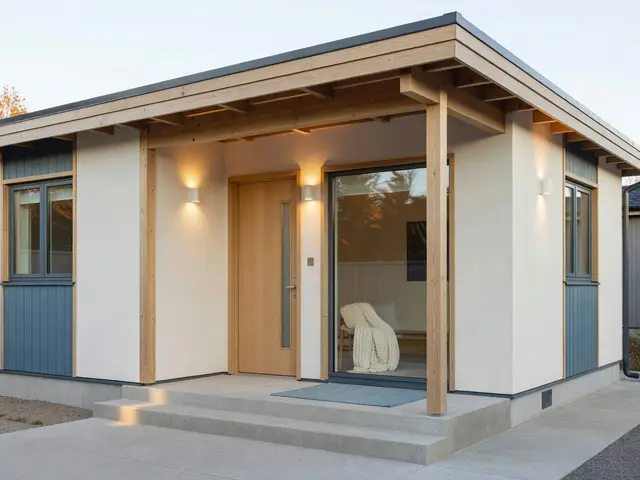
This single-story home features a covered entry that extends outward to create a sheltered transition from outdoors to inside. Light wood framing defines the soffit and supports, while creamy white stucco walls contrast with muted blue-gray lower wall panels. A glass door with minimal wood framing sits centered under the overhang, flanked by wall sconces that cast gentle light upward and downward. Two wide concrete steps lead to the entry platform, and matching blue-trimmed windows on either side maintain the symmetry.
Design this look with your photo ↗Your room photo + this reference. Review the studio allowance before generating.
What stands out
- The deep roof overhang extends beyond the main roofline, creating a protected alcove that keeps rain and snow off the entry while adding architectural depth to an otherwise simple facade.
- Light wood posts and fascia trim bring warmth against the neutral stucco, echoing Scandinavian preferences for blond timber that softens modern lines without adding visual weight.
- Wall-mounted sconces positioned on either side of the door provide both functional lighting and a vertical accent that draws the eye toward the entrance after dark.
- The blue-gray lower wall panels add a subtle color accent that grounds the structure and provides a practical, durable surface where the walls meet the concrete platform.
Make it work in your space
For a smaller entry or tighter budget, reduce the depth of the overhang but keep the wood framing visible to maintain the Scandinavian warmth. Skip one window on each side if space is limited, maintaining symmetry with other exterior details instead. Use painted wood trim instead of natural finish to save on maintenance costs, choosing a soft taupe or greige. Replace the poured concrete platform with large-format pavers in a similar gray tone. Keep the sconces and centered door, as these define the welcoming character of the entry regardless of overall square footage.
Confirm roof drainage and structural support before extending an entry cover.
Materials and finishes
- Light wood fascia and posts
- Choose a stable hardwood or engineered timber with a clear finish that showcases the grain. The wood should resist weathering and accept outdoor sealants without darkening significantly over time.
- Smooth stucco exterior finish
- A fine-textured stucco in warm white or cream provides a clean backdrop for trim details. Look for acrylic or polymer-modified stucco that resists cracking and sheds water effectively in freeze-thaw climates.
- Blue-gray painted lower panels
- Select a muted blue-gray in a satin or semi-gloss exterior paint for easy cleaning. The color should complement rather than compete with the natural wood and neutral upper walls.
- Poured concrete steps and platform
- Smooth-troweled concrete with a light broom finish prevents slipping while maintaining a refined appearance. Consider integral color or sealers that enhance durability without adding texture.
- Metal standing seam roofing
- Dark gray or charcoal metal roofing offers longevity and a crisp edge detail. Look for concealed fastener systems that create clean lines and minimize maintenance over decades.
More Scandinavian Exterior Ideas
Your questions, answered
How deep should a covered entry overhang be for weather protection?
An overhang extending 24 to 36 inches beyond the door provides adequate protection from rain and snow while you unlock the door or greet visitors. Deeper overhangs of 48 inches or more, like the one shown here, offer better shelter and create a true outdoor room feeling. Check local building codes for structural requirements, as longer spans may need additional support posts or engineered beams.
How do I try this look in my own space?
Choose Design this look and upload your own photo in the studio. This concept is loaded separately as a reference, and its design direction is included in the editable brief. Review your options before generating.
Can I buy the exact furniture and materials shown?
This is an AI-generated concept, not a catalog of real products. Use the image to compare shapes, colors, and materials, then verify dimensions and finishes with actual suppliers.