A direction for your next space
Contemporary Kitchen with Breakfast Nook
About this design
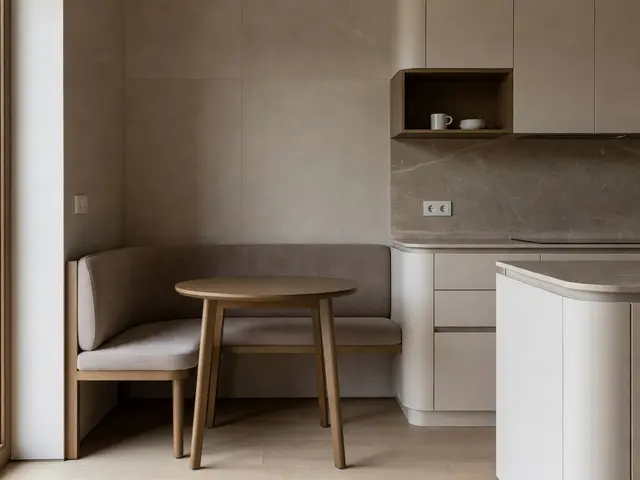
This contemporary kitchen carves out a dedicated eating area with a built-in corner bench and small round table. The upholstered bench seat wraps the corner with taupe cushioning, meeting a natural wood table with simple turned legs. Kitchen cabinetry in warm white extends along the adjacent wall, with handleless drawer fronts and upper cabinets in a matching taupe finish. A textured backsplash in muted gray tones continues the neutral palette, while pale floor tiles ground the entire space.
Design this look with your photo ↗Your room photo + this reference. Review the studio allowance before generating.
What stands out
- The corner bench maximizes seating without requiring a second chair, fitting two people comfortably while keeping the footprint tight and circulation clear around the kitchen workspace.
- Natural wood table legs and top introduce warmth against the cooler taupe and gray surfaces, bringing organic texture into a space dominated by smooth cabinet fronts and wall panels.
- Handleless cabinet drawers maintain the clean contemporary look, with their horizontal reveals creating subtle visual breaks without adding hardware that could interrupt the calm color story.
- An open upper cabinet niche displays a few dishware pieces, breaking up the closed storage while keeping the display minimal and functional rather than decorative.
Make it work in your space
In a smaller kitchen, skip the corner bench and use a single wall-mounted banquette on one side with two small chairs opposite. A drop-leaf table offers flexibility when you need extra floor space. On a budget, replace the upholstered bench with a wooden seat and add separate cushions you can remove for cleaning. Keep the handleless cabinets only on drawers and use simple pulls on doors to save on hardware costs. The neutral palette works in any size space and requires only paint and careful selection of one wood tone.
Allow enough room to slide into the bench without blocking the main aisle.
Materials and finishes
- Taupe upholstered bench cushion
- Choose a performance fabric that resists staining and wipes clean easily, since breakfast seating will see daily spills. A tight weave holds up better than looser textures.
- Light wood table and frame
- Look for oak or ash with a matte or satin finish that hides fingerprints and minor scratches. The grain should be visible but not overly figured.
- Textured gray backsplash panels
- Large format panels reduce grout lines and maintenance. A subtle texture adds depth without overwhelming a small space. Ensure the material is rated for kitchen use.
- Handleless cabinet drawer fronts
- These require push-to-open mechanisms or recessed grip channels along the top edge. Test the mechanism quality, as daily use will reveal any flimsiness quickly.
- Pale neutral floor tiles
- Large format tiles make a compact kitchen feel more open. Choose a matte finish for slip resistance and to hide wear patterns better than polished surfaces.
More Contemporary Kitchen Ideas
Your questions, answered
How deep should a built-in breakfast bench be in a contemporary kitchen?
Plan for sixteen to eighteen inches of seat depth for comfortable dining. This allows enough room to sit without feeling perched, while keeping the bench from protruding too far into the kitchen walkway. Add another four inches if you want a backrest cushion. Measure your kitchen aisle width first, ensuring at least thirty-six inches remains for passage behind pulled-out chairs or the table.
How do I try this look in my own space?
Choose Design this look and upload your own photo in the studio. This concept is loaded separately as a reference, and its design direction is included in the editable brief. Review your options before generating.
Can I buy the exact furniture and materials shown?
This is an AI-generated concept, not a catalog of real products. Use the image to compare shapes, colors, and materials, then verify dimensions and finishes with actual suppliers.