A direction for your next space
Contemporary Living Room with Olive Tree
About this design
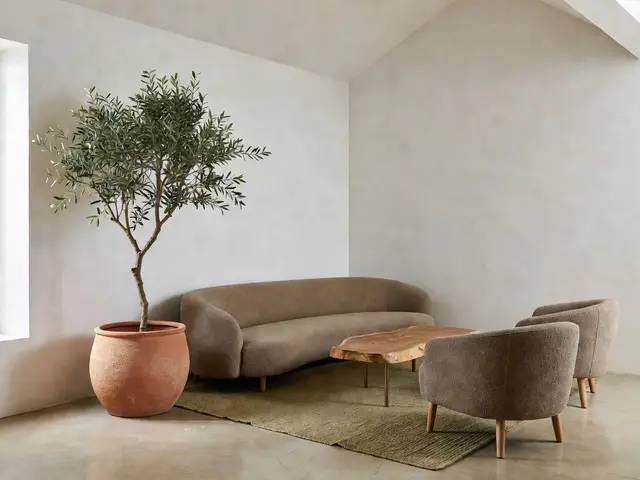
This contemporary living room centers on an indoor olive tree planted in a large terracotta pot. The space features a curved taupe sofa and matching rounded armchairs arranged around a low coffee table with a live-edge wood top and slender metal legs. The floor is polished concrete, and a textured area rug in sage green anchors the seating group. White walls and soft natural light create an airy backdrop for the warm neutral palette and organic shapes.
Design this look with your photo ↗Your room photo + this reference. Review the studio allowance before generating.
What stands out
- The curved sofa and rounded armchairs create a soft, inviting conversation area without harsh angles, reinforcing the contemporary preference for organic forms over traditional boxy furniture.
- The live-edge wood coffee table brings natural texture into the space while its slim metal legs keep the visual weight low, maintaining an open feel in the seating area.
- The large terracotta planter adds warmth and earthy texture that balances the cooler tones of the concrete floor and brings handcrafted character to the minimalist setting.
- The sage green area rug visually connects the olive foliage to the floor plane, grounding the seating arrangement and adding a layer of softness over the hard concrete surface.
Make it work in your space
In a smaller room, use a single curved loveseat or a pair of rounded chairs instead of the full sofa and chair set. Swap the large olive tree for a smaller potted fig or similar plant in a more compact planter. Keep the live-edge coffee table but choose a narrower slab. A smaller area rug can still define the seating zone. On a budget, skip the curved custom sofa and use standard armchairs with rounded backs, or add curved throw pillows to softer seating you already own.
Check the light needs of a real plant before placing it in the darkest corner of the room.
Materials and finishes
- Polished concrete flooring
- Look for a smooth troweled finish with minimal visible aggregate. Sealed concrete should have a subtle sheen that reflects light without appearing glossy or slippery.
- Terracotta planter
- Choose unglazed clay with visible texture and variation in color. Thicker walls provide better insulation for roots and a more substantial presence in large sizes.
- Curved upholstered seating
- Select tightly woven fabrics in neutral tones that hide seams well on rounded forms. The upholstery should be firm enough to hold the curved shape without sagging.
- Live-edge wood tabletop
- Look for stable, dried wood with interesting grain and natural edge contours. The slab should be thick enough to span the width without warping or requiring excessive support.
- Natural fiber area rug
- Choose flat-weave or low-pile construction in muted tones. The rug should be large enough to fit under the front legs of seating pieces to anchor the arrangement.
More Contemporary Living Room Ideas
Your questions, answered
How do you care for an indoor olive tree in a living room?
Place the olive tree near a bright window where it receives at least six hours of direct sunlight daily. Water only when the top two inches of soil feel dry, typically every one to two weeks depending on humidity and temperature. Ensure the planter has drainage holes to prevent root rot. Rotate the tree every few weeks so all sides receive equal light. Indoor olive trees benefit from occasional misting and may need supplemental grow lights in winter months or rooms with limited natural light.
How do I try this look in my own space?
Choose Design this look and upload your own photo in the studio. This concept is loaded separately as a reference, and its design direction is included in the editable brief. Review your options before generating.
Can I buy the exact furniture and materials shown?
This is an AI-generated concept, not a catalog of real products. Use the image to compare shapes, colors, and materials, then verify dimensions and finishes with actual suppliers.