A direction for your next space
Farmhouse Porch with Porch Swing
About this design
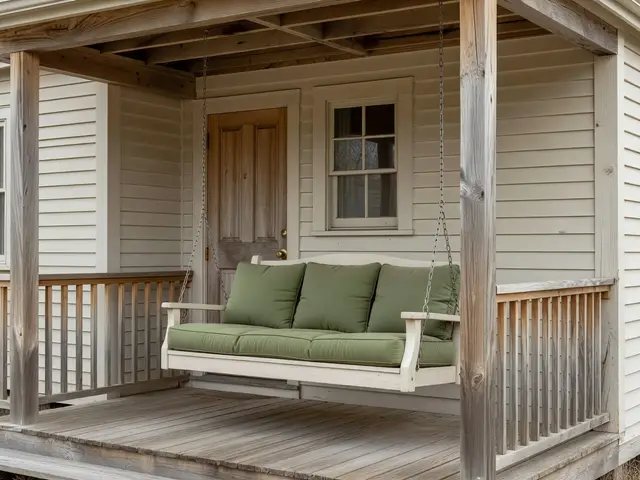
This covered farmhouse porch centers on a hanging swing with a white painted wood frame and three sage green cushions. The ceiling reveals exposed joists and beams in natural wood tones, while the porch floor is laid with wide weathered planks. The home exterior shows horizontal lap siding in a pale cream, and the porch railing uses corrugated metal panels set between simple vertical posts. A six-pane window and paneled door frame the swing, creating a sheltered entry area.
Design this look with your photo ↗Your room photo + this reference. Review the studio allowance before generating.
What stands out
- The corrugated metal railing panels provide a practical, budget-friendly alternative to traditional balusters while adding agricultural character that suits the farmhouse vernacular without overwhelming the simple porch design.
- Exposed ceiling joists and beams in unstained wood give the covered porch an unfinished, structural honesty that recalls rural outbuildings and establishes the relaxed, utilitarian aesthetic central to farmhouse style.
- The porch swing hangs from chains attached directly to the overhead beams, positioning it as a functional seating option that encourages lingering while keeping the floor space open and uncluttered.
- Weathered gray decking contrasts with the white painted swing frame and cream siding, introducing natural patina that suggests age and use without requiring maintenance-intensive finishes or decorative embellishment.
Make it work in your space
If your porch is narrower, hang a single-seat swing or substitute a pair of rocking chairs to preserve the farmhouse seating tradition without crowding the entry. On a budget, skip the corrugated metal railing and use simple square balusters with a painted finish. For a shallower roof overhang, mount the swing closer to the house wall to keep cushions dry. If exposed joists are not feasible, paint the ceiling boards white and add a single contrasting beam as a nod to structural elements.
A qualified installer should verify overhead support and safe swing clearance.
Materials and finishes
- Exposed ceiling joists
- Choose solid dimensional lumber in a species that weathers well if left unstained. Look for straight pieces without excessive knots if you want a cleaner appearance overhead.
- Corrugated metal panels
- Galvanized or painted steel panels work for porch railings. Confirm the panel height meets local code requirements, typically thirty-six inches minimum from the deck surface.
- Weathered wood decking
- Pressure-treated lumber will gray naturally over time, or you can apply a weathering stain to new boards. Ensure proper spacing between planks for drainage and air circulation.
- Painted wood swing frame
- Use exterior-grade paint on solid wood or composite materials rated for outdoor use. Sand and prime bare wood thoroughly to ensure the finish adheres and resists peeling.
- Horizontal lap siding
- Fiber cement or wood siding in a narrow profile creates clean lines. A light neutral color reflects heat and provides a versatile backdrop for porch furnishings and seasonal accents.
More Farmhouse Porch Ideas

Your questions, answered
How do I hang a porch swing from exposed ceiling joists safely?
Locate the ceiling joists with a stud finder or by looking for existing nailheads. Drill pilot holes and install heavy-duty eye bolts or swing hangers directly into the joist centers, not just the surface boards. Use hardware rated for at least 500 pounds per mounting point. If joists run parallel to the swing, install a perpendicular support beam between two joists, then attach the hangers to that crosspiece.
How do I try this look in my own space?
Choose Design this look and upload your own photo in the studio. This concept is loaded separately as a reference, and its design direction is included in the editable brief. Review your options before generating.
Can I buy the exact furniture and materials shown?
This is an AI-generated concept, not a catalog of real products. Use the image to compare shapes, colors, and materials, then verify dimensions and finishes with actual suppliers.