A direction for your next space
Farmhouse Porch with Slatted Screen
About this design
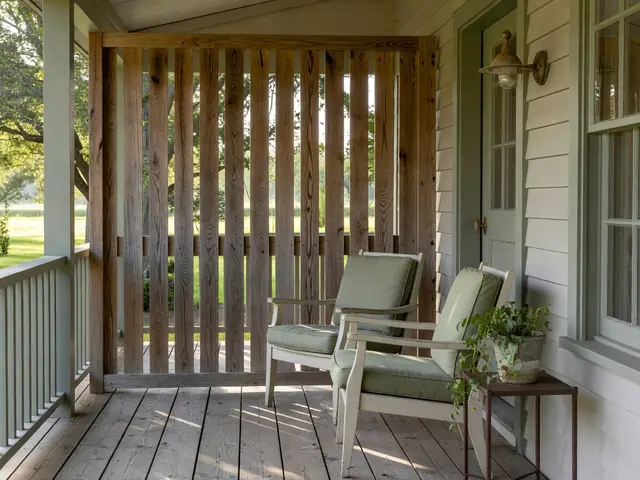
This side porch demonstrates how a simple timber screen can transform an underused outdoor space into a private retreat. Vertical slats in weathered oak allow dappled light and air to filter through while blocking direct sightlines. Two low lounge chairs with sage green cushions flank a small side table holding potted plants. White horizontal siding and painted porch trim frame the composition, while the natural wood floor completes the rustic farmhouse aesthetic.
Design this look with your photo ↗Your room photo + this reference. Review the studio allowance before generating.
What stands out
- The vertical timber screen divides the porch without enclosing it entirely, creating privacy from neighbors while maintaining cross-ventilation and glimpses of the surrounding lawn and trees.
- Cushioned lounge chairs in muted sage green sit low to the porch floor, establishing a relaxed seating area that feels grounded and informal rather than upright and formal.
- A simple side table holds potted greenery and a small arrangement, adding living texture at arm height without requiring built-in planters or complicated installation.
- The natural wood deck boards run parallel to the house wall, visually elongating the narrow porch and emphasizing its side-facing orientation rather than a traditional front-facing layout.
Make it work in your space
For a narrower porch, substitute a single lounge chair or a bench to preserve walking space, and mount the screen at one end rather than centering it. On a tight budget, build the screen from standard fence pickets spaced on a simple two-by-four frame. Skip custom furniture in favor of secondhand wooden chairs painted to match your trim. A single potted fern or herb in a galvanized bucket provides greenery without the cost of multiple planters. Keep the floor natural or use a solid stain rather than paint to reduce maintenance.
Balance privacy with airflow and confirm the screen can resist local wind.
Materials and finishes
- Vertical timber slat screen
- Choose boards with consistent width and spacing. The gaps should be wide enough for airflow but narrow enough for privacy. Natural cedar or pressure-treated lumber weathers gracefully without paint.
- Painted horizontal wood siding
- Select flat or clapboard siding in a soft white or ivory. Look for tight grain and minimal knots. Prime all surfaces before painting to prevent tannin bleed and ensure long-lasting coverage.
- Natural wood porch decking
- Consider five-quarter or standard decking boards in pressure-treated pine, cedar, or composite. Wider planks reduce visual clutter. Plan for proper joist spacing to prevent bounce and warping over time.
- Outdoor cushion fabric
- Pick solution-dyed acrylic or polyester that resists fading and mildew. Muted greens, tans, and grays suit farmhouse style. Look for removable covers with zippers for seasonal cleaning and storage.
- Painted wood porch ceiling
- Traditional porch ceilings use beadboard or tongue-and-groove planks painted in pale blue or white. Ensure proper ventilation above to prevent moisture buildup. Use exterior-grade paint for durability.
More Farmhouse Porch Ideas

Your questions, answered
How far apart should slats be on a porch privacy screen for farmhouse style?
Space slats two to four inches apart for farmhouse porch screens. Narrower gaps offer more privacy and shade but reduce airflow. Wider spacing lets in more light and breeze while still breaking sightlines. Use consistent spacing across the entire panel and secure each slat to horizontal rails top and bottom. Consider your porch orientation and prevailing winds when deciding on gap width for comfort and function.
How do I try this look in my own space?
Choose Design this look and upload your own photo in the studio. This concept is loaded separately as a reference, and its design direction is included in the editable brief. Review your options before generating.
Can I buy the exact furniture and materials shown?
This is an AI-generated concept, not a catalog of real products. Use the image to compare shapes, colors, and materials, then verify dimensions and finishes with actual suppliers.