A direction for your next space
Japandi Bathroom with Double Vanity
About this design
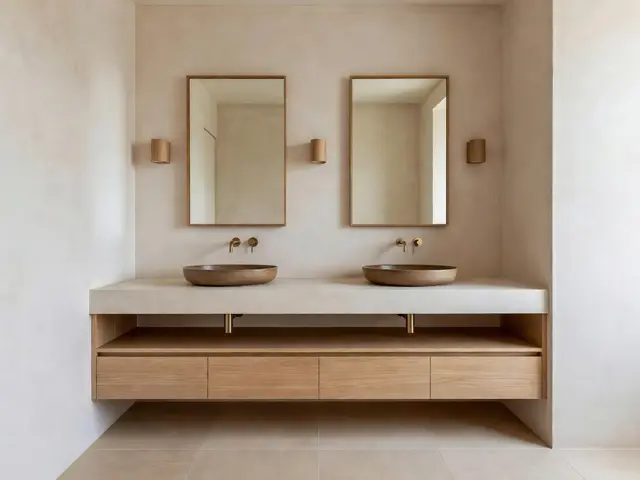
This Japandi bathroom centers on a wall-mounted double vanity that spans the width of a shallow alcove. The vanity features pale wood grain with four flat-front drawers below and an open shelf at mid-height. A thick white countertop supports two bronze vessel sinks with wall-mounted faucets. Rectangular mirrors with slim bronze frames hang above each sink, flanked by cylindrical bronze wall sconces. The walls are white, the floor is large-format beige tile, and the overall palette stays warm and neutral.
Design this look with your photo ↗Your room photo + this reference. Review the studio allowance before generating.
What stands out
- The floating vanity with open mid-shelf reduces visual weight while providing practical storage in the four drawers below, maintaining the clean lines essential to Japandi design.
- Bronze vessel sinks and matching wall-mounted faucets introduce handcrafted metalwork that contrasts gently with the pale wood and white surfaces without creating harsh breaks in color.
- Rectangular mirrors with thin bronze frames echo the vanity proportions and maintain simplicity, while the frame finish ties directly to the plumbing fixtures and sconces.
- Cylindrical wall sconces positioned beside each mirror provide task lighting at face level, and their understated bronze finish reinforces the warm metal accent running through the space.
Make it work in your space
In a smaller bathroom, use a single sink version of this vanity to maintain the floating design and open shelf. Skip the second mirror and sconce but keep the material palette identical. If budget is tight, substitute a wood-look laminate for solid wood and choose ceramic vessel sinks in a matte glaze instead of metal. The key elements to preserve are the wall-mounted vanity, the open shelf for reduced visual weight, and the warm neutral palette. You can mount a single large mirror instead of two framed ones.
Compare the value of two sinks against the storage and counter space they consume.
Materials and finishes
- Pale wood veneer or solid wood
- Look for wood with visible grain that runs horizontally across drawer fronts. A matte or satin finish protects the surface while keeping the natural texture visible and avoiding shine.
- Bronze or aged brass fixtures
- Choose a living finish that darkens over time rather than a coated surface. The metal should feel substantial and the color should have depth, not appear painted on.
- White stone or composite countertop
- Select a material thick enough to cantilever past the vanity body without visible brackets. A honed or matte finish resists water spots better than polished stone in daily use.
- Large-format porcelain floor tile
- Tiles measuring at least eighteen inches reduce grout lines and create a calmer floor plane. Choose a neutral beige or taupe with subtle variation to add warmth underfoot.
- Vessel sink in bronze or ceramic
- The sink should sit shallow on the counter, not tall and bulky. A smooth interior makes cleaning easier, and the exterior finish should coordinate with your faucet choice.
More Japandi Bathroom Ideas
Your questions, answered
How high should a wall-mounted bathroom vanity be installed above the floor?
A wall-mounted vanity typically installs so the countertop sits thirty-two to thirty-six inches above the finished floor, the same height as standard bathroom vanities. With vessel sinks that sit on top of the counter, you may want to lower the vanity slightly, closer to thirty-two inches, so the sink rim does not end up uncomfortably high for shorter household members. Always account for the vessel sink height when determining your final mounting position.
How do I try this look in my own space?
Choose Design this look and upload your own photo in the studio. This concept is loaded separately as a reference, and its design direction is included in the editable brief. Review your options before generating.
Can I buy the exact furniture and materials shown?
This is an AI-generated concept, not a catalog of real products. Use the image to compare shapes, colors, and materials, then verify dimensions and finishes with actual suppliers.