A direction for your next space
Japandi Bedroom with Textured Accent Wall
About this design
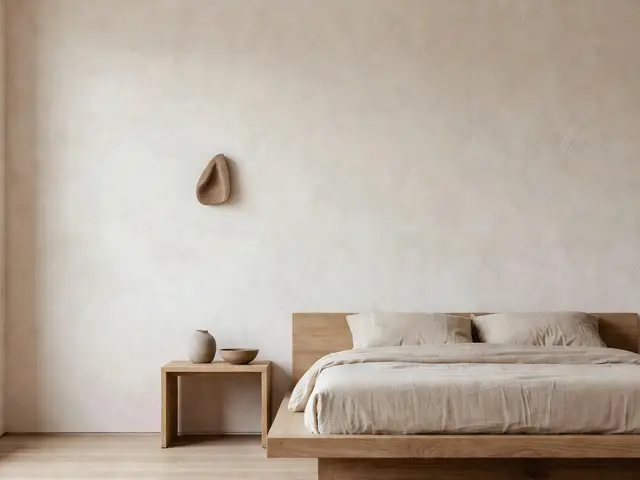
This bedroom pairs a gently textured accent wall in warm sand tones with a low platform bed in light natural wood. The wall's subtle surface variation creates visual interest without disrupting the room's calm. A simple bedside table holds a rounded vase and shallow bowl, both in muted earth tones. Bedding in soft off-white and warm beige layers over the platform frame. A small sculptural wall piece in organic brown adds the only decorative accent. Natural light washes across the surfaces, emphasizing texture over color contrast.
Design this look with your photo ↗Your room photo + this reference. Review the studio allowance before generating.
What stands out
- The textured accent wall uses a sand-colored plaster or lime wash finish that catches light unevenly, creating depth through surface variation rather than pattern or bold color.
- The low platform bed frame in pale wood grain keeps visual weight near the floor, a hallmark of Japanese-inspired design that makes the ceiling feel higher and the room more open.
- Handmade ceramic pieces on the bedside table feature irregular shapes and matte glazes in earthy neutrals, bringing tactile interest without introducing busy patterns or reflective surfaces.
- The single sculptural wall piece, shaped like a smooth stone or shell, anchors the space above the bed without requiring symmetry or additional accessories for balance.
Make it work in your space
In a smaller bedroom, keep the textured accent wall on one side only and use a full-size platform bed instead of queen or king. Skip the bedside table and mount a narrow floating shelf instead. For budget savings, apply textured paint or venetian plaster yourself rather than hiring a specialist. Source simple wood furniture secondhand and refinish it in a light stain. Limit ceramic accessories to one or two pieces from local makers or pottery studios. The sculptural wall art can be replaced with a single dried botanical element.
View a large texture sample under your actual bedside lighting before covering the wall.
Materials and finishes
- Textured plaster or lime wash
- Look for finishes that create subtle surface variation through hand application. The texture should be gentle enough to read as calm, not rough or heavily stippled.
- Light wood platform frame
- Choose wood with visible grain in pale honey or ash tones. Platform construction eliminates the need for a box spring and keeps the bed low to the ground.
- Matte ceramic vessels
- Seek pieces with irregular hand-formed shapes and unglazed or matte-glazed surfaces. Neutral earth tones work better than high-gloss finishes in this aesthetic.
- Natural linen or cotton bedding
- Select fabrics with a relaxed drape and slight texture. Colors should stay within a narrow range of warm neutrals for a cohesive, restful appearance.
- Pale wood or engineered flooring
- Pick flooring in light natural tones that complement rather than match the bed frame. A clean, uniform surface supports the minimal look.
More Japandi Bedroom Ideas
Your questions, answered
How do you create a textured accent wall for a Japandi bedroom?
Apply a textured plaster, lime wash, or specialty paint in a warm neutral like sand or off-white. Work the material with a trowel or sponge in irregular patterns to create subtle surface variation. The goal is gentle texture that catches light without looking busy. You can also use a thick matte paint applied with a roller and then lightly worked with a dry brush. Test your technique on a sample board first to get the right level of texture.
How do I try this look in my own space?
Choose Design this look and upload your own photo in the studio. This concept is loaded separately as a reference, and its design direction is included in the editable brief. Review your options before generating.
Can I buy the exact furniture and materials shown?
This is an AI-generated concept, not a catalog of real products. Use the image to compare shapes, colors, and materials, then verify dimensions and finishes with actual suppliers.