A direction for your next space
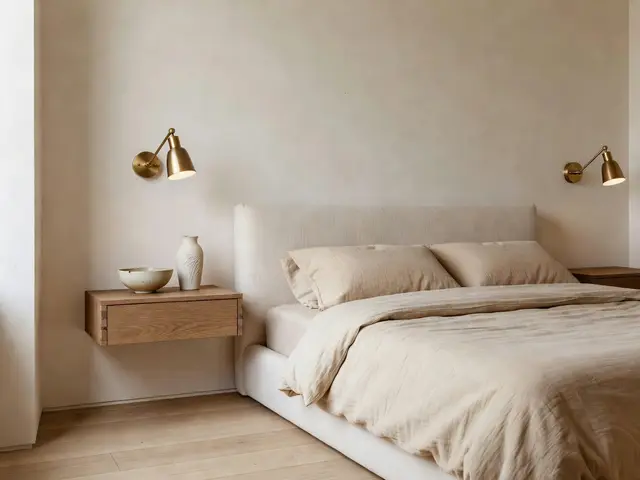
Japandi Bedroom with Wall Sconces
About this design
This bedroom centers on a carefully edited bedside arrangement where adjustable brass wall sconces eliminate the need for table lamps. Floating nightstands in light oak are mounted directly to the wall on each side of an upholstered linen headboard. The palette stays resolutely neutral with warm off-white walls, sand-toned bedding, and pale wood flooring. The minimal approach maximizes floor space while keeping essential surfaces within reach. Natural textures appear in the wood grain, woven linen, and a small ceramic vase on the nightstand.
Design this look with your photo ↗Your room photo + this reference. Review the studio allowance before generating.
What stands out
- Wall-mounted nightstands free up floor space beneath the bed, making the room feel larger and easier to clean while maintaining accessible surfaces for bedside essentials.
- Adjustable brass sconces with cone shades direct light exactly where needed for reading, and their warm metal finish adds subtle warmth against the cool neutral palette.
- The low-profile upholstered headboard in natural linen wraps the bed in soft texture without adding visual bulk, keeping the space feeling open and uncluttered.
- Pale oak flooring with visible grain runs throughout, grounding the room in natural material while reflecting light to brighten the space and emphasize the horizontal lines.
Make it work in your space
If working with a smaller bedroom, mount just one sconce on the primary side of the bed and use a single floating nightstand. In tight budgets, skip custom floating nightstands and install simple wood shelves with concealed brackets. Standard swing-arm lamps mounted to the wall achieve similar function at lower cost. For rental situations, use freestanding narrow nightstands in light wood and add plug-in sconces. The key elements to preserve are the neutral palette, natural materials, and uncluttered surfaces that define the style.
Check reading position and switch reach before deciding where sconces should be mounted.
Materials and finishes
- Floating oak nightstand
- Look for solid wood construction with visible grain and dovetail joinery. The drawer should close smoothly, and mounting hardware must support at least twenty-five pounds when holding books and ceramics.
- Brushed brass wall sconce
- Choose adjustable arm sconces with a matte or lightly brushed finish that will develop patina over time. Verify the shade directs light downward for reading without creating harsh glare.
- Linen upholstered headboard
- Select medium-weight linen in undyed natural tones. The fabric should have visible texture and slight irregularity. Avoid overly stuffed padding; a slim profile maintains the minimal aesthetic.
- Sand-toned linen bedding
- Look for stonewashed or pre-washed linen that feels soft but retains body. Natural, beige, and warm gray tones layer well. The fabric should have a relaxed, lived-in drape rather than crisp stiffness.
- Pale oak flooring
- Wide planks in white oak or light European oak show natural grain variation. A matte or satin finish reduces glare. Lighter stains keep the room feeling airy and complement minimal furnishings.
More Japandi Bedroom Ideas
Your questions, answered
How high should wall sconces be mounted above floating nightstands in a bedroom?
Mount sconces twenty-two to twenty-six inches above the nightstand surface, which typically places them forty to forty-eight inches from the floor depending on your bed height. This positions the light source at a comfortable reading height when sitting up in bed. Adjustable arm sconces offer flexibility if you need to fine-tune the position after installation. Test the reach and light direction before finalizing placement.
How do I try this look in my own space?
Choose Design this look and upload your own photo in the studio. This concept is loaded separately as a reference, and its design direction is included in the editable brief. Review your options before generating.
Can I buy the exact furniture and materials shown?
This is an AI-generated concept, not a catalog of real products. Use the image to compare shapes, colors, and materials, then verify dimensions and finishes with actual suppliers.