A direction for your next space
Japandi Porch with Built-In Bench
About this design
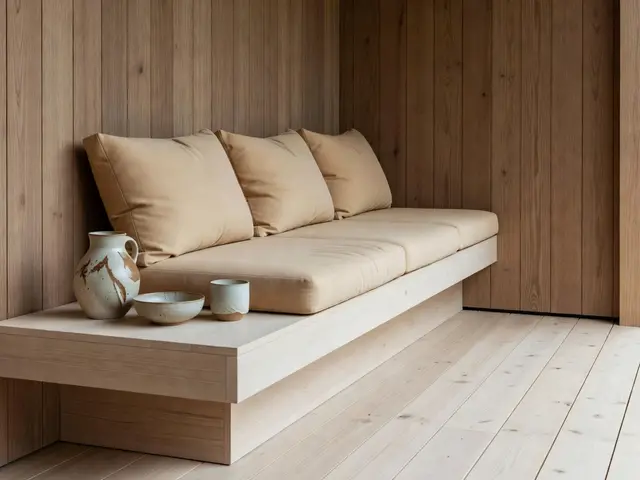
This narrow porch uses vertical wood paneling in warm natural tones to create a calm backdrop for seating. A built-in bench runs along the back wall, topped with sand-colored cushions and three matching pillows. The bench sits on a raised platform that extends forward to form a low table surface. Light wood flooring in wide planks continues the natural palette. The space demonstrates how minimal built-in furniture can maximize seating in a compact footprint.
Design this look with your photo ↗Your room photo + this reference. Review the studio allowance before generating.
What stands out
- The raised platform serves double duty as both bench base and table surface, eliminating the need for separate furniture pieces while maintaining clean lines throughout the narrow space.
- Vertical wood paneling behind the bench creates subtle shadow lines that add depth without pattern or color, keeping the backdrop calm while preventing the space from reading as flat.
- Three loose cushions in identical sand fabric provide comfort without fussy details, and their neutral tone allows the wood grain to remain the primary visual texture in the room.
- A small ceramic collection on the platform table introduces handmade texture and organic form, their irregular shapes and earthy glazes adding warmth without competing with the wood surroundings.
Make it work in your space
In a shorter porch, reduce the bench length and make the platform table narrower or skip it entirely, using small side tables instead. For a tighter budget, skip the built-in platform and use a simple wooden bench with legs, adding store-bought cushions in natural linen or cotton duck. Paint existing wood paneling in a pale warm white if new wood is cost-prohibitive. The key elements to preserve are the neutral palette, natural materials, and uncluttered horizontal lines.
Choose cushion storage and drainage details for your local rain exposure.
Materials and finishes
- Vertical wood paneling
- Look for planks with visible grain and natural color variation. Wider boards read more contemporary, while narrower vertical strips create traditional cottage character.
- Light wood flooring
- Wide plank flooring in pale finishes shows less dirt than darker stains. Consider engineered wood for porches with temperature swings, as it resists warping better than solid boards.
- Built-in bench platform
- The platform should be sturdy enough to support seated weight plus the cantilevered table extension. Use the same wood species throughout for a cohesive look.
- Sand-toned upholstery fabric
- Choose outdoor-rated fabric if the porch is uncovered or gets moisture. Solution-dyed acrylic resists fading and mildew while maintaining a soft hand similar to cotton.
- Handmade ceramic vessels
- Look for pieces with visible throwing marks or irregular edges. Matte glazes in cream, sand, or soft gray complement wood tones without adding visual noise.
More Japandi Porch Ideas
Your questions, answered
What cushion thickness works best for a built-in porch bench?
Four to six inches of foam provides comfortable seating for extended periods. Use high-density foam rated for outdoor use if the porch is exposed to weather. Thinner cushions look sleeker but require more frequent shifting during use. Add a plywood base under the cushions if the built-in platform feels too hard, and consider removable covers in a washable fabric for easy seasonal maintenance.
How do I try this look in my own space?
Choose Design this look and upload your own photo in the studio. This concept is loaded separately as a reference, and its design direction is included in the editable brief. Review your options before generating.
Can I buy the exact furniture and materials shown?
This is an AI-generated concept, not a catalog of real products. Use the image to compare shapes, colors, and materials, then verify dimensions and finishes with actual suppliers.