A direction for your next space
Japandi Porch with Slatted Screen
About this design
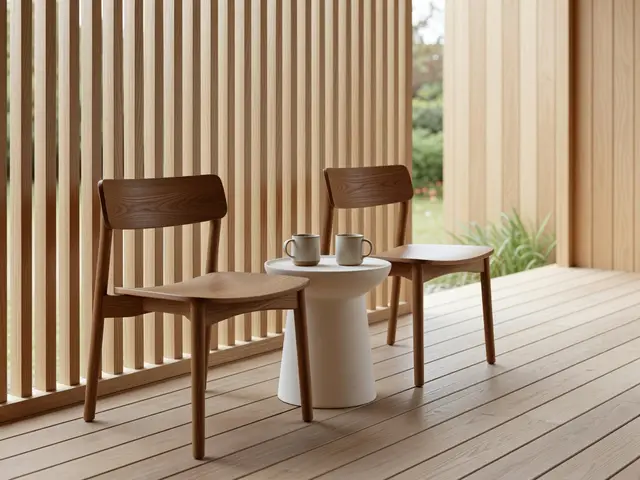
This side-facing porch pairs a floor-to-ceiling slatted screen with two sculptural chairs and a cylindrical side table. The screen alternates narrow walnut-toned slats with wider natural wood slats, creating rhythm and filtered privacy. Pale timber decking runs the length of the space, while a matching vertical-slatted panel frames the open side. Two ceramic cups rest on the white cylindrical table between chairs with gently curved backs. Soft daylight enters from the open side, revealing greenery outside.
Design this look with your photo ↗Your room photo + this reference. Review the studio allowance before generating.
What stands out
- The alternating slatted screen uses two wood tones in varying widths, establishing vertical rhythm while maintaining partial transparency to surrounding landscape without creating a solid barrier.
- Sculptural side chairs with curved backs and tapered legs sit low to the ground, their warm walnut finish echoing the darker screen slats and grounding the seating arrangement.
- A white cylindrical side table provides contrast against honey-toned decking, its smooth plaster-like surface and simple geometry balancing the linear wood elements throughout the porch.
- Pale timber decking with visible grain and narrow spacing creates a cohesive floor plane that lightens the space and complements both the natural and darker wood tones above.
Make it work in your space
For a smaller porch, reduce the slatted screen to a single accent wall rather than wrapping two sides. Use one chair instead of two, paired with the cylindrical table as a landing spot. Skip custom slat construction and substitute prefabricated wood panels or even outdoor fabric on a simple frame. Keep the pale decking if possible, as it expands visual space. On a budget, paint standard lumber in two tones to mimic the alternating slat effect, and source a simple concrete planter as a side table.
Balance privacy with airflow and confirm the screen can resist local wind.
Materials and finishes
- Vertical wood slats
- Look for slats with consistent spacing and two complementary tones. Ensure they are exterior-rated and consider how much transparency versus privacy you need based on slat width and gap size.
- Pale timber decking
- Choose decking with tight grain and minimal knots for a refined look. Ensure boards are suitable for outdoor exposure and consider how the finish will weather in your climate.
- Walnut-tone wood furniture
- Select chairs and accents with visible grain that will develop patina outdoors. Check joinery quality and whether the finish is suitable for covered porch conditions with temperature fluctuations.
- Matte ceramic or stoneware
- Pick pieces with a smooth, unglazed or matte glazed surface that reads tactile. Ensure cups and vessels are frost-resistant if your porch experiences freezing temperatures.
- Cylindrical plaster or concrete table
- Look for a smooth finish without visible seams. Confirm the material is sealed for outdoor moisture and that the base diameter provides stability on decking without tipping.
More Japandi Porch Ideas


Your questions, answered
How do you weatherproof a wood slatted screen on a porch?
Apply exterior-grade stain or sealant to all slat surfaces before installation, paying attention to end grain which absorbs moisture fastest. Use stainless steel or coated fasteners to prevent rust stains. Ensure the screen has adequate roof overhang to minimize direct rain exposure. Reapply finish every two to three years depending on your climate. For maximum durability, choose naturally rot-resistant species or composite slats designed for vertical exterior applications.
How do I try this look in my own space?
Choose Design this look and upload your own photo in the studio. This concept is loaded separately as a reference, and its design direction is included in the editable brief. Review your options before generating.
Can I buy the exact furniture and materials shown?
This is an AI-generated concept, not a catalog of real products. Use the image to compare shapes, colors, and materials, then verify dimensions and finishes with actual suppliers.