A direction for your next space
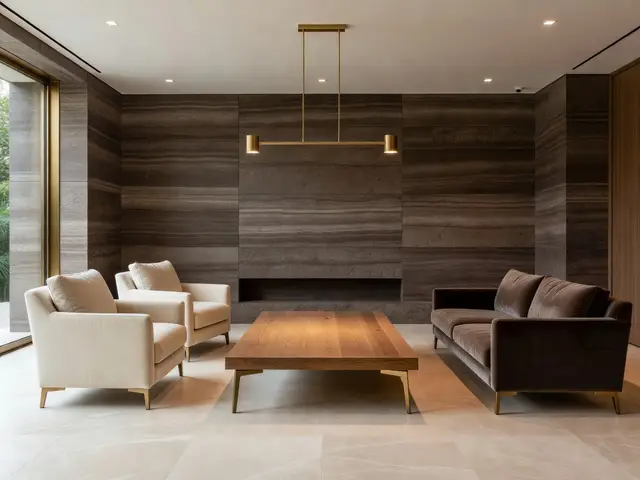
Luxury Living Room with Oak Coffee Table
About this design
This living room arranges seating around a low walnut coffee table with angled legs. Two cream armchairs with light wood frames face a charcoal sofa, creating an intimate conversation area. The feature wall behind displays horizontal wood planks in alternating tones of espresso, taupe, and walnut, installed in a staggered pattern. A linear brass chandelier with downlights hangs centered above the table. Pale wide-plank flooring and recessed ceiling lights add ambient warmth throughout the space.
Design this look with your photo ↗Your room photo + this reference. Review the studio allowance before generating.
What stands out
- The horizontal wood plank wall uses boards of varying widths and tones, creating subtle stripes that add depth without overwhelming the refined palette of the room.
- The walnut coffee table sits on splayed legs that angle outward, a mid-century detail that balances the table's substantial top and keeps sightlines open across the seating area.
- The linear brass chandelier features two adjustable downlights on vertical rods, directing focused light onto the coffee table while the horizontal bar anchors the composition overhead.
- Floor-to-ceiling glass on the left wall brings in natural light that shifts across the wood grain throughout the day, highlighting the textural variety in the planked wall treatment.
Make it work in your space
Start with the wood accent wall but limit it to one surface rather than wrapping multiple walls. Use fewer plank varieties or paint some boards in coordinating tones to reduce material costs. A smaller coffee table with similar angled legs provides the same silhouette at less expense. Replace the custom brass fixture with a simpler pendant in warm metal. Keep the conversation seating layout but use a loveseat instead of a full sofa, and one accent chair instead of two, to suit tighter dimensions.
Size the table around reach from each seat and leave a comfortable path around the grouping.
Materials and finishes
- Horizontal wood wall planks
- Look for planks with consistent milling but varying grain patterns and natural color shifts. The installation pattern matters as much as the wood itself for creating visual rhythm.
- Walnut wood table top
- Choose walnut with visible grain variation and warm undertones. A matte or low-sheen finish shows the wood character better than high gloss in residential settings.
- Brushed brass metal fixtures
- Brushed or satin finishes on brass avoid the high shine of polished metal while still reflecting light. They develop a subtle patina over time that suits luxury interiors.
- Pale wide-plank flooring
- Wide planks in light tones make rooms feel more expansive. Look for consistent color with subtle grain so the floor recedes and lets furniture and walls take focus.
- Upholstery fabric in neutrals
- Solid neutrals in different textures work better than patterns in tailored spaces. Choose tightly woven fabrics with a slight nap for durability and a refined hand.
More Luxury Living Room Ideas
Your questions, answered
How do you install horizontal wood planks on a living room wall?
Planks can attach directly to drywall with construction adhesive and finish nails if the wall is flat, or over furring strips for uneven surfaces. Start from the bottom and work up, varying plank lengths to create a staggered pattern. Leave slight gaps between boards for wood movement, and finish cut edges with stain to match. Consider prefinishing planks before installation to avoid touch-up work on the wall.
How do I try this look in my own space?
Choose Design this look and upload your own photo in the studio. This concept is loaded separately as a reference, and its design direction is included in the editable brief. Review your options before generating.
Can I buy the exact furniture and materials shown?
This is an AI-generated concept, not a catalog of real products. Use the image to compare shapes, colors, and materials, then verify dimensions and finishes with actual suppliers.