A direction for your next space
Mid-Century Modern Bedroom with Dressing Corner
About this design
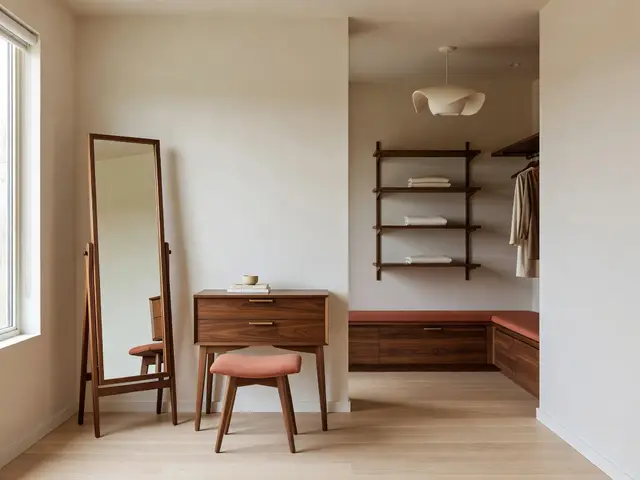
This bedroom carves out a dedicated dressing area using three coordinated pieces: a tall freestanding mirror in a walnut frame, a low dresser with a single drawer, and a round upholstered stool. The furniture sits on pale wood flooring against white walls, with natural light entering from a window on the left. An adjacent alcove holds wall-mounted shelving in matching walnut and a built-in bench upholstered in muted terracotta, with hanging storage above. The palette stays neutral, letting the wood grain and sculptural pendant light provide visual interest.
Design this look with your photo ↗Your room photo + this reference. Review the studio allowance before generating.
What stands out
- The freestanding mirror tilts on an A-frame base, allowing angle adjustment for full-length viewing while keeping the footprint compact and the design visually light.
- Walnut furniture with tapered legs and horizontal grain patterns anchors the mid-century aesthetic without overwhelming the small dressing zone or competing with the adjacent closet alcove.
- The upholstered stool in terracotta linen introduces soft color and texture at seated height, balancing the hard surfaces and warm wood tones throughout the space.
- Wall-mounted shelving in the alcove keeps folded items visible and accessible while the open design maintains sightlines and prevents the recessed area from feeling closed off.
Make it work in your space
In a smaller bedroom, skip the separate stool and use the built-in bench for seating at the dresser. Mount the mirror directly on the wall instead of using a floor stand to reclaim floor space. If budget is tight, start with the mirror and one multifunctional piece like a narrow console that provides both drawer storage and a surface for getting ready. Add the alcove shelving later using standard brackets and stained lumber. The terracotta accent can come from a single cushion rather than custom upholstery.
Allow room to open drawers fully and stand back from the mirror.
Materials and finishes
- Walnut veneer or solid walnut
- Look for consistent grain direction and warm brown tones without excessive red or yellow cast. Veneer over stable substrates resists warping and costs less than solid construction.
- Pale oak or maple flooring
- Choose wide planks in a matte or low-sheen finish to keep the floor receding visually. Light wood grounds dark furniture without adding contrast that fragments small rooms.
- Terracotta upholstery linen
- Natural linen in muted clay tones softens with age and hides minor wear better than synthetic weaves. Test fabric samples against your wood finishes before committing to yardage.
- White matte wall paint
- Flat or eggshell sheens diffuse light without glare and make wood tones appear richer. Pure white rather than warm white keeps the palette crisp in rooms with limited natural light.
- Brushed brass or bronze hardware
- Drawer pulls in warm metal finishes complement walnut better than chrome or nickel. Keep profiles slim and horizontal to echo mid-century proportions and maintain clean lines.
More Mid-Century Modern Bedroom Ideas
Your questions, answered
How do you position a freestanding mirror in a bedroom dressing area?
Place the mirror where natural light hits it from the side rather than directly behind you, which creates shadows on your face. Leave at least two feet of clear floor space in front so you can step back to see full outfits. Position it near your dresser or closet so you can view clothing options without walking across the room. Angle the mirror slightly if the frame allows to reduce glare from windows or overhead fixtures.
How do I try this look in my own space?
Choose Design this look and upload your own photo in the studio. This concept is loaded separately as a reference, and its design direction is included in the editable brief. Review your options before generating.
Can I buy the exact furniture and materials shown?
This is an AI-generated concept, not a catalog of real products. Use the image to compare shapes, colors, and materials, then verify dimensions and finishes with actual suppliers.