A direction for your next space
Mid-Century Modern Bedroom with Upholstered Headboard
About this design
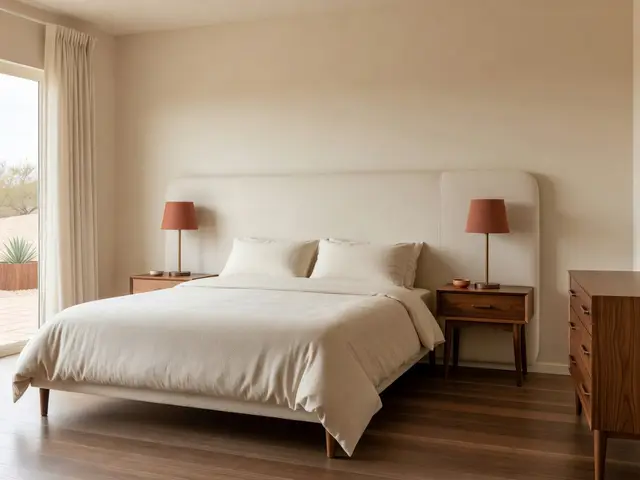
This bedroom centers on a tall, cream-upholstered headboard that extends well above the pillows, creating a soft vertical focal point against pale walls. The bed is dressed in white and beige linens with layered pillows in cream and tan. Flanking the bed are matching walnut nightstands with single drawers and open lower shelves. Coral-toned table lamps with tapered bases sit on each nightstand. Medium-toned wood flooring runs throughout, and natural light enters from a window with sheer curtains on the left. A walnut dresser stands along the right wall.
Design this look with your photo ↗Your room photo + this reference. Review the studio allowance before generating.
What stands out
- The cream upholstered headboard reaches high on the wall, offering a soft, neutral backdrop that balances the warm wood tones without overwhelming the room's minimalist palette.
- Coral table lamps on slender bases add a muted terracotta accent, repeating the mid-century preference for sculptural forms and providing warm task lighting at each bedside.
- Walnut nightstands with open lower shelves combine function and form, offering storage while their tapered legs and horizontal grain maintain the period's signature furniture silhouette.
- Layered neutral bedding in white and beige tones creates texture without pattern, letting the architecture of the headboard and furniture profiles define the visual interest.
Make it work in your space
In a smaller bedroom, use a headboard that stops closer to standard height to avoid overpowering the space, and choose single-drawer floating nightstands to preserve floor area. If budget is tight, a DIY upholstered headboard using plywood, foam, and fabric yields similar results. Skip the matching dresser and rely on under-bed storage or a single narrow chest. Keep one lamp instead of two if nightstands must be asymmetrical, and source secondhand walnut pieces rather than new to maintain the wood tones affordably.
Check the height of the headboard against windows and outlets before ordering.
Materials and finishes
- Upholstered linen or cotton
- Choose a tightly woven natural fabric in cream or off-white. Look for a matte finish that resists pilling and has enough body to maintain clean, tailored lines on a tall headboard.
- Walnut veneer or solid walnut
- Seek out medium-brown walnut with visible grain and warm undertones. The wood should have a satin or matte finish rather than high gloss to align with mid-century authenticity.
- Coral ceramic lamp base
- Select a matte or semi-gloss ceramic finish in terracotta or coral tones. The base should have a sculptural, tapered profile that feels substantial without appearing heavy.
- White cotton or linen bedding
- Opt for natural fibers with a soft hand and subtle texture. Avoid overly crisp sheeting; the fabric should drape gently and soften the structured furniture around it.
- Medium-toned wood flooring
- Look for planks in oak or similar hardwood with warm brown tones and natural grain variation. A matte or low-sheen finish keeps the floor grounded and understated.
More Mid-Century Modern Bedroom Ideas
Your questions, answered
What height should an upholstered headboard be in a mid-century modern bedroom?
A mid-century modern upholstered headboard typically extends 48 to 60 inches from the floor, sitting well above the mattress top. This tall proportion creates a vertical anchor and balances low-profile furniture. In rooms with standard eight-foot ceilings, aim for the lower end of that range. Measure from the floor, not the mattress, to ensure the headboard remains proportional even if you change bedding thickness.
How do I try this look in my own space?
Choose Design this look and upload your own photo in the studio. This concept is loaded separately as a reference, and its design direction is included in the editable brief. Review your options before generating.
Can I buy the exact furniture and materials shown?
This is an AI-generated concept, not a catalog of real products. Use the image to compare shapes, colors, and materials, then verify dimensions and finishes with actual suppliers.