A direction for your next space
Mid-Century Modern Exterior with Native Planting
About this design
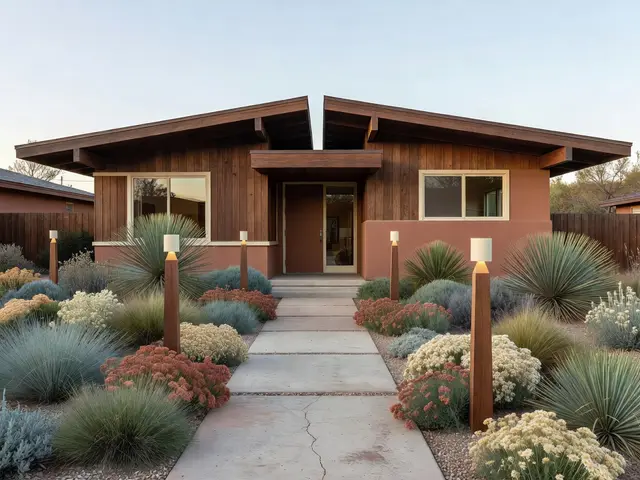
This single-story home presents classic mid-century modern architecture with its low-pitched butterfly roofline and clean geometric lines. Horizontal wood siding in dark walnut tones clads the upper facade, while muted terracotta stucco wraps the lower portion. Large windows punctuate both materials, and a central entry with glass sidelights anchors the composition. A straight concrete walkway leads to the front door, flanked by layered native plantings in blues, greens, and silvery tones that spill across decomposed granite beds.
Design this look with your photo ↗Your room photo + this reference. Review the studio allowance before generating.
What stands out
- Butterfly roofline sections angle outward from a central valley, creating dynamic shadow lines while maintaining the horizontal emphasis characteristic of mid-century design without adding unnecessary height.
- Wood post fixtures with cube-shaped lights line the walkway at regular intervals, providing functional illumination while their vertical geometry contrasts with the home's strong horizontal massing.
- Drought-tolerant plantings in varied textures create depth through layering: spiky yuccas and agaves anchor corners, while rounded grasses and low flowering groundcovers soften the concrete hardscape.
- Concrete pavers set within decomposed granite establish a purposeful rhythm along the entry path, the material transition adding visual interest while keeping maintenance needs low in arid climates.
Make it work in your space
On smaller lots, condense the planting palette to three or four species rather than the full diversity shown here, which will reduce costs and simplify maintenance while preserving the layered look. Shorten the walkway or use fewer pavers with wider gravel gaps to stretch materials further. Skip the multiple light posts and install just one pair flanking the entry. For tighter budgets, paint existing stucco in terracotta tones and add wood battens over plain siding to mimic the horizontal board effect without full re-cladding.
Choose real plants for your region, sun exposure and mature size, not just their color.
Materials and finishes
- Horizontal wood siding
- Select vertical-grain cedar or similar species that weathers consistently. Look for tight, even spacing between boards and consider pre-stained options to ensure uniform color from installation day forward.
- Terracotta stucco finish
- Choose a smooth or lightly textured application rather than heavy knockdown patterns. Test samples in natural light to find muted earth tones that complement rather than compete with wood elements.
- Concrete walkway pavers
- Specify consistent thickness and smooth finishes for clean lines. Ensure proper sub-base preparation and consider control joints to minimize cracking as the material expands and contracts seasonally.
- Decomposed granite groundcover
- Source stabilized DG that binds without hardening completely. Verify proper depth, typically three to four inches compacted, and install edging to prevent migration into planted areas over time.
- Wood light posts
- Match post material and finish to siding for visual continuity. Confirm posts are pressure-treated or naturally rot-resistant at ground contact, and use concrete footings for stability in softer soils.
More Mid-Century Modern Exterior Ideas
Your questions, answered
What native plants work best for mid-century modern front yard landscaping in dry climates?
Choose architectural specimens with strong forms like yucca, agave, and ornamental grasses that echo the home's clean lines. Add textural contrast with low mounding plants such as blue fescue, lavender, or trailing rosemary. Select species native to your region that thrive without supplemental irrigation once established. Group plants by water needs and use inorganic mulch like gravel to reduce maintenance while reinforcing the modernist aesthetic.
How do I try this look in my own space?
Choose Design this look and upload your own photo in the studio. This concept is loaded separately as a reference, and its design direction is included in the editable brief. Review your options before generating.
Can I buy the exact furniture and materials shown?
This is an AI-generated concept, not a catalog of real products. Use the image to compare shapes, colors, and materials, then verify dimensions and finishes with actual suppliers.