A direction for your next space
Mid-Century Modern Kitchen with Breakfast Nook
About this design
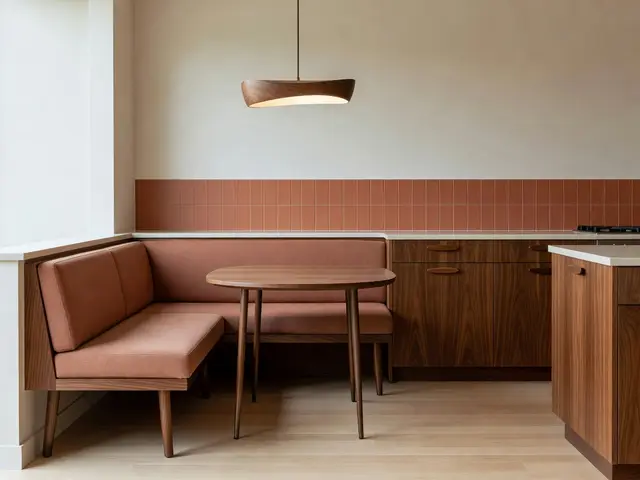
This kitchen breakfast nook tucks a built-in corner banquette into an alcove beside the working kitchen. The L-shaped bench features a solid wood frame with terracotta upholstered seat and back cushions. A round walnut table on tapered legs sits in front, paired with a matching wood chair. Above, a sculptural pendant fixture with a curved wood shade provides focused light. The backsplash uses rectangular terracotta tiles in a running bond pattern, while walnut cabinetry lines the adjacent wall. Pale wood flooring and cream walls keep the space bright.
Design this look with your photo ↗Your room photo + this reference. Review the studio allowance before generating.
What stands out
- The corner banquette maximizes seating in a compact footprint, with wood side panels that echo the cabinetry grain and provide structural support for the upholstered sections.
- Terracotta tiles in a horizontal running bond create visual width along the backsplash, their matte finish and warm tone coordinating with the cushion fabric.
- The curved wood pendant shade adds sculptural interest overhead while directing light downward onto the table surface, balancing form with task lighting needs.
- Tapered wood legs on both the table and chair reference classic mid-century profiles, keeping the furniture visually light despite the solid materials.
Make it work in your space
For smaller kitchens, reduce the banquette to a single straight bench along one wall rather than an L-shape, which still provides built-in seating without requiring corner space. A smaller round table, around thirty inches in diameter, accommodates two comfortably. Skip custom upholstery and use removable cushions with washable covers instead. Substitute a simpler wood pendant or even a ceramic fixture with warm tones if sculptural wood lighting exceeds budget. Limit terracotta tile to a shorter backsplash section behind the bench rather than running it the full wall length.
Allow enough room to slide into the bench without blocking the main aisle.
Materials and finishes
- Walnut cabinet fronts
- Look for quarter-sawn or rift-sawn walnut with consistent grain direction and medium brown tone. Horizontal grain orientation emphasizes width and keeps the wood from feeling too busy.
- Terracotta upholstery fabric
- Choose a durable performance fabric in a muted terracotta or clay shade rather than bright orange. The fabric should withstand kitchen use and coordinate with tile undertones.
- Rectangular terracotta tiles
- Standard subway tile proportions work well in this earthy color. Ensure the tile has a matte or satin finish to avoid glare and maintain the warm, understated palette.
- Pale wood flooring
- Light oak or maple flooring in a natural or whitewashed finish provides contrast against darker wood tones. Wide planks suit the mid-century aesthetic better than narrow strips.
- Wood pendant shade
- Seek sculptural fixtures with curved or boat-shaped shades in solid wood or wood veneer. The underside should be light-colored or reflective to maximize downward illumination.
More Mid-Century Modern Kitchen Ideas
Your questions, answered
What depth should a built-in breakfast banquette be in a kitchen?
Plan for eighteen to twenty inches of seat depth from the front edge to the back cushion. Add another two to four inches for a back cushion if the bench includes an upholstered backrest. Allow fifteen to eighteen inches of clearance between the seat edge and table for comfortable seating and entry. Total floor-to-table distance should be around thirty inches, accounting for standard table height of twenty-nine to thirty inches and cushion compression.
How do I try this look in my own space?
Choose Design this look and upload your own photo in the studio. This concept is loaded separately as a reference, and its design direction is included in the editable brief. Review your options before generating.
Can I buy the exact furniture and materials shown?
This is an AI-generated concept, not a catalog of real products. Use the image to compare shapes, colors, and materials, then verify dimensions and finishes with actual suppliers.