A direction for your next space
Mid-Century Modern Porch with Built-In Bench
About this design
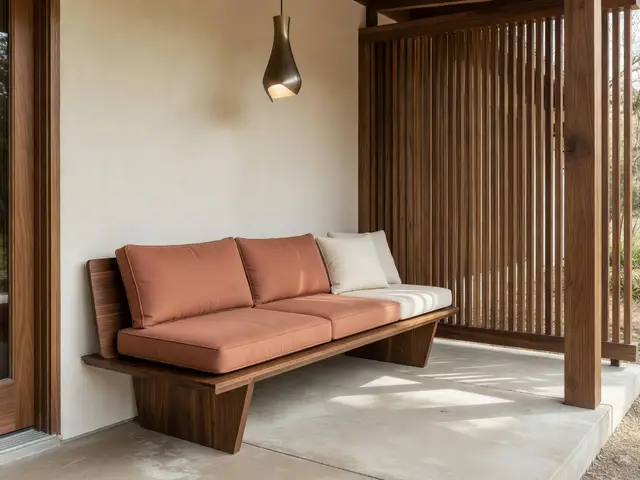
This narrow porch demonstrates how built-in seating can maximize a compact footprint. A low-profile bench runs along the back wall, constructed from walnut-toned wood with angled legs that reference mid-century furniture design. The cushions alternate between muted terracotta and cream, providing seating for three. A vertical slat screen on the right filters light and adds privacy without blocking airflow. The smooth concrete floor anchors the space, while a sculptural pendant light hangs overhead. Wood framing at left suggests an open transition to adjacent areas.
Design this look with your photo ↗Your room photo + this reference. Review the studio allowance before generating.
What stands out
- The bench features sculptural angled legs in walnut wood that echo classic mid-century furniture while remaining sturdy enough for outdoor use, creating visual interest at floor level.
- Vertical wood slats create a privacy screen that filters incoming sunlight into linear patterns across the concrete floor, maintaining openness while defining the porch boundary.
- Cushions in two tones, terracotta and cream, provide comfortable seating while keeping the palette restrained and allowing the wood architecture to remain the primary visual focus.
- The narrow pendant light with its tapered profile and downward beam concentrates illumination without overwhelming the modest proportions of this compact porch.
Make it work in your space
For a smaller porch, reduce the bench to a two-seater or create an L-shaped corner unit. Skip the privacy screen if space is tight, or use a simpler vertical panel. On a budget, build the bench from construction-grade lumber stained to mimic walnut rather than using hardwood throughout. Replace the sculptural pendant with a simpler cone shade fixture. Consider leaving one end of the bench open rather than boxing it in completely, which reduces material costs while maintaining the clean-lined look.
Choose cushion storage and drainage details for your local rain exposure.
Materials and finishes
- Walnut-toned wood framing
- Choose hardwood with natural weather resistance or treated softwood in warm brown tones. Look for consistent grain and color matching across structural elements and furniture pieces.
- Smooth concrete flooring
- Large format concrete pavers or poured slabs work well. Select a light gray tone to reflect heat and show off shadow patterns from surrounding screens.
- Outdoor cushion fabric
- Specify solution-dyed acrylic or polyester designed for exterior use. Muted terracotta and cream tones hide minor dirt while maintaining the mid-century palette.
- Vertical wood slat screen
- Use consistent spacing between slats, typically one to two inches, for balanced light filtering. Match wood species and finish to structural framing for visual continuity.
- Metal pendant fixture
- Look for powder-coated finishes in matte black or bronze that resist corrosion. Tapered or teardrop shapes reference mid-century design without literal reproduction.
More Mid-Century Modern Porch Ideas
Your questions, answered
What type of wood works best for outdoor built-in benches in a mid-century design?
Cedar, teak, and ipe offer natural rot resistance and can be left to weather or stained in walnut tones. Pressure-treated pine or fir provides a budget alternative when stained dark brown. All options need proper sealing on cut ends and regular maintenance. The angled leg design requires careful joinery, so consider working with a carpenter experienced in outdoor furniture construction to ensure structural integrity and longevity.
How do I try this look in my own space?
Choose Design this look and upload your own photo in the studio. This concept is loaded separately as a reference, and its design direction is included in the editable brief. Review your options before generating.
Can I buy the exact furniture and materials shown?
This is an AI-generated concept, not a catalog of real products. Use the image to compare shapes, colors, and materials, then verify dimensions and finishes with actual suppliers.