A direction for your next space
Modern Bedroom with Textured Accent Wall
About this design
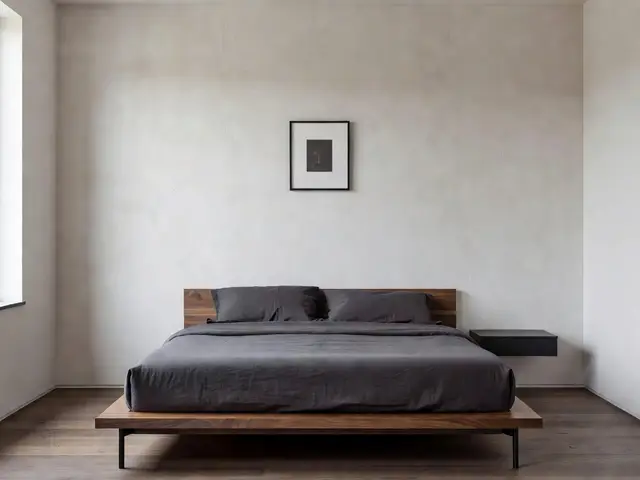
This modern bedroom centers on a textured white wall that provides subtle visual interest without competing for attention. A low walnut platform bed with black metal legs anchors the space, dressed in charcoal gray bedding. A small walnut nightstand floats beside the bed, while light wood flooring adds warmth underfoot. A single framed print hangs centered above the bed, and natural light enters from the left, illuminating the room's restrained palette of warm whites, dark grays, and medium wood tones.
Design this look with your photo ↗Your room photo + this reference. Review the studio allowance before generating.
What stands out
- The textured white wall adds dimension through light and shadow without pattern or color, keeping the space calm while preventing the large surface from feeling flat or sterile.
- The platform bed sits low to the floor on slim black metal legs, extending wider than the mattress to create integrated nightstand surfaces that eliminate the need for additional furniture.
- Charcoal gray bedding in a single tone provides visual weight against the pale walls, grounding the bed without introducing pattern or competing textures into the minimal scheme.
- The small black-framed artwork hangs at a modest scale, offering a focal point without dominating the wall or disrupting the bedroom's deliberate sense of visual quiet.
Make it work in your space
In a smaller bedroom, keep the low platform bed but choose a narrower frame without extended side surfaces. Use a single floating nightstand on one side only. Maintain the textured white wall but limit it to the bed wall rather than continuing around the room. Skip the artwork if wall space is tight, letting the texture alone provide interest. On a budget, apply textured paint or install tongue and groove paneling painted white instead of plaster. Swap the walnut platform for a simpler wood bed frame in stained pine, and use budget charcoal cotton sheets rather than linen.
View a large texture sample under your actual bedside lighting before covering the wall.
Materials and finishes
- Textured wall finish
- Look for a finish that creates subtle relief without heavy pattern. The texture should be visible in changing light but remain neutral enough to recede as a backdrop.
- Walnut wood platform
- Choose medium to dark walnut with visible grain. The wood should have enough color depth to stand out against light floors while maintaining warmth, not reading as stark brown.
- Black metal bed frame
- Select thin tubular or angle iron metal in matte black. The frame should be minimal and recede visually, supporting the wood platform without adding visual bulk.
- Charcoal bed linens
- Pick a solid charcoal gray in matte cotton or linen. Avoid sheen or texture that might compete with the wall. The fabric should drape smoothly without stiffness.
- Light wood flooring
- Choose pale to medium wood in wide planks with minimal grain variation. The floor should provide warmth without drawing attention, lighter than the bed but not bleached white.
More Modern Bedroom Ideas
Your questions, answered
What type of wall texture works best behind a bed in a modern bedroom?
A low relief texture with subtle dimension works well, such as skip trowel plaster, fine knockdown, or smooth venetian plaster. The texture should create gentle shadows that shift with light throughout the day. Avoid heavy Spanish or Mediterranean textures that read as busy. The goal is tactile interest that remains visually quiet. White or off-white keeps the effect minimal. Apply the texture only on the bed wall to maintain focus without overwhelming a small room.
How do I try this look in my own space?
Choose Design this look and upload your own photo in the studio. This concept is loaded separately as a reference, and its design direction is included in the editable brief. Review your options before generating.
Can I buy the exact furniture and materials shown?
This is an AI-generated concept, not a catalog of real products. Use the image to compare shapes, colors, and materials, then verify dimensions and finishes with actual suppliers.