A direction for your next space
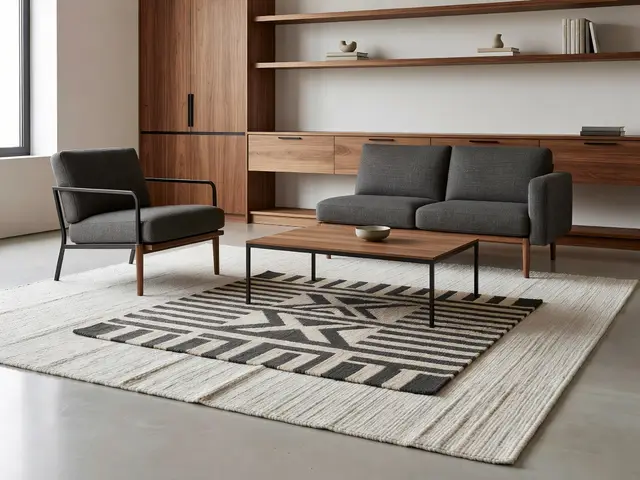
Modern Living Room with Layered Rugs
About this design
This living room centers on two layered area rugs: a neutral woven base topped by a smaller rug with bold geometric patterning in charcoal and cream. A compact charcoal sofa and matching lounge chair flank a walnut and black metal coffee table. Behind them, a custom walnut storage unit with open shelving and closed cabinets fills the wall, providing both display and concealed storage. Light floods in from a window at left, highlighting the warm wood grain against white walls and pale concrete-look flooring.
Design this look with your photo ↗Your room photo + this reference. Review the studio allowance before generating.
What stands out
- The layered rug approach adds visual interest without cluttering the space, with the patterned top rug defining the seating zone while the larger base anchors the entire arrangement.
- Black powder-coated metal frames on both the coffee table and lounge chair echo each other, creating a cohesive thread that ties the seating area together without matching too literally.
- Walnut wood runs through the entire room, from the coffee table to the wall unit to the chair and sofa legs, warming the otherwise cool gray and white palette.
- The wall unit combines closed lower storage with open upper shelves, hiding clutter while keeping a few sculptural objects and books on display for personality.
Make it work in your space
In a smaller room, skip the layered rugs and use just one patterned rug to save visual space. Replace the full wall unit with a single low credenza or floating shelf for storage without overwhelming the room. A loveseat instead of a full sofa can free up circulation space. Keep the coffee table but consider a round shape to ease traffic flow. Maintain the walnut and charcoal palette even if you scale down the pieces, as the restrained color scheme makes any space feel larger.
Keep rug edges out of main walking routes and use appropriate pads to reduce movement.
Materials and finishes
- Walnut veneer cabinetry
- Look for consistent grain direction and warm brown tones without excessive orange. Vertical grain on doors adds subtle movement, while horizontal grain on shelves creates calm.
- Charcoal upholstery fabric
- Choose a tight weave that resists pilling and holds its shape. This looks like a cotton-linen blend or performance fabric with a slight texture that hides minor wear.
- Black powder-coated metal
- Matte black metal should feel smooth and even without glossy reflections. Welded joints should be clean and legs firmly attached to resist wobbling under daily use.
- Wool flatweave rug
- Flatweave construction lies flat without curling and shows less footprint traffic than pile rugs. Natural fibers breathe better than synthetics and age more gracefully in high-traffic areas.
- Polished concrete flooring
- Sealed concrete should feel smooth underfoot and resist staining from spills. Look for even coloring without major cracks, though minor surface variations add character.
More Modern Living Room Ideas
Your questions, answered
How do you layer rugs without them sliding around in a living room?
Place a thin rubber rug pad between the two rugs to prevent slipping. The pad should be slightly smaller than the top rug so it stays hidden. For the base rug on hard flooring, use another pad underneath. Vacuum regularly to prevent dirt from building up between layers, which can cause bunching. If the top rug shifts often, double-sided carpet tape around the edges can secure it, though this works best on natural fiber rugs that can handle adhesive removal.
How do I try this look in my own space?
Choose Design this look and upload your own photo in the studio. This concept is loaded separately as a reference, and its design direction is included in the editable brief. Review your options before generating.
Can I buy the exact furniture and materials shown?
This is an AI-generated concept, not a catalog of real products. Use the image to compare shapes, colors, and materials, then verify dimensions and finishes with actual suppliers.