A direction for your next space
Scandinavian Porch with Slatted Screen
About this design
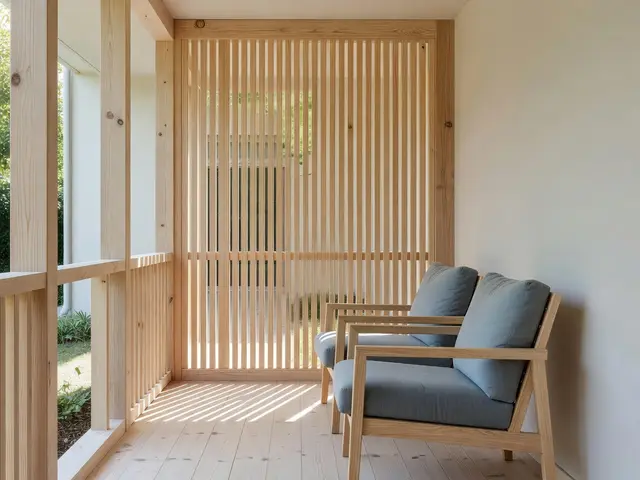
This side-facing porch pairs clean lines with natural warmth through a floor-to-ceiling slatted timber screen and matching framework. Two simple chairs with light wood frames and gray seat cushions rest against a white wall, creating a modest seating area. The screen filters daylight into soft vertical stripes across pale wood flooring while maintaining privacy from neighboring views. The design relies on repetition of blond wood tones and minimal furnishings to achieve its calm, uncluttered character.
Design this look with your photo ↗Your room photo + this reference. Review the studio allowance before generating.
What stands out
- The vertical timber slat screen uses evenly spaced battens to break sightlines without blocking air circulation or casting the porch into darkness, a practical balance for open yet private outdoor rooms.
- Gray cushions on simple wooden chair frames provide just enough softness without pattern or fuss, letting the architecture remain the visual anchor while offering comfortable spots to sit.
- Pale wood flooring with visible knots and grain runs perpendicular to the slat orientation, adding subtle texture underfoot and reinforcing the honest material approach typical of this style.
- The timber framing around windows and doorways repeats the same light wood species as the screen, creating visual continuity that ties structural elements together across the porch.
Make it work in your space
For a smaller porch, reduce the slatted screen to a partial wall or corner section rather than floor-to-ceiling coverage. One chair instead of two still captures the look without crowding tight quarters. On a budget, skip custom milled battens and use standard dimension lumber spaced with simple wood blocks as standoffs. Painted or stained construction-grade pine flooring offers similar visual effect at lower cost than specialty wide planks. Keep the white wall and stick to one wood tone throughout to maintain the style's restraint.
Balance privacy with airflow and confirm the screen can resist local wind.
Materials and finishes
- Vertical timber battens
- Choose straight-grained softwood in a natural or clear finish. Consistent spacing between battens is critical for a clean look. Plan for weathering if the porch is exposed to rain.
- Pale wood plank flooring
- Select wide planks in pine, spruce, or similar light species. A matte or low-sheen finish hides wear better than high gloss. Expect visible knots and color variation for character.
- Light wood chair frames
- Look for simple joinery and minimal ornamentation in ash, oak, or beech. The frame should feel sturdy without bulk. A natural oil finish highlights the grain.
- Gray upholstery fabric
- Medium-weight linen or cotton blends in solid colors wear well outdoors under cover. Choose removable cushion covers for easy cleaning. Avoid fabrics that fade quickly in sunlight.
- White wall finish
- Use exterior-grade paint in a matte or eggshell sheen to reduce glare. Pure white or warm white tones complement blond wood without looking sterile. Plan for regular touch-ups.
More Scandinavian Porch Ideas
Your questions, answered
How far apart should slats be on a Scandinavian privacy screen?
Space slats one to two inches apart for a typical privacy screen that filters views without creating a solid wall. Closer spacing increases privacy but reduces airflow and light. Farther spacing feels more open but shows more of what is behind. Test your preferred gap with a few sample boards held upright at eye level before cutting all your battens to length.
How do I try this look in my own space?
Choose Design this look and upload your own photo in the studio. This concept is loaded separately as a reference, and its design direction is included in the editable brief. Review your options before generating.
Can I buy the exact furniture and materials shown?
This is an AI-generated concept, not a catalog of real products. Use the image to compare shapes, colors, and materials, then verify dimensions and finishes with actual suppliers.