A direction for your next space
Japandi Exterior with Native Planting
About this design
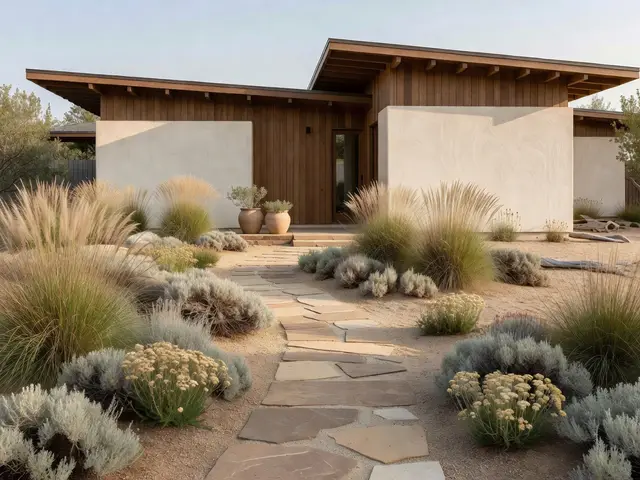
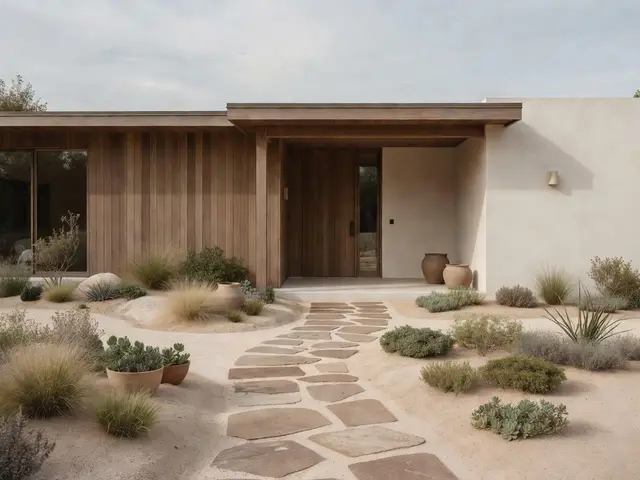
This single-story home pairs vertical wood siding with smooth stucco walls in warm off-white, creating the clean geometry typical of Japandi design. Asymmetrical rooflines with exposed rafter tails add architectural interest while maintaining low visual weight. An irregular flagstone path winds through layered planting beds filled with native grasses and silvery succulents set in decomposed granite. The palette of sand, warm brown wood, and cream stucco reads as calm and grounded under soft natural light.
Design this look with your photo ↗Your room photo + this reference. Review the studio allowance before generating.
What stands out
- Layered ornamental grasses in varying heights, from low clumping varieties to tall feathery specimens, create textural depth without demanding high water use or constant maintenance.
- Silvery-blue succulents and low groundcovers fill gaps between stones and grasses, their sculptural forms and muted tones reinforcing the restrained Japandi palette while thriving in arid conditions.
- Irregular flagstone pavers laid with generous spacing allow planting to flow between the stepping surfaces, softening the path and integrating hardscape with the surrounding garden beds.
- Terracotta pots near the entry add handmade warmth and a subtle earthy contrast to the stucco walls, grounding the architecture with tactile, organic elements at human scale.
Make it work in your space
On a tighter budget, reduce the variety of plantings to two or three reliable native grasses and one type of groundcover, buying smaller sizes that will fill in over time. Use gravel instead of decomposed granite for immediate cost savings. Limit flagstone to a narrower central path and edge with the same gravel used elsewhere. If your yard is smaller, concentrate the layered planting on one side of the path only, keeping the other side simpler with mulch and a few accent plants. Skip the terracotta pots initially and add them as budget allows.
Choose real plants for your region, sun exposure and mature size, not just their color.
Materials and finishes
- Vertical wood siding
- Choose boards with visible grain and warm brown tones that will weather gracefully. Look for consistent width and tight joinery to maintain clean lines over time.
- Smooth stucco finish
- Select a warm off-white or sand tone that complements natural wood. A fine texture minimizes shadows and keeps walls looking crisp in bright sunlight.
- Irregular flagstone pavers
- Pick stones in warm tan and gray tones with varied sizes for an organic look. Ensure thickness is consistent for stable walking surfaces.
- Decomposed granite ground cover
- This compacted material provides a stable, permeable base that drains well. Choose a color that blends with your stone and complements your plantings.
- Terracotta planting pots
- Unglazed terracotta offers breathability for roots and develops a natural patina. Select simple forms without excessive decoration to suit the restrained aesthetic.
More Japandi Exterior Ideas
Your questions, answered
How do you maintain a native grass and succulent garden in a Japandi style exterior?
Cut back ornamental grasses once a year in late winter before new growth starts, removing dead foliage to ground level. Succulents need minimal care but benefit from occasional removal of spent leaves and division every few years if they spread too wide. Rake decomposed granite paths annually to keep them level and top-dress as needed. Limit fertilizer to maintain the restrained growth and muted colors that suit this aesthetic.
How do I try this look in my own space?
Choose Design this look and upload your own photo in the studio. This concept is loaded separately as a reference, and its design direction is included in the editable brief. Review your options before generating.
Can I buy the exact furniture and materials shown?
This is an AI-generated concept, not a catalog of real products. Use the image to compare shapes, colors, and materials, then verify dimensions and finishes with actual suppliers.