A direction for your next space
Japandi Exterior with Timber Pergola
About this design
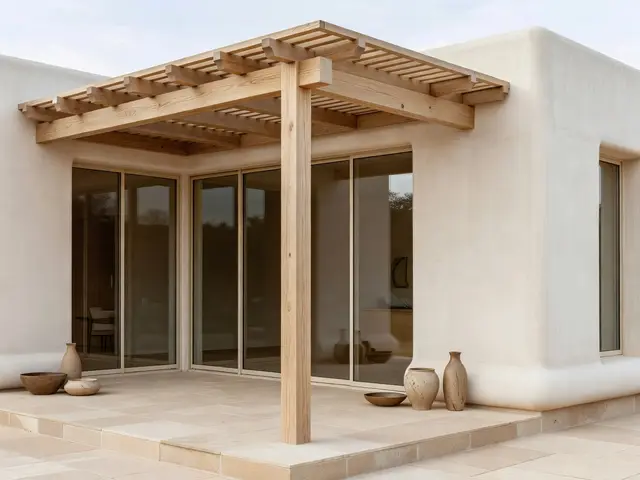
This Japandi exterior pairs a natural timber pergola with smooth stucco walls in warm off-white. The pergola shelters a pale stone terrace just outside a wall of sliding glass doors that connect indoor and outdoor spaces. Exposed beam ends create a rhythmic overhead pattern that casts gentle shadows across the paving. Handmade ceramic vessels in earthy tones sit on the terrace, echoing the natural palette. The design maintains low visual weight through simple geometry and restrained material choices.
Design this look with your photo ↗Your room photo + this reference. Review the studio allowance before generating.
What stands out
- The timber pergola uses exposed joinery and closely spaced rafters that create a dappled shade pattern, bringing texture overhead while maintaining an open, airy feel that defines Japandi outdoor living.
- Wide sliding glass doors with slim frames dissolve the boundary between interior and exterior, allowing the terrace to function as an extended living area while maximizing natural light penetration into the home.
- Handmade ceramic vessels in sand and brown tones are arranged on the pale terrace, introducing organic forms and tactile surfaces that balance the clean architectural lines without adding visual clutter.
- The pale stone or concrete paving reflects light and complements the warm stucco walls, creating a cohesive neutral backdrop that allows natural wood grain and handmade objects to become focal points.
Make it work in your space
On a smaller terrace, reduce the pergola to cover just a seating area rather than the full width. Use fewer, thicker beams instead of closely spaced rafters to lower material costs while maintaining the timber presence. If full sliding doors are not feasible, a single French door flanked by fixed glass panels achieves similar indoor-outdoor connection. Skip the stone paving in favor of poured concrete with a smooth trowel finish. Keep one or two handmade ceramic pieces as accents rather than a full collection.
Have anchoring, wind loads and any permit requirements verified locally.
Materials and finishes
- Light timber pergola beams
- Select wood with visible grain that will weather gracefully outdoors. Cedar, oak, or Douglas fir offer durability. Leave unsealed or use transparent finishes that allow natural color variation to show.
- Smooth stucco exterior finish
- Choose a troweled stucco with minimal texture for clean surfaces. Warm off-white or sand tones work better than stark white. Ensure proper sealing in climates with freeze-thaw cycles.
- Pale stone or concrete paving
- Look for large format pavers in light neutral tones to minimize grout lines. Honed or matte finishes prevent glare. Ensure slip resistance for outdoor safety in wet conditions.
- Slim-profile sliding glass doors
- Prioritize narrow frames to maximize glass area and sight lines. Bronze or wood-tone finishes integrate better than bright metal. Verify thermal performance ratings for your climate zone.
- Handmade ceramic vessels
- Select pieces with visible throwing marks or irregular shapes that show the maker's hand. Unglazed or matte glazes in earth tones maintain the understated aesthetic better than glossy finishes.
More Japandi Exterior Ideas
Your questions, answered
What type of wood is best for a Japandi-style pergola in outdoor conditions?
Cedar and white oak are excellent choices for their natural rot resistance and attractive grain patterns. Both weather to a silvery gray if left unsealed, which suits the Japandi aesthetic. Douglas fir offers similar durability at lower cost in many regions. Apply a transparent penetrating oil if you want to preserve the original wood color, or let it age naturally for a softer, weathered appearance. Avoid pressure-treated lumber, which lacks the refined grain character this style requires.
How do I try this look in my own space?
Choose Design this look and upload your own photo in the studio. This concept is loaded separately as a reference, and its design direction is included in the editable brief. Review your options before generating.
Can I buy the exact furniture and materials shown?
This is an AI-generated concept, not a catalog of real products. Use the image to compare shapes, colors, and materials, then verify dimensions and finishes with actual suppliers.