A direction for your next space
Minimalist Bathroom with Floating Vanity
About this design
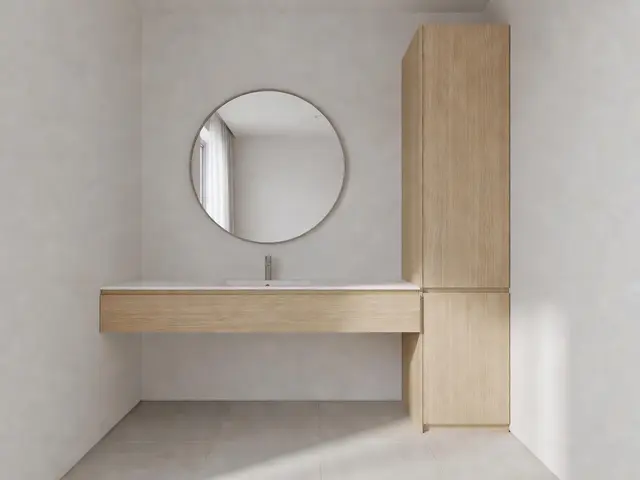
This minimalist bathroom pairs a floating pale oak vanity with a wall-mounted tall cabinet in the same wood tone. The vanity cantilevers from the white wall without visible supports, housing an integrated rectangular sink. A round mirror with a thin dark metal rim hangs centered above the vanity. The tall cabinet sits perpendicular to the vanity, extending from floor to ceiling. Pale gray floor tiles and white walls create a neutral backdrop that emphasizes the clean horizontal and vertical lines.
Design this look with your photo ↗Your room photo + this reference. Review the studio allowance before generating.
What stands out
- The wall-mounted vanity hovers above the floor, creating visible clearance underneath that makes the compact bathroom feel more spacious and simplifies floor cleaning in tight quarters.
- The round mirror provides a gentle counterpoint to the strictly rectangular cabinetry, softening the geometry without adding visual clutter or requiring shelf space for toiletries.
- Pale oak wood grain runs horizontally across the vanity and vertically on the tall cabinet, introducing subtle texture while maintaining the quiet, uncluttered aesthetic central to minimalist design.
- The perpendicular cabinet placement divides the room into zones without requiring a full wall, offering substantial storage while preserving the open, unbroken quality of the white walls.
Make it work in your space
In a smaller bathroom, use just the floating vanity and skip the tall cabinet, instead installing recessed medicine cabinets inside the wall cavity. For tighter budgets, choose a simple wall-mounted shelf in light wood rather than a custom floating vanity, pairing it with a white vessel sink. Keep the round mirror and pale floor regardless of room size, as these establish the minimalist character without requiring custom millwork or professional installation.
Check wall support and plumbing positions before selecting a wall-mounted vanity.
Materials and finishes
- Pale oak veneer cabinetry
- Look for consistent grain patterns and smooth finishes without prominent knots. Lighter oak tones show fewer water spots and fingerprints than darker stains in humid bathroom environments.
- White wall paint or panels
- Choose moisture-resistant paint formulations rated for bathrooms. Satin or eggshell finishes resist mildew better than flat paint while maintaining a soft, low-glare appearance.
- Pale gray floor tiles
- Select large-format tiles to minimize grout lines, which reduces visual busyness and cleaning effort. Matte finishes provide better slip resistance than polished surfaces when wet.
- Thin metal mirror frame
- Dark bronze or black metal frames add definition without bulk. Verify the frame width stays under one inch to maintain proportions appropriate for minimalist spaces.
- Integrated countertop sink
- One-piece sink and counter construction eliminates the rim seam where water and grime collect. Confirm the material resists staining from common toiletries and hard water deposits.
More Minimalist Bathroom Ideas
Your questions, answered
How do you mount a floating vanity securely to support daily use?
Floating vanities require solid blocking installed between wall studs during construction or renovation. The cabinet attaches to this reinforced framework with heavy-duty brackets hidden inside the cabinet body. For existing walls, locate studs with a finder and use multiple lag bolts driven directly into framing members. Most floating vanities support typical bathroom use when properly anchored to structural elements rather than drywall alone.
How do I try this look in my own space?
Choose Design this look and upload your own photo in the studio. This concept is loaded separately as a reference, and its design direction is included in the editable brief. Review your options before generating.
Can I buy the exact furniture and materials shown?
This is an AI-generated concept, not a catalog of real products. Use the image to compare shapes, colors, and materials, then verify dimensions and finishes with actual suppliers.