A direction for your next space
Minimalist Kitchen with Open Shelves
About this design
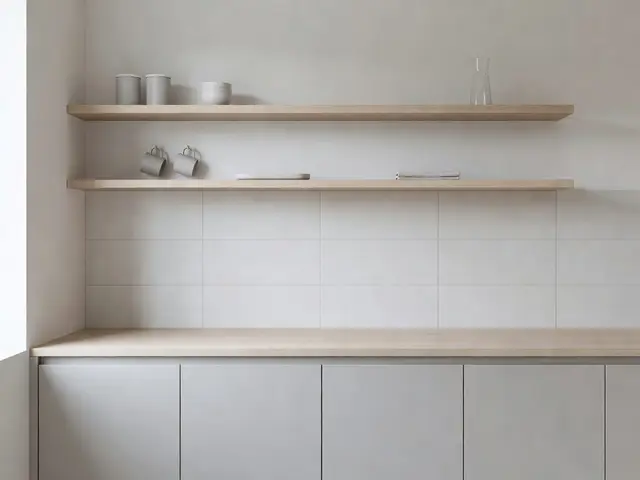
This minimalist kitchen features a straight run of soft gray lower cabinets topped with a pale oak countertop. Two open shelves in the same pale oak finish float above a white backsplash composed of simple square tiles. The lower cabinets have no visible hardware, maintaining clean lines. A few gray ceramic vessels, white mugs, and simple glassware rest on the shelves, demonstrating the restrained decorative approach. The palette relies entirely on chalk white, soft gray, and pale oak tones, with natural light creating subtle shadows along the wall and shelving.
Design this look with your photo ↗Your room photo + this reference. Review the studio allowance before generating.
What stands out
- The handleless lower cabinets use push-to-open mechanisms or recessed grips, eliminating visual clutter and preserving the uninterrupted gray surfaces that define minimalist storage.
- The pale oak shelves have a shallow depth that prevents overcrowding, encouraging the sparse display visible here with ample breathing room between each object.
- The square white tiles create a simple grid pattern on the backsplash, offering durability and easy cleaning without competing for attention against the wood and gray palette.
- The oak countertop wraps the edge with a clean square profile rather than an ornate molding, keeping the transition between horizontal and vertical surfaces minimal and architectural.
Make it work in your space
In a smaller kitchen, use just one open shelf instead of two to avoid visual weight. The same pale oak and soft gray palette works in compact spaces, but consider shortening the counter run and using the open shelving only in one section. For tighter budgets, skip custom handleless cabinets and use simple flat-front stock cabinets with small, discreet pulls in a matching gray or brushed nickel. Paint existing cabinets rather than replacing them, and use laminate countertops in a pale wood finish instead of solid oak.
Reserve shelves for frequently used items and keep less-used supplies behind doors.
Materials and finishes
- Pale oak shelving
- Look for light woods with consistent grain and minimal knots. The finish should be smooth and sealed to resist kitchen moisture while maintaining a natural appearance.
- Soft gray cabinet fronts
- Choose a matte or satin finish rather than high gloss. The gray should read neutral and warm, avoiding cool blue undertones that can feel stark.
- White square tiles
- Select tiles with tight grout lines and minimal texture. A slight eggshell or matte finish hides water spots better than high gloss in a working backsplash area.
- Oak countertop
- Ensure the wood is properly sealed for kitchen use. Edge profiles should be simple and squared rather than rounded or beveled for a clean minimalist line.
- Matte wall paint
- Pick a warm white or pale gray with very low sheen. Flat or matte finishes hide imperfections better than gloss and create the soft, even backdrop minimalist kitchens need.
More Minimalist Kitchen Ideas
Your questions, answered
How do you keep open kitchen shelves looking uncluttered in a minimalist design?
Limit items to what you use daily and choose pieces in a cohesive color palette, like the white and gray ceramics visible here. Leave generous space between objects rather than filling every inch. Group similar items together, such as mugs on one shelf and serving pieces on another. Store less attractive necessities in the closed cabinets below. Dust weekly to prevent buildup that makes open storage look neglected rather than intentional.
How do I try this look in my own space?
Choose Design this look and upload your own photo in the studio. This concept is loaded separately as a reference, and its design direction is included in the editable brief. Review your options before generating.
Can I buy the exact furniture and materials shown?
This is an AI-generated concept, not a catalog of real products. Use the image to compare shapes, colors, and materials, then verify dimensions and finishes with actual suppliers.