A direction for your next space
Modern Exterior with Cedar Entry
About this design
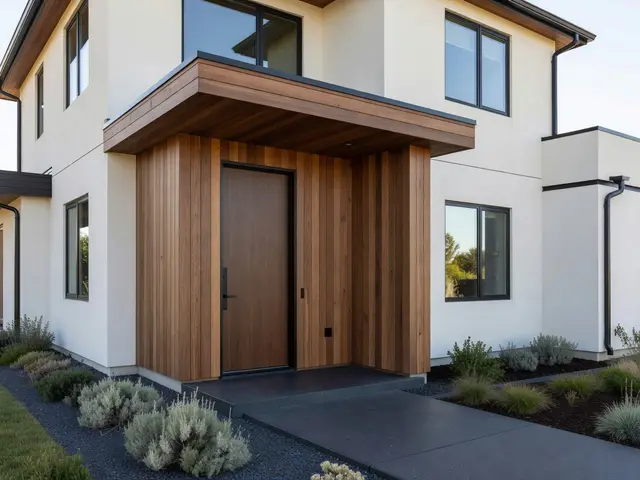
This two-story modern home uses white stucco walls as a neutral backdrop for a warm wood entry volume that extends from the facade. Vertical cedar boards wrap the recessed front door and continue to a flat roof overhang that acts as a sheltered porch. Black-framed windows of varying sizes punctuate the white walls, while exposed rafter tails in matching black add structural detail. The entry path is poured concrete flanked by dark gravel beds with low silver-green shrubs and ornamental grasses.
Design this look with your photo ↗Your room photo + this reference. Review the studio allowance before generating.
What stands out
- The cedar-clad entry volume projects slightly from the facade, creating a visual anchor and a defined threshold that helps visitors identify the front door from the street.
- Black window frames and gutters provide crisp contrast against the white stucco, reinforcing the modern aesthetic without competing with the warmer wood tones at the entry.
- A flat roof overhang supported by the cedar volume offers weather protection at the door while maintaining the clean horizontal lines characteristic of modern architecture.
- Low-maintenance landscaping with gravel mulch and drought-tolerant plants in shades of gray-green softens the hard surfaces without requiring extensive upkeep or irrigation.
Make it work in your space
If your entry is smaller, limit the cedar cladding to the door surround itself rather than wrapping an entire volume. Skip the projecting overhang and use a simple flush canopy or even a wall-mounted light for shelter. White fiber cement panels can substitute for stucco at lower cost. Replace the gravel beds with mulched areas if your budget is tight, keeping the same restrained plant palette. Prioritize black windows on the front facade where they have the most visual impact, using white or bronze frames elsewhere.
Consider the weathering and maintenance of real wood at an exposed entrance.
Materials and finishes
- Vertical cedar siding
- Choose boards with consistent grain and color. Natural cedar will weather to gray unless sealed regularly. Tight vertical installation with minimal reveal creates a contemporary look rather than rustic.
- White stucco finish
- A smooth or lightly textured stucco provides the cleanest appearance. Ensure proper underlayment and flashing details, especially where stucco meets wood or window frames, to prevent moisture intrusion.
- Black aluminum window frames
- Narrow profiles keep sightlines minimal. Look for thermally broken frames in cold climates. Matte black or dark bronze finishes are less reflective and read as true black from the street.
- Poured concrete walkway
- A smooth trowel finish works well in modern settings. Control joints should be planned to align with architectural features when possible. Light broom finishing provides slip resistance in wet conditions.
- Dark decorative gravel
- Use angular rather than rounded stone for better compaction and less migration. A weed barrier underneath is essential. Depth of three to four inches provides good coverage and weed suppression.
More Modern Exterior Ideas
Your questions, answered
How do you maintain vertical cedar siding on a modern home exterior?
Vertical cedar requires annual inspection for splits or loose boards. If you want to preserve the natural honey tone, apply a clear UV-protective sealer every two to three years. For a weathered gray look, leave it untreated but expect uneven color initially. Keep sprinklers and soil away from the bottom edge to prevent rot. Clean with a mild detergent and soft brush rather than pressure washing, which damages the wood grain.
How do I try this look in my own space?
Choose Design this look and upload your own photo in the studio. This concept is loaded separately as a reference, and its design direction is included in the editable brief. Review your options before generating.
Can I buy the exact furniture and materials shown?
This is an AI-generated concept, not a catalog of real products. Use the image to compare shapes, colors, and materials, then verify dimensions and finishes with actual suppliers.