A direction for your next space
Japandi Living Room with Layered Rugs
About this design
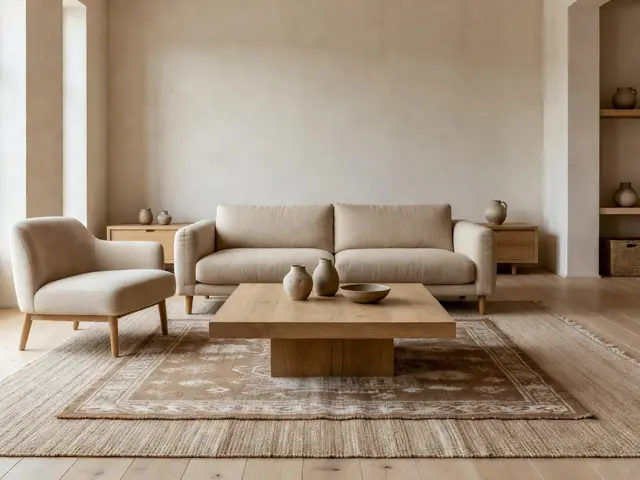
This living room centers on two layered rugs that define the seating area. A larger woven rug in warm beige sits beneath a smaller geometric-patterned rug in cream and taupe. The seating includes a low-profile sofa in sand linen and a rounded accent chair with natural wood legs. A substantial wood coffee table anchors the arrangement, topped with handmade ceramic vessels. Flanking nightstands with single drawers and wall-mounted shelving complete the setup. Light floods the space through unseen windows, softening the neutral palette of off-whites and earthy browns.
Design this look with your photo ↗Your room photo + this reference. Review the studio allowance before generating.
What stands out
- The layered rug combination establishes visual boundaries without heavy contrast, with the geometric accent rug adding subtle pattern while the textured base rug grounds the entire seating area in warmth.
- Rounded furniture forms, especially the accent chair with its curved back and arms, soften the rectilinear coffee table and sofa, creating the organic-meets-minimal balance central to Japandi style.
- Handmade ceramic vessels in muted earth tones sit on the coffee table and side tables, bringing artisanal texture and sculptural interest without introducing busy patterns or bright color.
- Wall-mounted open shelving displays a sparse collection of pottery and woven baskets, maintaining the uncluttered aesthetic while providing functional storage that doubles as understated decoration.
Make it work in your space
In a smaller room, use just one rug instead of layering two, and replace the sofa with a loveseat or daybed. Keep the accent chair and coffee table as your core pieces. Skip the flanking side tables and use the wall shelving for essentials. On a tighter budget, start with the larger textured rug and add the patterned layer later. Choose slipcover seating instead of upholstered pieces, and collect handmade ceramics gradually from local makers or thrift sources.
Keep rug edges out of main walking routes and use appropriate pads to reduce movement.
Materials and finishes
- Woven natural fiber rug
- Look for jute, sisal, or seagrass with a flat or low-pile weave. The texture should be visible but not rough underfoot, and the color should lean warm rather than gray.
- Linen upholstery fabric
- Choose tightly woven linen in undyed or naturally pigmented tones. The fabric should show slight texture and allow the furniture form to remain clean-lined without pattern interruption.
- Solid wood furniture
- Select pieces with visible grain in light oak, ash, or maple. The finish should be matte or low-sheen, highlighting natural color variation without heavy staining or glossy topcoats.
- Handmade ceramic vessels
- Seek out pottery with organic shapes and matte glazes in clay, sand, or stone tones. Slight irregularities and hand-formed marks add authenticity that machine-made pieces lack.
- Geometric patterned rug
- Choose low-contrast patterns in neutral colorways, with designs that suggest traditional weaving rather than bold graphics. The pile should be low to mid-height for easy layering.
More Japandi Living Room Ideas
Your questions, answered
How do you layer rugs in a Japandi living room without making the space look busy?
Keep both rugs in the same neutral color family, with no more than two or three tones total. The bottom rug should be larger and solid or subtly textured, while the top rug can have a gentle geometric or traditional pattern. Align the rugs so the smaller one sits centered or slightly forward on the larger base. Avoid high contrast between the two layers, and ensure furniture legs rest on at least one of the rugs to anchor the arrangement.
How do I try this look in my own space?
Choose Design this look and upload your own photo in the studio. This concept is loaded separately as a reference, and its design direction is included in the editable brief. Review your options before generating.
Can I buy the exact furniture and materials shown?
This is an AI-generated concept, not a catalog of real products. Use the image to compare shapes, colors, and materials, then verify dimensions and finishes with actual suppliers.