A direction for your next space
Japandi Living Room with Window Reading Nook
About this design
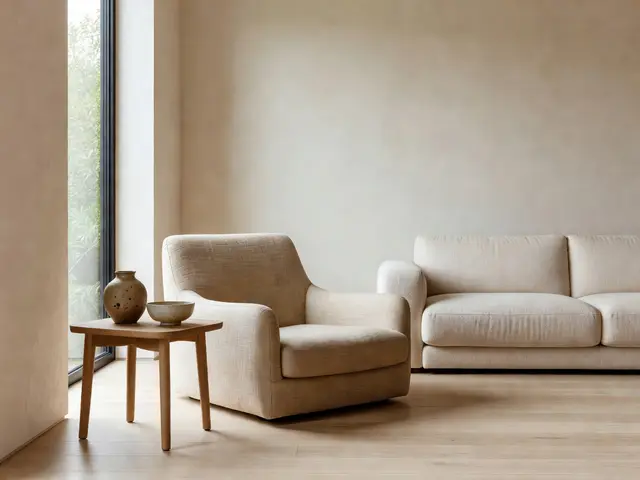
This living room creates a quiet reading corner by positioning a single upholstered armchair and small wooden side table beside a tall window. The furniture is arranged to separate the reading spot from the main sofa seating. Natural light floods the space through the narrow vertical window. The palette holds to warm neutrals: pale beige walls, light oak flooring, and linen upholstery in a soft sand tone. Simple ceramic objects on the side table add handmade texture without clutter.
Design this look with your photo ↗Your room photo + this reference. Review the studio allowance before generating.
What stands out
- The small round side table in light oak has three angled legs and a compact top that holds a few ceramic pieces without crowding the reading corner.
- The standalone armchair features a low profile with soft rolled arms and back, upholstered in natural linen that complements rather than contrasts with the adjacent sofa.
- Light oak flooring runs throughout in wide planks with subtle grain variation, providing warmth underfoot while keeping the palette cohesive and calm.
- The tall narrow window is framed in black metal, creating a clean vertical line that draws the eye upward and maximizes natural light in the reading area.
Make it work in your space
In a smaller living room, use just the armchair and side table without the full sofa to create the reading nook. Position the chair at an angle to a standard window if you lack a tall vertical one. A nesting table or even a simple wooden stool can replace the side table. For budget savings, choose a slipcovered chair in cotton canvas instead of linen, and look for unfinished wood furniture that you can seal with a clear matte finish yourself. Keep the pale neutral palette regardless of room size to maintain the open feeling.
Place a reading lamp beside the chair so the nook remains useful after daylight fades.
Materials and finishes
- Linen upholstery fabric
- Look for midweight linen with a natural slub texture that shows slight irregularity in the weave. Avoid overly refined or stiff versions. The fabric should feel soft but durable enough for daily use.
- Light oak wood
- Choose white oak or similar species with a pale natural finish that shows the grain without heavy staining. The wood should feel smooth but not glossy, with a matte or satin topcoat.
- Black metal window frame
- Thin profile frames work best to maximize glass area. Look for powder coated steel or aluminum with clean welded corners. The finish should be matte to avoid reflective glare.
- Ceramic vessels
- Handmade ceramics with visible throwing marks or uneven glazes add warmth. Choose earth tones like ochre, rust, or natural clay. Avoid perfectly uniform production pieces.
- Wide plank flooring
- Planks between seven and ten inches wide show more of the wood grain pattern. Choose boards with minimal color variation for a calm look. A matte finish hides scuffs better than high gloss.
More Japandi Living Room Ideas
Your questions, answered
How do you arrange furniture for a reading nook in a living room with a sofa?
Position the reading chair perpendicular or at a slight angle to the sofa rather than directly facing it, creating a separate zone. Place the chair close to the window for natural light and add a small side table within arm's reach. Leave at least thirty inches of clearance between the chair and sofa for easy movement. This layout defines two activity areas without requiring a room divider or rug to mark the boundary.
How do I try this look in my own space?
Choose Design this look and upload your own photo in the studio. This concept is loaded separately as a reference, and its design direction is included in the editable brief. Review your options before generating.
Can I buy the exact furniture and materials shown?
This is an AI-generated concept, not a catalog of real products. Use the image to compare shapes, colors, and materials, then verify dimensions and finishes with actual suppliers.