A direction for your next space
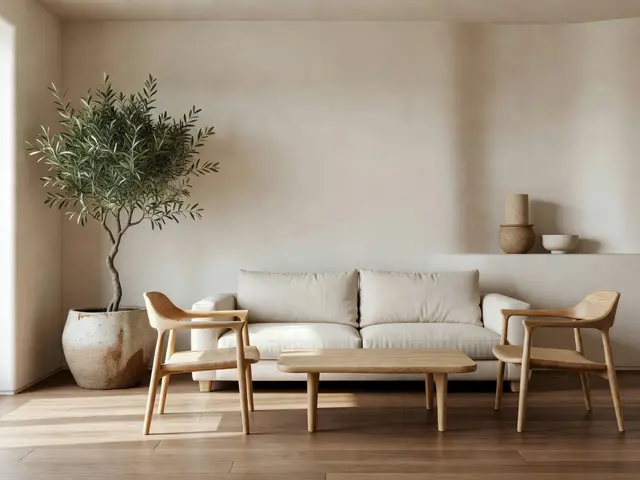
Japandi Living Room with Olive Tree
About this design
This living room pairs the simplicity of Japanese design with Scandinavian warmth through a carefully edited arrangement. A mature olive tree in a large earthenware planter anchors one corner, its silvery foliage contrasting with sand-toned walls. A low-profile sofa in warm off-white faces two lightweight wood chairs across a simple coffee table. The floor is pale wood with visible grain. Natural light fills the space, emphasizing the soft neutral palette and organic textures throughout.
Design this look with your photo ↗Your room photo + this reference. Review the studio allowance before generating.
What stands out
- The olive tree in its textured ceramic planter brings height and life to the corner without overwhelming the low-profile furniture that defines Japandi restraint.
- Light wood chairs with curved backs and armrests add sculptural interest while maintaining the airy feel essential to this style's uncluttered approach.
- The shallow ledge shelf holds a few handmade ceramic pieces in earthy tones, demonstrating the Japandi principle of displaying only what serves a purpose or brings beauty.
- Pale wood flooring with natural grain variation runs throughout, grounding the room in organic texture while reflecting light to keep the space feeling open.
Make it work in your space
In a smaller living room, use a younger olive tree or swap it for a similarly sculptured indoor plant like a fiddle leaf fig in a modest planter. Replace the full sofa with a loveseat and use just one accent chair to maintain breathing room. Skip the floating shelf if wall space is limited. On a budget, find secondhand wood furniture with simple lines and refinish it in a light stain. Use slipcovers in natural fabrics over existing upholstered pieces to achieve the soft neutral palette.
Check the light needs of a real plant before placing it in the darkest corner of the room.
Materials and finishes
- Earthenware planter with texture
- Look for planters with irregular surfaces or visible throwing marks. The rough, matte finish should feel handcrafted rather than mass-produced, with natural clay tones that complement wood furniture.
- Light wood with visible grain
- Choose woods like white oak or ash with clear grain patterns. The finish should be natural or lightly oiled to preserve the wood's warmth without adding shine or heaviness.
- Linen or cotton upholstery
- Select tightly woven natural fabrics in undyed or lightly pigmented shades. The texture should be matte and soft, avoiding any sheen that would feel too formal or modern.
- Matte ceramic vessels
- Handmade pieces with slight irregularities work best. Look for glazes in sand, clay, or cream that show variation in tone rather than perfectly uniform color.
- Pale hardwood flooring
- Wide planks in light finishes show off natural wood character. The surface should have a low-luster finish that reads as natural rather than glossy or distressed.
More Japandi Living Room Ideas
Your questions, answered
How do you care for an indoor olive tree in a living room?
Indoor olive trees need at least six hours of bright light daily, ideally near a south or west-facing window. Water deeply when the top two inches of soil feel dry, usually every week or two depending on humidity. Use well-draining soil and a pot with drainage holes to prevent root rot. Expect some leaf drop as the tree adjusts to indoor conditions, and rotate it occasionally for even growth.
How do I try this look in my own space?
Choose Design this look and upload your own photo in the studio. This concept is loaded separately as a reference, and its design direction is included in the editable brief. Review your options before generating.
Can I buy the exact furniture and materials shown?
This is an AI-generated concept, not a catalog of real products. Use the image to compare shapes, colors, and materials, then verify dimensions and finishes with actual suppliers.