A direction for your next space
Mid-Century Modern Bathroom with Floating Vanity
About this design
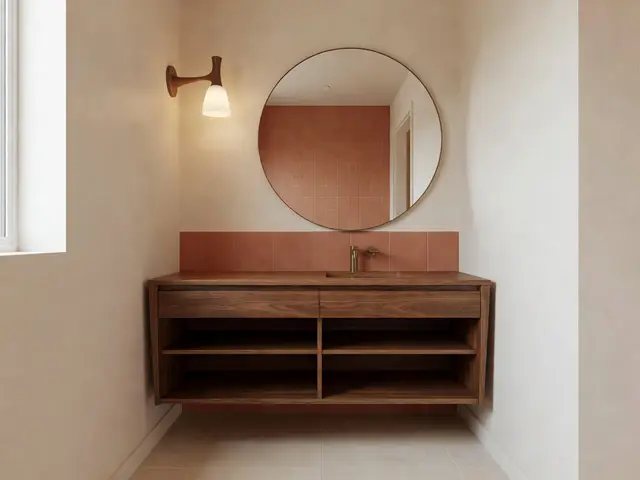
This bathroom centers on a wall-mounted walnut vanity with open shelving beneath a large round mirror. The vanity features horizontal grain and four open cubby compartments instead of drawers or doors. A terracotta tile backsplash runs behind the sink and continues into the mirror's reflection, creating a warm band of color against white walls. A simple sconce with a white glass shade and wood arm provides task lighting. Pale floor tiles extend beneath the floating vanity, emphasizing the suspended form.
Design this look with your photo ↗Your room photo + this reference. Review the studio allowance before generating.
What stands out
- The floating vanity maximizes visible floor space while providing storage in four open cubbies, a practical solution that keeps the room feeling larger and maintains clean horizontal lines.
- Terracotta tiles create a backsplash that extends beyond the sink area, adding warmth and a tactile surface that contrasts with smooth white walls without overwhelming the compact space.
- The oversized round mirror with thin black frame balances the linear vanity below and reflects light throughout the room while serving as a sculptural element in its own right.
- Exposed floor beneath the wall-mounted vanity makes cleaning easier and creates visual breathing room, a key strategy in small bathrooms where every inch of open space matters.
Make it work in your space
If working with a smaller bathroom, reduce the vanity width but maintain the floating installation to preserve floor visibility. Skip the extended tile backsplash and tile only directly behind the sink to save on material costs. A smaller round mirror still achieves the look. Consider ready-made floating vanities with open shelving rather than custom millwork. For tighter budgets, paint an existing vanity in a warm wood tone and remove lower cabinet doors to create open storage that mimics the design.
Check wall support and plumbing positions before selecting a wall-mounted vanity.
Materials and finishes
- Walnut veneer or solid wood
- Look for consistent horizontal grain and rich brown tones with subtle variation. Quality veneer offers the look at lower cost than solid wood while resisting moisture better in bathrooms.
- Terracotta or clay tiles
- Choose matte or low-sheen finishes in warm, muted tones rather than bright orange. Larger format tiles reduce grout lines and create a cleaner, more cohesive surface.
- Round mirror with metal frame
- A thin profile in black or dark bronze maintains focus on the glass itself. Ensure the diameter is proportional to your vanity width, typically two-thirds to three-quarters.
- White wall paint or plaster
- Opt for eggshell or satin finishes in bathrooms for easier cleaning than flat paint. Pure white or warm white tones complement wood and terracotta without competing.
- Large format floor tiles
- Pale neutral tones in porcelain or ceramic work best. Larger tiles mean fewer grout lines, creating a cleaner appearance and less maintenance in a small footprint.
More Mid-Century Modern Bathroom Ideas
Your questions, answered
How do you keep open shelving organized in a floating bathroom vanity?
Use uniform baskets or boxes within each cubby to contain toiletries and keep items from looking cluttered. Limit what you store to frequently used items and maintain consistent heights across shelves. Rolled towels work well visually and functionally. Avoid overfilling the cubbies, leaving some negative space so the shelving looks intentional rather than crowded. Regular editing prevents accumulation.
How do I try this look in my own space?
Choose Design this look and upload your own photo in the studio. This concept is loaded separately as a reference, and its design direction is included in the editable brief. Review your options before generating.
Can I buy the exact furniture and materials shown?
This is an AI-generated concept, not a catalog of real products. Use the image to compare shapes, colors, and materials, then verify dimensions and finishes with actual suppliers.