A direction for your next space
Mid-Century Modern Bathroom with Tile Niche
About this design
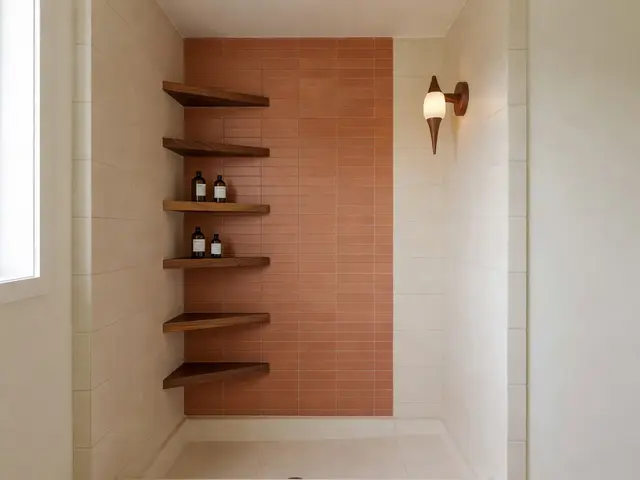
This bathroom centers on a vertical niche set into the shower wall, where terracotta-toned horizontal tiles create a warm backdrop for six floating walnut shelves. The shelves span the full width of the niche, providing dedicated storage for bottles and toiletries. Cream-colored tiles cover the surrounding walls, creating contrast with the terracotta panel. A sculptural wall sconce in brushed metal and frosted glass provides lighting on the adjacent wall. The design uses a minimal palette and simple geometry to create functional storage within a clean, streamlined space.
Design this look with your photo ↗Your room photo + this reference. Review the studio allowance before generating.
What stands out
- Six walnut floating shelves installed at regular intervals within the terracotta niche provide visible, accessible storage while maintaining the clean horizontal lines characteristic of mid-century design.
- The terracotta tile panel runs floor to ceiling in a horizontal orientation, adding warmth and visual weight to the niche while contrasting with the cream tiles that surround it.
- The tapered metal and frosted glass wall sconce echoes mid-century lighting design, casting ambient light while serving as a sculptural element on the neutral wall surface.
- Cream field tiles on the main shower walls create a neutral envelope that allows the terracotta niche to stand out as the focal point without competing finishes.
Make it work in your space
In a smaller shower, reduce the number of shelves to three or four while maintaining even spacing. If a full-height niche is not feasible, create a horizontal band of terracotta tile at shoulder height with two or three shelves. For budget savings, use waterproof wood-look laminate shelves instead of solid walnut, or limit the terracotta tile to a smaller panel. The cream field tile can be a basic subway tile in a brick or stacked pattern to reduce costs while preserving the clean backdrop.
Plan niche size around actual bottles and keep waterproofing continuous.
Materials and finishes
- Horizontal terracotta tile
- Look for tiles with a matte or low-sheen finish to avoid glare in wet conditions. Horizontal formats emphasize width and create calm, linear compositions on vertical surfaces.
- Walnut floating shelves
- Choose solid wood or quality veneer with visible grain. Ensure proper sealing for moisture resistance in shower environments. Concealed brackets maintain clean lines.
- Cream ceramic wall tile
- Select tiles with a slight texture for slip resistance and visual interest. Larger formats reduce grout lines and maintain the minimalist aesthetic.
- Brushed metal sconce fixture
- Look for finishes that resist moisture and corrosion in bathrooms. Warm metals like brass or bronze complement walnut and terracotta tones.
- Frosted glass shade
- Diffused glass softens light and reduces harsh shadows. Tapered or geometric shapes reference mid-century forms while providing functional illumination.
More Mid-Century Modern Bathroom Ideas
Your questions, answered
How do you waterproof floating shelves in a shower niche?
Shelves in wet areas should be solid wood properly sealed with multiple coats of marine-grade polyurethane or waterproof epoxy, reapplied annually. Alternatively, use synthetic materials like solid surface or porcelain that naturally resist water. Ensure the niche itself has a waterproof membrane behind the tile and that shelves are mounted to allow water drainage rather than pooling. Adequate ventilation helps all materials dry between uses.
How do I try this look in my own space?
Choose Design this look and upload your own photo in the studio. This concept is loaded separately as a reference, and its design direction is included in the editable brief. Review your options before generating.
Can I buy the exact furniture and materials shown?
This is an AI-generated concept, not a catalog of real products. Use the image to compare shapes, colors, and materials, then verify dimensions and finishes with actual suppliers.