A direction for your next space
Farmhouse Exterior with Cedar Entry
About this design
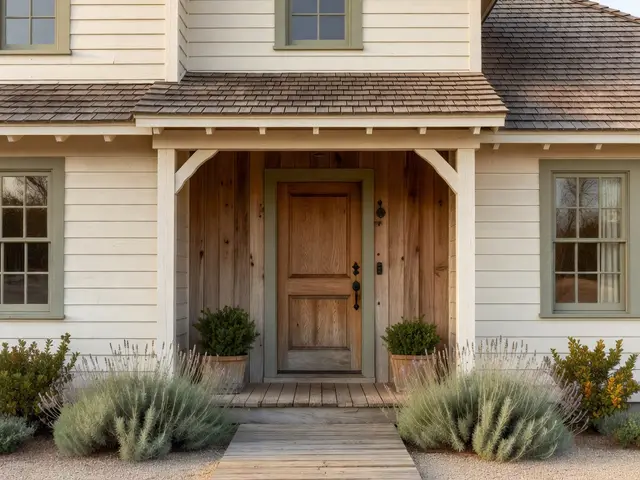
This farmhouse entry centers on a sheltered portico with a gabled roof supported by square timber posts and diagonal brackets. The ceiling and side walls are clad in vertical cedar boards with a natural finish that contrasts with the cream horizontal siding of the main house. A simple two-panel wood door in a medium tone sits beneath the overhang, flanked by matching double-hung windows with sage green trim. The walkway is weathered wood decking bordered by low silvery grasses and boxwood in terra cotta containers.
Design this look with your photo ↗Your room photo + this reference. Review the studio allowance before generating.
What stands out
- Vertical cedar boards line the portico ceiling and walls, creating a warm wood envelope that defines the entry and provides textural contrast against smooth painted siding.
- Exposed timber brackets supporting the portico roof add structural detail while maintaining the understated character typical of farmhouse design without excessive ornamentation.
- Symmetrical planting anchors the entry with mounded silver-blue grasses on either side, offering year-round structure and a soft naturalistic counterpoint to the architectural geometry.
- Weathered wood decking extends as a walkway, its grayish patina bridging the transition from landscaped beds to the sheltered entry while suggesting age and casual approachability.
Make it work in your space
For a smaller entry, skip the full portico and install a simple flat canopy supported by two posts or decorative brackets mounted to the house wall. Use the cedar lining on just the ceiling to keep the warm wood accent without enclosing the space. Substitute gravel for wood decking to reduce material costs while maintaining the informal farmhouse character. Plant fewer specimens or divide existing grasses to fill in over time. Keep the symmetrical layout and natural color palette to preserve the cohesive look.
Consider the weathering and maintenance of real wood at an exposed entrance.
Materials and finishes
- Vertical cedar siding
- Look for clear or knotty grades depending on your budget. Natural cedar weathers to silver-gray outdoors unless sealed. Vertical installation hides imperfections better than horizontal and suits porch ceilings.
- Horizontal lap siding
- Choose fiber cement or wood with a smooth face and consistent reveal width. Paint in warm neutrals like ivory or cream. Properly primed and painted, it requires repainting every ten to fifteen years.
- Dimensional lumber posts
- Use pressure-treated or naturally rot-resistant species like cedar for structural posts. Sand smooth and seal or paint. Square posts in four-by-four or six-by-six dimensions suit farmhouse proportions.
- Wood panel door
- Solid wood or wood veneer doors offer authentic texture. Look for two or three horizontal panels with minimal molding. Medium stains showcase grain without darkening the entry too much.
- Decomposed granite pathways
- This compacted material drains well and complements drought-tolerant plantings. Edge it clearly to prevent migration into beds. Rake and top-dress annually to maintain a tidy surface.
More Farmhouse Exterior Ideas
Your questions, answered
How do I protect a natural cedar portico ceiling from weather damage?
Apply a clear penetrating oil or UV-blocking sealer within a few months of installation to slow weathering and prevent cupping. Reapply every two to three years depending on exposure. Ensure the portico roof has adequate overhang and proper flashing to keep water off the ceiling boards. Good ventilation prevents moisture buildup that can lead to mold or rot in enclosed porch ceilings.
How do I try this look in my own space?
Choose Design this look and upload your own photo in the studio. This concept is loaded separately as a reference, and its design direction is included in the editable brief. Review your options before generating.
Can I buy the exact furniture and materials shown?
This is an AI-generated concept, not a catalog of real products. Use the image to compare shapes, colors, and materials, then verify dimensions and finishes with actual suppliers.