A direction for your next space
Farmhouse Exterior with Native Planting
About this design
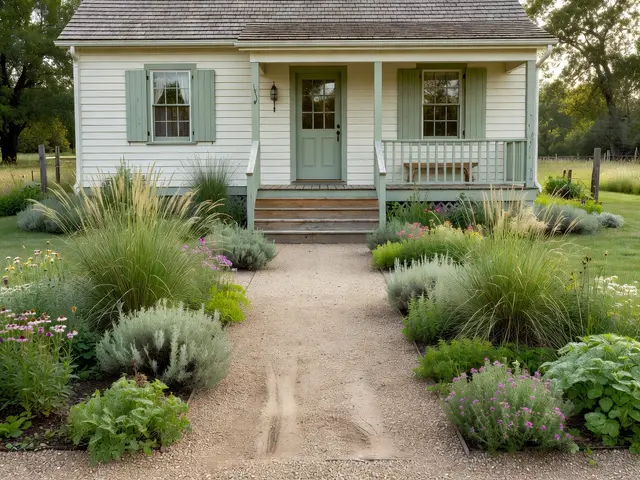
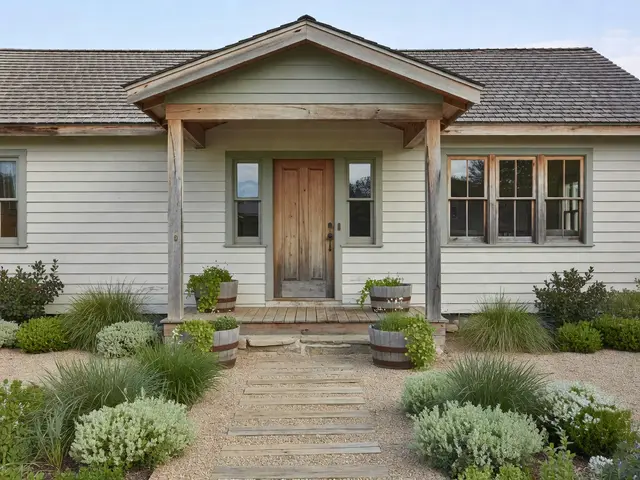
This white-painted clapboard cottage sits behind a gravel path bordered by layered planting beds that blend ornamental grasses, silvery foliage, and flowering perennials. Sage green shutters and a matching door anchor the front elevation, while natural wood steps lead to a covered porch with turned balusters. The plantings frame the walkway in informal, asymmetrical drifts, combining different textures and heights without rigid edging. Mature trees in the background and soft afternoon light enhance the rural, unhurried character.
Design this look with your photo ↗Your room photo + this reference. Review the studio allowance before generating.
What stands out
- Gravel path provides a permeable, low-cost surface that drains quickly and complements the informal planting style without requiring concrete or pavers.
- Ornamental grasses in varying heights and colors create year-round structure and movement, anchoring the beds while needing minimal care beyond seasonal trimming.
- Sage green trim unifies the shutters, door, and porch accents, offering a muted alternative to black or white that suits the farmhouse palette.
- Asymmetrical planting beds curve informally along the path, avoiding strict symmetry and allowing different plant masses to overlap and mingle naturally.
Make it work in your space
For a smaller yard, reduce the planting depth on either side of the path and choose compact grasses and perennials that stay under two feet tall. Skip the gravel in favor of decomposed granite or even mulch pathways, which cost less and install faster. A single painted shutter beside the door delivers the sage green accent without the expense of multiple pairs. Simplify the porch to a basic stoop with minimal trim if budget is tight, focusing plant investment near the entry where it has the most impact.
Choose real plants for your region, sun exposure and mature size, not just their color.
Materials and finishes
- White clapboard siding
- Choose fiber cement or wood clapboard with a smooth finish. Look for consistent exposure widths and tight seams that accept paint cleanly without excessive grain bleeding through.
- Sage green exterior paint
- Select a mid-tone green with gray undertones for shutters and doors. Test samples in full sun and shade to ensure the color remains soft rather than turning too blue or yellow.
- Natural wood porch steps
- Use pressure-treated lumber or rot-resistant species like cedar for outdoor steps. Leave natural or apply a clear sealant to let the grain show while protecting against moisture.
- Crushed gravel path
- Choose angular gravel rather than round pebbles for better compaction and stability underfoot. A quarter-inch to half-inch size works well for walking surfaces and requires edging to contain it.
- Turned wood porch balusters
- Look for consistent turning patterns and smooth sanding. Prime and paint all sides before installation to prevent moisture intrusion at joints and end grain.
More Farmhouse Exterior Ideas
Your questions, answered
How do I keep a gravel path from spreading into planting beds?
Install metal or plastic edging along both sides of the path, sinking it at least four inches into the soil so the top sits slightly below the gravel surface. This hidden border contains the gravel while allowing plants to spill over naturally. Rake the path occasionally to redistribute stones and top up thin spots every year or two. Avoid landscape fabric under gravel, as it traps debris and eventually shows through, creating maintenance headaches.
How do I try this look in my own space?
Choose Design this look and upload your own photo in the studio. This concept is loaded separately as a reference, and its design direction is included in the editable brief. Review your options before generating.
Can I buy the exact furniture and materials shown?
This is an AI-generated concept, not a catalog of real products. Use the image to compare shapes, colors, and materials, then verify dimensions and finishes with actual suppliers.