A direction for your next space
Farmhouse Exterior with Courtyard Entry
About this design
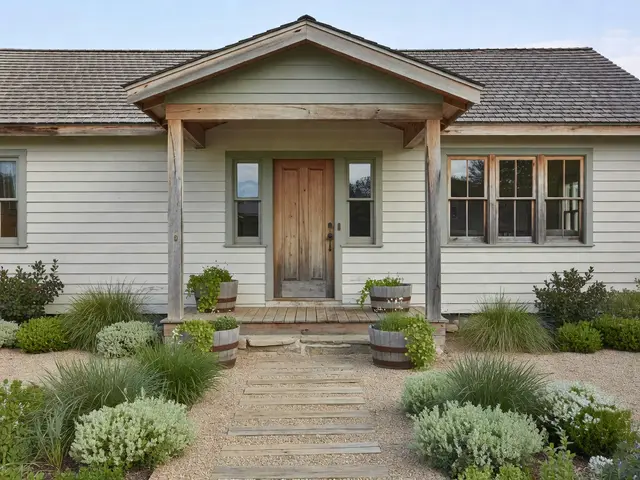
This single-story farmhouse exterior centers on a planted entry courtyard that creates a buffer between the street and the front door. A stepping stone path set into pea gravel runs through low, drought-tolerant plantings, leading to a covered gable porch. The home is clad in pale gray horizontal siding with a simple gable roof. A weathered wood door with vertical planks sits between two narrow windows, and larger windows flank the entry on the right side.
Design this look with your photo ↗Your room photo + this reference. Review the studio allowance before generating.
What stands out
- The stepping stone path set into pea gravel offers a casual yet defined route through the courtyard, reducing lawn maintenance while keeping the approach informal and welcoming.
- Potted plants on simple wood risers at either side of the porch steps add height and seasonal flexibility without requiring permanent beds or extensive installation.
- The gabled porch with exposed wood brackets provides shelter and architectural interest at the entry, creating a transitional zone that reads clearly from the street.
- Low mixed plantings of silvery foliage and ornamental grasses soften the gravel courtyard, offering texture and movement without blocking sightlines to the front door.
Make it work in your space
For a smaller lot, reduce the courtyard depth and use a narrower gravel band along the foundation with just two or three stepping stones. Skip the risers and place potted plants directly on the porch or flanking the door. On a budget, pour a simple concrete path and add gravel only at the edges, or use decomposed granite instead of pea gravel. Keep the plantings minimal with hardy native grasses that require no irrigation once established.
Keep the path visible and check drainage before enclosing a courtyard.
Materials and finishes
- Pea gravel courtyard surface
- Choose washed pea gravel in neutral tones that drain well and stay put underfoot. A depth of two to three inches over landscape fabric prevents weeds and keeps stones stable.
- Flagstone stepping stones
- Look for irregular natural stone pavers with a flat walking surface. Space them a comfortable stride apart and set them slightly below grade so the gravel holds them in place.
- Horizontal lap siding
- Select primed fiber cement or wood siding in a consistent reveal width. Lighter colors reflect heat and require touch-up painting less frequently than darker tones in full sun.
- Weathered wood entry door
- Vertical plank doors with visible grain and natural finish develop character over time. Apply a penetrating oil or clear sealant annually to prevent splitting and UV damage.
- Wood porch support brackets
- Exposed brackets should be solid construction lumber, not decorative trim. Leave them natural or seal them to match porch posts, ensuring they can bear actual structural load.
More Farmhouse Exterior Ideas
Your questions, answered
How do I keep a gravel courtyard from spreading into the lawn or planting beds?
Install metal or plastic edging along the perimeter, setting it flush with the gravel surface so it stays hidden. Landscape fabric underneath the gravel also helps contain stones. Rake the gravel back into place monthly and top it off annually as it settles. Avoid high-traffic shortcuts across planted areas, which scatter stones. A three-inch gravel depth is heavy enough to resist scattering but light enough to rake easily.
How do I try this look in my own space?
Choose Design this look and upload your own photo in the studio. This concept is loaded separately as a reference, and its design direction is included in the editable brief. Review your options before generating.
Can I buy the exact furniture and materials shown?
This is an AI-generated concept, not a catalog of real products. Use the image to compare shapes, colors, and materials, then verify dimensions and finishes with actual suppliers.