A direction for your next space
Farmhouse Kitchen with Oak Cabinets
About this design
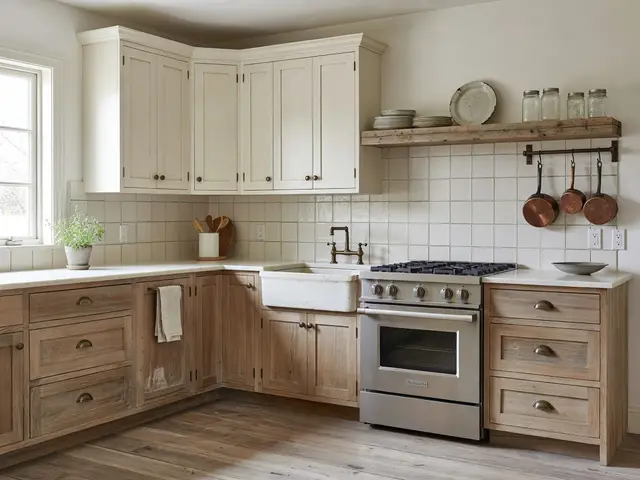
This L-shaped farmhouse kitchen balances warm and cool tones through its two-tone cabinetry. Natural oak lower cabinets with bin pull hardware form the working base, while painted off-white upper cabinets keep the walls feeling open. A white square tile backsplash runs from counter to upper cabinet, providing a neutral backdrop. A deep farmhouse sink sits beneath a matte black faucet, and a stainless steel range anchors the cooking zone. Open wood shelving above the range holds everyday dishes and copper cookware.
Design this look with your photo ↗Your room photo + this reference. Review the studio allowance before generating.
What stands out
- The two-tone cabinet treatment divides the kitchen visually, with natural oak below providing warmth and texture while painted upper cabinets in pale cream prevent the space from feeling too heavy or dark.
- Copper pots hang from hooks beneath the open shelf, adding a functional storage solution that displays cookware as decor while keeping frequently used pieces within easy reach of the range.
- Square white tiles laid in a grid pattern create a clean, unfussy backsplash that lets the wood cabinetry stand out and provides an easy-to-clean surface behind the sink and cooking area.
- Dark bronze bin pulls on the oak drawers offer a subtle contrast that enhances the rustic character without competing with the natural wood grain and varied tones in the cabinetry.
Make it work in your space
In a smaller kitchen, install two-tone cabinetry on a single wall or galley layout instead of an L-shape. Keep the painted uppers to preserve the airy feel, but limit oak lowers to base cabinets only. Skip the open shelving if wall space is tight and use the area for additional upper storage. A smaller farmhouse sink, around 30 inches instead of 36, maintains the style while fitting tighter counters. Use the same square tile but stop the backsplash at a single row above the counter to reduce material costs.
Review wood samples next to the floor to avoid competing undertones.
Materials and finishes
- Natural oak cabinet fronts
- Look for visible grain with color variation ranging from honey to light brown. The wood should show natural character marks. Avoid overly uniform or orange-toned finishes that read artificial.
- White square ceramic tile
- Choose tiles with slight texture or handmade irregularity rather than perfectly flat surfaces. Grout lines should be narrow but visible to maintain the grid pattern that defines this traditional look.
- Farmhouse apron front sink
- Select a sink deep enough for large pots, typically seven to ten inches. The front apron should sit flush with or slightly proud of the cabinet face to create the signature profile.
- Wood open shelving
- Use reclaimed or rough-sawn lumber that shows age and texture. The shelf should be substantial, at least two inches thick, to support dishware weight and provide visual heft.
- Bronze or black metal hardware
- Cup pulls and bin pulls in oil-rubbed bronze or matte black provide period-appropriate contrast. Avoid shiny finishes. Hardware should feel substantial in the hand, not lightweight or hollow.
More Farmhouse Kitchen Ideas
Your questions, answered
What color should I paint upper cabinets to pair with natural oak lower cabinets?
Off-white, warm cream, or pale gray work best with oak's golden undertones. Pure white can create too stark a contrast and make the oak appear more orange. Test paint samples in your kitchen's natural light, as oak shifts from honey to amber depending on exposure. Colors with a slight warm or greige base prevent the two-tone effect from feeling disjointed while still providing clear visual separation between upper and lower cabinetry.
How do I try this look in my own space?
Choose Design this look and upload your own photo in the studio. This concept is loaded separately as a reference, and its design direction is included in the editable brief. Review your options before generating.
Can I buy the exact furniture and materials shown?
This is an AI-generated concept, not a catalog of real products. Use the image to compare shapes, colors, and materials, then verify dimensions and finishes with actual suppliers.