A direction for your next space
Farmhouse Kitchen with Waterfall Island
About this design
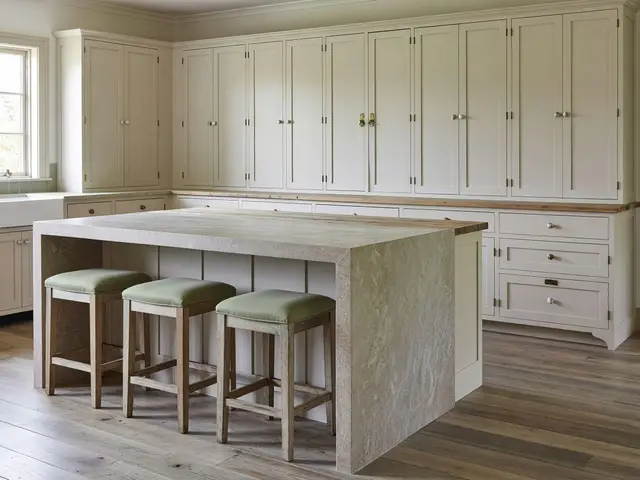
This farmhouse kitchen centers on a substantial island with a waterfall edge clad in pale gray stone. Three sage green upholstered stools tuck beneath the natural wood countertop. Floor-to-ceiling ivory cabinets line the back wall in a symmetrical arrangement, featuring simple hardware and inset panel doors. Below, a run of drawers with cup pulls provides base storage. Wide-plank oak flooring in a weathered finish grounds the space, while a window on the left brings in natural light.
Design this look with your photo ↗Your room photo + this reference. Review the studio allowance before generating.
What stands out
- The stone waterfall edge extends from countertop to floor in a single piece, creating a clean vertical line that adds architectural weight without requiring ornate details common in other styles.
- Ivory upper cabinets stretch to the ceiling, maximizing storage while maintaining farmhouse simplicity through flat panel doors and minimal black hinges that read as functional rather than decorative.
- Sage green upholstery on the counter stools introduces soft color that complements the neutral palette without overwhelming the space, a restrained approach typical of farmhouse interiors.
- Wide-plank oak flooring shows natural knots and grain variation, providing textural interest underfoot while the muted tone keeps the overall effect calm rather than busy.
Make it work in your space
In a smaller kitchen, skip the floor-to-ceiling cabinets on one wall and use open shelving or a window instead to prevent a boxed-in feeling. A narrower island without the waterfall edge reduces material costs while still providing seating for two stools. Replace custom inset cabinetry with quality stock cabinets in a similar ivory tone. Keep the wood countertop on the island as an affordable contrast to stone, and use the wide-plank flooring only in the kitchen footprint rather than throughout adjacent spaces.
Check aisle widths with stools occupied and appliance doors open.
Materials and finishes
- Stone waterfall island cladding
- Look for stone with subtle veining rather than bold patterns. The pale gray tone shown here works because it remains neutral while adding texture through natural variation in the surface.
- Natural wood island countertop
- Choose a wood species with visible grain that can withstand daily prep work. The butcher block style shown provides warmth against cooler stone and painted surfaces.
- Painted inset cabinet doors
- Inset doors sit flush with the cabinet frame rather than overlaying it. This requires precise construction but creates crisp shadow lines. Choose a durable paint finish for kitchen use.
- Wide-plank oak flooring
- Wider planks show more grain character and fewer seams. Look for a matte or low-sheen finish that hides scratches better than glossy treatments in high-traffic kitchens.
- Linen or cotton stool upholstery
- Natural fabric upholstery adds softness but requires more maintenance than leather or vinyl. Consider performance fabrics treated to resist stains while maintaining a natural appearance.
More Farmhouse Kitchen Ideas
Your questions, answered
How do you protect a waterfall edge island in a working kitchen?
The vertical stone surface handles splashes well but can chip at the bottom edge where feet and vacuum cleaners hit. Some homeowners add a clear bumper guard along the base or choose a honed finish rather than polished stone, which shows scratches less. Seal natural stone according to the supplier's recommendation, typically once or twice yearly. Avoid leaning hard objects against the edge, and teach children not to kick the stone while seated.
How do I try this look in my own space?
Choose Design this look and upload your own photo in the studio. This concept is loaded separately as a reference, and its design direction is included in the editable brief. Review your options before generating.
Can I buy the exact furniture and materials shown?
This is an AI-generated concept, not a catalog of real products. Use the image to compare shapes, colors, and materials, then verify dimensions and finishes with actual suppliers.