A direction for your next space
Farmhouse Kitchen with Statement Range Hood
About this design
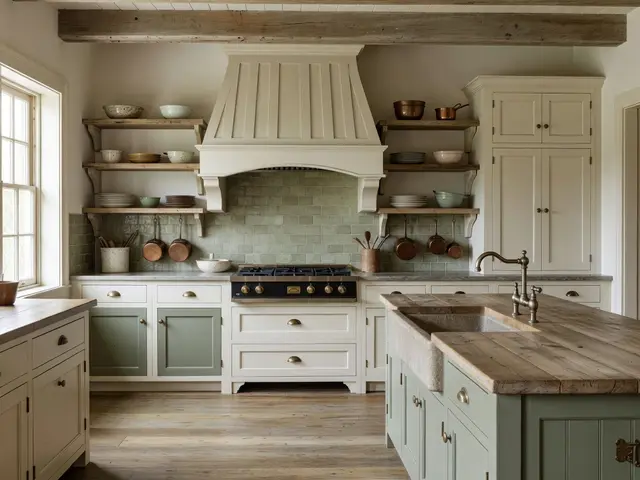
This farmhouse kitchen centers on a custom range hood with vertical paneling and a graceful arched alcove. Pale green subway tile lines the cooking zone behind a professional-style gas range. Cream-painted cabinetry surrounds the cooking area, while sage green cabinets form the island and flanking base units. Open shelving on dark wood brackets displays pottery and bowls. A thick butcher block countertop caps the island, contrasting with lighter counters elsewhere. An exposed beam crosses the ceiling, and pale wood flooring grounds the space.
Design this look with your photo ↗Your room photo + this reference. Review the studio allowance before generating.
What stands out
- The arched alcove behind the range creates architectural depth, framing the cooking zone with pale green tile that adds subtle color without competing with the statement hood
- Dark wood open shelving brackets and thick planks provide rustic texture against cream walls, keeping daily dishes accessible while displaying earthenware in warm neutral tones
- Sage green cabinet doors on the island and perimeter base units ground the room, offering visual weight that balances the airy cream upper cabinets and hood
- The butcher block island countertop shows natural grain and age, providing a warm work surface that invites meal preparation and contrasts with cooler painted surfaces
Make it work in your space
In a smaller kitchen, install the statement hood over a standard 30-inch range rather than a wide professional model. Replace full open shelving with one or two floating shelves per side to avoid visual clutter. Use the sage green on lower cabinets only, keeping uppers cream to maintain height. Swap thick butcher block for a thinner wood countertop on just the island or a small section of counter. Skip the ceiling beam if your space has low ceilings. Paint existing cabinets rather than replacing them.
Have ventilation capacity and required appliance clearances checked before building an enclosure.
Materials and finishes
- Vertical board range hood
- Look for smooth-faced panels with clean joints. The hood should taper gently and extend fully to the ceiling. Painted finishes hide seams better than stain.
- Pale green subway tile
- Choose a matte or satin glaze rather than high gloss for authentic farmhouse character. Lighter grout minimizes contrast and keeps the backsplash subtle and calm.
- Butcher block countertop
- Expect visible grain, knots, and color variation in quality wood. Thicker slabs around two inches show more character. Plan for regular oiling to maintain the surface.
- Dark walnut open shelving
- Solid wood planks should be thick enough to hold weight without bowing. Look for brackets with a hand-forged or matte finish rather than shiny metal.
- Reclaimed wood ceiling beam
- Genuine salvaged beams show saw marks, nail holes, and weathering. New beams can be wire-brushed or hand-planed for texture. Size should suit ceiling height.
More Farmhouse Kitchen Ideas
Your questions, answered
How do you clean and maintain a painted wood range hood in a working kitchen?
Wipe the hood weekly with a damp microfiber cloth to remove cooking residue before it builds up. For grease spots, use a gentle dish soap solution and dry immediately to protect the paint. Avoid abrasive cleaners that can dull the finish. Touch up chips or worn areas with matching paint as needed. If your hood has a vent insert, clean or replace filters according to the manufacturer's schedule to prevent grease from migrating onto painted surfaces.
How do I try this look in my own space?
Choose Design this look and upload your own photo in the studio. This concept is loaded separately as a reference, and its design direction is included in the editable brief. Review your options before generating.
Can I buy the exact furniture and materials shown?
This is an AI-generated concept, not a catalog of real products. Use the image to compare shapes, colors, and materials, then verify dimensions and finishes with actual suppliers.