A direction for your next space
Minimalist Living Room with Curved Sofa
About this design
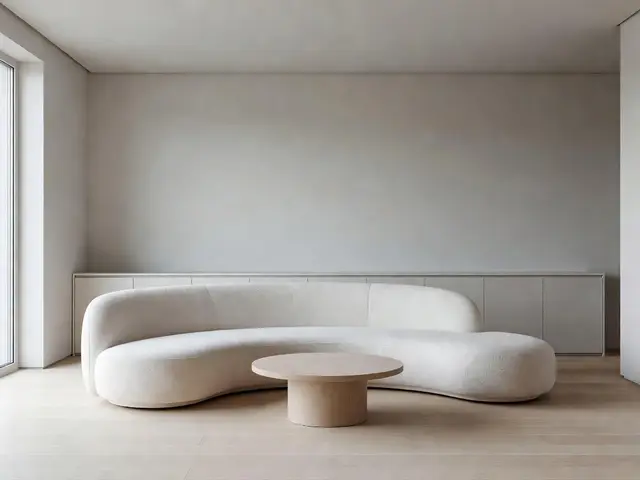
This minimalist living room centers on a sculptural curved sofa upholstered in white fabric. The sofa's organic, kidney-like shape creates a soft conversation area without traditional arms or visible legs. Behind it, a low gray paneled wall provides integrated storage while maintaining clean lines. A round coffee table in pale oak sits on light wood flooring that spans the entire space. Natural light enters from the left through a floor-to-ceiling window, while soft gray walls and a white ceiling complete the neutral envelope.
Design this look with your photo ↗Your room photo + this reference. Review the studio allowance before generating.
What stands out
- The curved sofa's continuous form eliminates visual breaks, with its plush white upholstery wrapping around the seating area in one smooth gesture that defines the conversation zone.
- The low gray storage wall behind the sofa provides concealed storage through flush panel doors that read as architectural detailing rather than furniture.
- Light oak flooring with minimal grain variation establishes a warm neutral base that prevents the white and gray palette from feeling cold or institutional.
- The cylindrical coffee table in pale wood echoes the sofa's rounded forms while its substantial proportions keep it from disappearing against the generous seating.
Make it work in your space
In a smaller living room, use a compact curved loveseat rather than the full sculptural sofa to maintain the organic form at a manageable scale. Skip the low storage wall if space is tight and opt for a floating shelf instead. Keep the round coffee table but choose a smaller diameter. On a budget, look for a standard sofa with rounded arms and add a slipcover in white cotton or linen. Maintain the pale wood flooring and soft gray walls, as these establish the minimalist foundation without requiring custom pieces.
Map the curve on the floor with tape to check how much circulation space it really needs.
Materials and finishes
- White upholstery fabric
- Choose a performance fabric with a subtle texture that hides minor wear. Tightly woven materials in warm whites resist soiling better than stark bright whites in high-traffic living rooms.
- Matte gray panel finish
- Look for low-sheen laminates or painted MDF that won't show fingerprints. The finish should be durable enough for daily contact since these panels likely conceal frequently accessed storage.
- Pale oak wood flooring
- Select wide planks with minimal color variation and a matte or satin finish. The subtle grain should be present but not prominent, supporting the room rather than competing for attention.
- Smooth wall plaster
- A fine-texture plaster or multiple coats of quality paint creates the even, soft gray surface visible here. The finish diffuses light gently without any sheen or texture catching the eye.
- Solid wood table base
- The cylindrical form requires stable, dense wood or engineered material. Look for options with consistent color throughout since the round shape will be viewed from all angles in the room.
More Minimalist Living Room Ideas
Your questions, answered
How do you clean and maintain a white curved sofa in a family living room?
Vacuum weekly with an upholstery attachment to prevent dirt from settling into fibers. Treat spills immediately by blotting with a clean white cloth and water, working from the outside in. For deeper cleaning, use a fabric cleaner suitable for your upholstery type every few months. Consider applying a fabric protector treatment after professional cleaning. Rotate cushions if removable to ensure even wear, and keep the sofa out of direct sunlight to prevent yellowing over time.
How do I try this look in my own space?
Choose Design this look and upload your own photo in the studio. This concept is loaded separately as a reference, and its design direction is included in the editable brief. Review your options before generating.
Can I buy the exact furniture and materials shown?
This is an AI-generated concept, not a catalog of real products. Use the image to compare shapes, colors, and materials, then verify dimensions and finishes with actual suppliers.