A direction for your next space
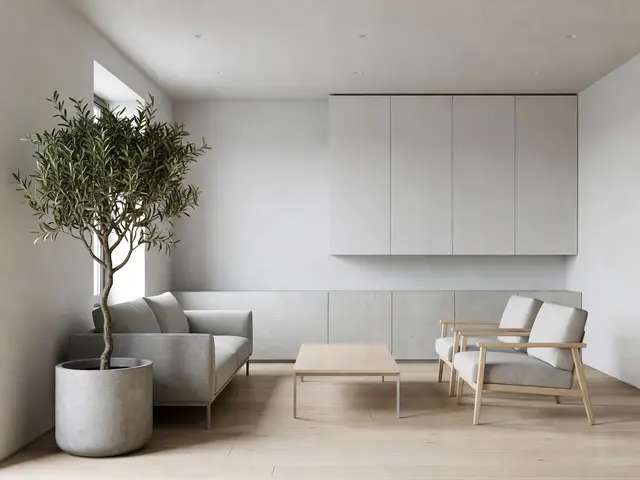
Minimalist Living Room with Olive Tree
About this design
This living room centers on a single olive tree planted in a large cylindrical white planter with visible texture. The tree stands beside a gray upholstered corner sofa on pale oak wide-plank flooring. White walls and ceiling provide a neutral backdrop, while floor-to-ceiling built-in cabinets in soft gray flank the right wall. A low rectangular coffee table in light wood sits within the seating area, joined by a pale wood armchair with white cushions. Natural light from an unseen source brightens the corner.
Design this look with your photo ↗Your room photo + this reference. Review the studio allowance before generating.
What stands out
- The textured white cylindrical planter anchors the olive tree without competing visually, its substantial size balancing the tree's height while the matte finish complements the room's quiet palette.
- Floor-to-ceiling gray built-in cabinets maximize storage while maintaining clean lines, their handleless design and soft color reading as part of the wall rather than separate furniture.
- Wide-plank pale oak flooring runs continuously without interruption or area rugs, visually expanding the space and allowing the minimal furniture arrangement to float freely.
- The corner sofa configuration creates an intimate seating area without blocking sightlines, its low profile and neutral gray upholstery keeping the focus on the architectural elements and olive tree.
Make it work in your space
In a smaller room, use a floor-standing plant in a similar planter instead of a full tree to achieve the same organic accent without overwhelming the space. Replace the corner sofa with a compact two-seat version and skip the separate armchair. Mount wall cabinets only, leaving the lower wall open to preserve visual breathing room. Keep the pale wood flooring and minimal coffee table, as these elements work at any scale and create the foundation of the look without requiring square footage.
Check the light needs of a real plant before placing it in the darkest corner of the room.
Materials and finishes
- Wide-plank pale oak flooring
- Look for boards at least six inches wide with minimal grain variation and a matte or natural oil finish that shows subtle wood character without high gloss or heavy distressing.
- Handleless gray cabinet fronts
- Choose flat-panel doors in a soft warm gray with integrated finger pulls or push-to-open mechanisms. Matte laminate or painted MDF keeps costs reasonable while delivering smooth surfaces.
- Textured white planter finish
- Seek a plaster-like or concrete finish with slight surface variation that catches light. The texture should be subtle enough to remain neutral but visible enough to add tactile interest.
- Low-pile gray upholstery
- Select tightly woven fabrics in performance blends that resist wear and staining. The color should be a true mid-gray without strong warm or cool undertones for maximum versatility.
- Light wood frame construction
- Look for hardwood frames in pale ash, oak, or maple with visible grain and minimal finish. The wood should appear natural rather than bleached, with joints that are clean and tight.
More Minimalist Living Room Ideas
Your questions, answered
How do you keep an indoor olive tree alive in a living room?
Olive trees need at least six hours of direct sunlight daily, so place them within three feet of a south-facing window. Water only when the top two inches of soil are completely dry, usually every week or two. Use well-draining potting mix and ensure the planter has drainage holes with a catch tray underneath. Rotate the tree monthly for even growth and watch for leaf drop, which signals either overwatering or insufficient light.
How do I try this look in my own space?
Choose Design this look and upload your own photo in the studio. This concept is loaded separately as a reference, and its design direction is included in the editable brief. Review your options before generating.
Can I buy the exact furniture and materials shown?
This is an AI-generated concept, not a catalog of real products. Use the image to compare shapes, colors, and materials, then verify dimensions and finishes with actual suppliers.