A direction for your next space
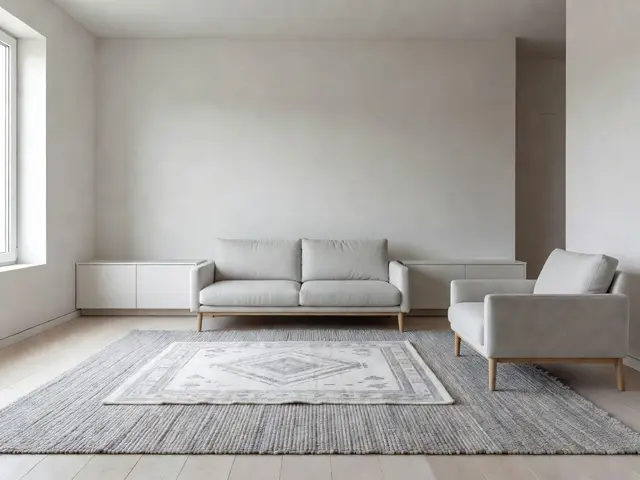
Minimalist Living Room with Layered Rugs
About this design
This minimalist living room centers on a layered rug arrangement that defines the seating area. A charcoal gray textured rug, likely jute or sisal, serves as the base layer, topped with a lighter accent rug featuring geometric marble-like veining in soft grays and whites. Two low-profile sofas in pale gray fabric rest on light oak legs, facing each other across the rugs. A matching low cabinet sits against the left wall beneath a tall window, while white walls and pale wood flooring amplify natural light throughout the space.
Design this look with your photo ↗Your room photo + this reference. Review the studio allowance before generating.
What stands out
- The layered rug technique adds depth without clutter, with the darker base rug grounding the space while the lighter patterned top rug draws the eye and defines conversation zones.
- Light oak legs on both sofas and the cabinet create visual continuity at floor level, allowing the furniture to appear to float rather than anchor heavily to the ground.
- The low-profile cabinet provides hidden storage that maintains clean wall lines, demonstrating how integrated storage preserves the uncluttered aesthetic central to minimalist design.
- Monochromatic gray upholstery on different furniture pieces creates cohesion while subtle variations in tone prevent the palette from feeling flat or one-dimensional.
Make it work in your space
In smaller rooms, use just one rug in a mid-tone gray rather than layering, which can visually crowd tight spaces. Swap the two sofas for one sofa and a single chair to open up floor area. Skip the low cabinet if wall space is limited, choosing a narrow console instead. Keep the pale wood legs and light upholstery, as these elements make furniture recede visually. On a budget, start with the larger textured rug alone and add the patterned layer later, or substitute a printed cotton dhurrie for the accent rug.
Keep rug edges out of main walking routes and use appropriate pads to reduce movement.
Materials and finishes
- Textured jute or sisal rug
- Look for tightly woven natural fiber rugs with minimal shedding. Check the backing for durability and ensure the texture is comfortable enough for bare feet if needed.
- Geometric patterned accent rug
- Choose low-pile rugs with digitally printed or flatweave construction for patterns that stay crisp. Verify the rug lies flat without curling at edges when layered.
- Light oak wood legs
- Select hardwood rather than veneer for longevity. Look for consistent grain and tone across pieces, with a matte or satin finish that resists showing fingerprints.
- Pale gray upholstery fabric
- Opt for tightly woven performance fabrics that resist staining and pilling. Test samples in your actual lighting conditions as gray can shift between warm and cool tones.
- White matte wall paint
- Choose low-sheen or matte finishes to minimize imperfections. Consider washable formulas for high-traffic living areas, and test samples on multiple walls before committing.
More Minimalist Living Room Ideas
Your questions, answered
How do you keep layered rugs from sliding apart in a living room?
Use a thin rug pad between the two layers, cut slightly smaller than the top rug so it remains hidden. Non-slip mesh pads work better than rubber for rug-on-rug applications. Alternatively, place furniture legs on both rugs to anchor them in place. Avoid thick padding between layers, which creates an unstable surface. For high-traffic areas, consider double-sided rug tape at corners only, testing first to ensure it does not damage the bottom rug.
How do I try this look in my own space?
Choose Design this look and upload your own photo in the studio. This concept is loaded separately as a reference, and its design direction is included in the editable brief. Review your options before generating.
Can I buy the exact furniture and materials shown?
This is an AI-generated concept, not a catalog of real products. Use the image to compare shapes, colors, and materials, then verify dimensions and finishes with actual suppliers.