A direction for your next space
Japandi Kitchen with Breakfast Nook
About this design
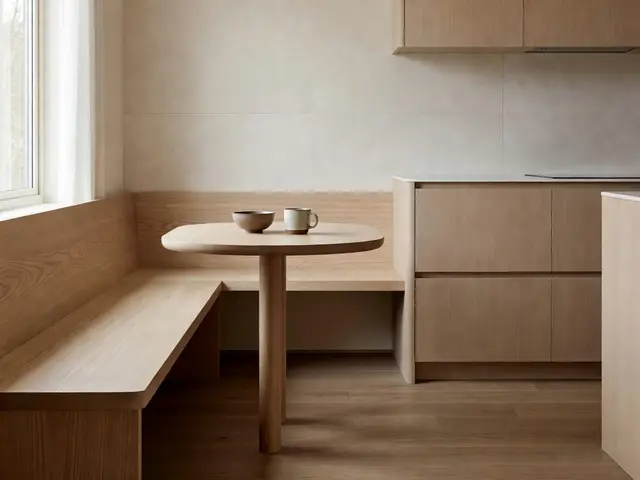
This kitchen pairs a working cooking zone with a compact breakfast nook anchored by a built-in L-shaped bench and a small round pedestal table. The bench runs along two walls beneath a window, offering integrated seating without eating into floor space. Pale wood grain wraps the bench front and continues through the cabinetry, while upper cabinets in a taupe finish maintain clean lines. Large format wall tiles in warm off-white climb partway up the walls, meeting the pale painted upper portion. Natural light from the window washes over the setup, emphasizing the honey tones in the wood flooring and furniture.
Design this look with your photo ↗Your room photo + this reference. Review the studio allowance before generating.
What stands out
- The built-in bench eliminates the need for freestanding chairs, streamlining the footprint while the continuous wood grain keeps the corner visually quiet and cohesive.
- The round pedestal table suits the corner layout because its single central support allows easier movement around the bench without chair or table legs creating obstacles.
- Pale wood grain on the bench face and lower cabinets adds warmth without pattern or contrast, supporting the Japandi preference for understated natural texture.
- The two-tone wall treatment, with large tiles below and smooth paint above, divides the vertical plane gently and stops the eye at a comfortable height.
Make it work in your space
If your kitchen lacks a corner window, position the bench along a single wall and add a slim floating shelf above for plants or ceramics to create visual interest. A smaller round table works in tighter spaces, or swap it for a wall-mounted drop-leaf that folds away when not in use. Budget-conscious updates can start with paint: refinish existing cabinets in a taupe tone and add a simple wood-fronted bench using plywood with edge banding. Skip custom cabinetry and use ready-made base units with wood-look contact paper or veneer applied to exposed sides.
Allow enough room to slide into the bench without blocking the main aisle.
Materials and finishes
- Pale wood grain veneer
- Look for consistent grain direction and a matte or low-sheen finish. Avoid high-gloss treatments that read too contemporary or synthetic rather than natural and tactile.
- Taupe painted cabinet fronts
- Choose a warm neutral with brown or gray undertones rather than cool gray. Flat or eggshell sheens keep the surface soft and reduce reflective glare.
- Large format wall tiles
- Tiles with minimal grout lines create a calmer backdrop. Select a warm off-white or cream tone that complements wood rather than stark white that can feel cold.
- Solid wood pedestal base
- A chunky single-post design offers stability and a handcrafted feel. Ensure the wood tone matches or closely coordinates with other timber elements in the space.
- Medium-toned wood flooring
- Flooring in a honey or natural oak tone grounds the lighter finishes above. Look for planks with visible grain but not heavy distressing or dark knots.
More Japandi Kitchen Ideas
Your questions, answered
How do you keep a built-in breakfast bench comfortable for daily use?
Add seat cushions in linen or cotton for padding, keeping them low-profile so they do not dominate visually. Choose foam inserts at least two inches thick with a medium firmness. Removable covers allow for easy cleaning. Position the bench height at sixteen to eighteen inches and leave enough space between the bench edge and table for diners to slide in comfortably. A backrest or wall-mounted lumbar pillows increase comfort for longer meals.
How do I try this look in my own space?
Choose Design this look and upload your own photo in the studio. This concept is loaded separately as a reference, and its design direction is included in the editable brief. Review your options before generating.
Can I buy the exact furniture and materials shown?
This is an AI-generated concept, not a catalog of real products. Use the image to compare shapes, colors, and materials, then verify dimensions and finishes with actual suppliers.