A direction for your next space
Japandi Kitchen with Open Shelves
About this design
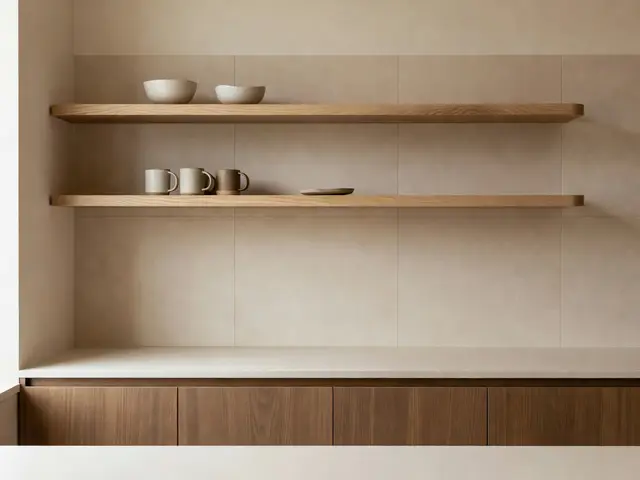
This Japandi kitchen centers on two floating wood shelves mounted against a pale beige tiled backsplash. The shelves display simple ceramic bowls and mugs in neutral tones. Below, a white countertop provides a crisp horizontal line above walnut-toned lower cabinets with a natural grain finish. The color palette remains tightly controlled: warm wood, soft sand, and clean white. Recessed lighting along the shelf undersides adds gentle illumination that emphasizes the wood grain and creates subtle shadows.
Design this look with your photo ↗Your room photo + this reference. Review the studio allowance before generating.
What stands out
- The floating shelves maintain a consistent depth and rounded front edge, creating visual continuity while allowing the natural wood grain to vary from shelf to shelf.
- White ceramic bowls and mugs with organic, handmade shapes provide functional display while reinforcing the restrained palette and artisan quality central to Japandi design.
- Recessed LED strips beneath each shelf cast downward light that highlights the backsplash texture and creates layered ambient lighting without visible fixtures.
- The walnut lower cabinets use horizontal grain orientation and flat panel construction, balancing warmth against the cooler tones above without adding visual clutter.
Make it work in your space
In a smaller kitchen, install just one floating shelf instead of two to maintain the open feel without overwhelming the wall. Use the same wood species for the shelf and lower cabinets to create cohesion on a budget. Skip the recessed lighting and rely on under-cabinet strips mounted to the bottom of upper cabinets if you have them elsewhere. For tighter budgets, paint existing cabinets in a warm taupe instead of replacing them with walnut veneer. Keep the white countertop and simple ceramics, as these anchor the Japandi aesthetic without major expense.
Reserve shelves for frequently used items and keep less-used supplies behind doors.
Materials and finishes
- Light wood floating shelves
- Choose hardwood with visible grain variation and a matte finish. Look for rounded or eased front edges rather than sharp corners to soften the profile.
- Large format beige tiles
- Select tiles in a neutral sand or off-white tone with minimal grout lines. Matte or satin finishes work better than high gloss for a calm, understated backdrop.
- White solid surface countertop
- Pick a non-porous material with a smooth matte finish that resists staining. Pure white provides contrast without introducing pattern or veining.
- Walnut veneer cabinet fronts
- Look for horizontal grain direction and consistent coloring. A clear matte or satin finish preserves the wood character without excessive shine.
- Recessed shelf lighting
- Choose slim LED strips with warm white temperature. Install them in routed channels or clips so the light source remains hidden when viewed straight on.
More Japandi Kitchen Ideas
Your questions, answered
How deep should floating shelves be in a Japandi kitchen?
Floating shelves in Japandi kitchens typically range from ten to twelve inches deep, enough to hold dinner plates or bowls without protruding too far into the room. This depth balances function with the minimalist aesthetic, keeping the wall plane relatively flat. Match the shelf depth to what you plan to display. Shallower shelves around eight inches work if you only need space for mugs and small items.
How do I try this look in my own space?
Choose Design this look and upload your own photo in the studio. This concept is loaded separately as a reference, and its design direction is included in the editable brief. Review your options before generating.
Can I buy the exact furniture and materials shown?
This is an AI-generated concept, not a catalog of real products. Use the image to compare shapes, colors, and materials, then verify dimensions and finishes with actual suppliers.