A direction for your next space
Japandi Kitchen with Sage Cabinetry
About this design
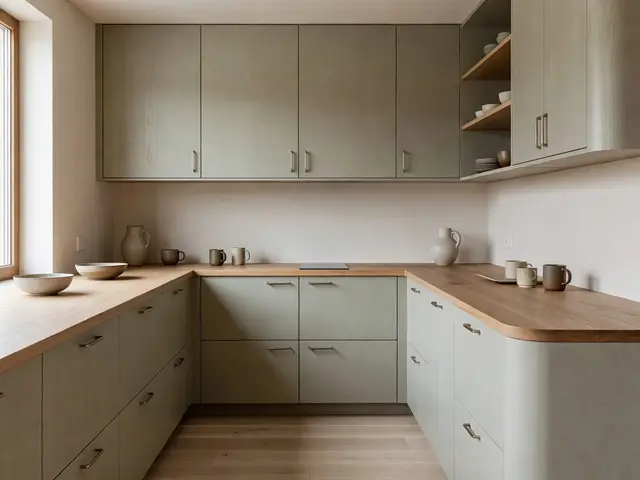
This U-shaped kitchen demonstrates Japandi design through muted sage cabinet fronts paired with warm wood countertops. Upper and lower cabinetry wraps three walls, maximizing storage while maintaining visual calm. Simple metal bar pulls in a brushed finish provide functional hardware without drawing attention. The palette stays neutral with soft white walls, light wood flooring, and earthy ceramic accessories arranged along the counters. Natural light from a window on the left brightens the space.
Design this look with your photo ↗Your room photo + this reference. Review the studio allowance before generating.
What stands out
- The sage green cabinetry reads almost gray in certain light, providing subtle color that stays neutral enough to anchor the space without competing with the natural wood tones.
- Wood countertops bring warmth and organic texture to balance the flat cabinet surfaces, their honey tone creating a middle ground between the sage base and white upper walls.
- Handmade ceramic vessels in cream, brown, and gray populate the counters in small clusters, adding artisan character while keeping the look uncluttered and functional.
- Open shelving on the upper right corner breaks up the run of closed cabinets, displaying everyday items and preventing the storage from feeling too uniform or heavy.
Make it work in your space
In a galley or L-shaped kitchen, keep the sage cabinets and wood counters but reduce upper cabinets to avoid a closed-in feeling. Use open shelving on one wall instead. On a budget, paint existing cabinets in a muted sage and add butcher block to one section of counter rather than the full run. Skip specialty hardware and use simple bar pulls. Focus spending on good paint and one quality wood surface where you prep food most often.
Test a cabinet color sample in both daylight and under-cabinet light.
Materials and finishes
- Sage painted cabinet doors
- Look for a grayed-down sage with low saturation rather than bright green. Matte or satin finishes work better than gloss for a natural, understated appearance.
- Wood butcher block countertops
- Choose a light to medium wood tone with visible grain. Butcher block requires regular oiling but develops character over time and can be sanded if damaged.
- Brushed metal bar pulls
- Simple cylindrical or flat bar pulls in brushed nickel or stainless keep hardware minimal. Avoid ornate designs; the profile should be clean and slim.
- Light wood plank flooring
- Wide planks in a natural or whitewashed finish enhance the calm feeling. Look for minimal variation in tone to keep the floor from drawing too much attention.
- Matte white wall paint
- A warm white or off-white works better than stark white in Japandi spaces. Matte finish reduces glare and creates a softer backdrop for wood and ceramics.
More Japandi Kitchen Ideas
Your questions, answered
What shade of sage green works best for Japandi kitchen cabinets?
Choose a muted, grayed sage with low saturation rather than a bright or yellow-toned green. The color should read almost neutral, sitting between gray and green. Test samples in your kitchen light, as sage can shift significantly between natural and artificial light. A color that looks slightly gray in the can often reveals its green undertones on the wall, which is what you want for this style.
How do I try this look in my own space?
Choose Design this look and upload your own photo in the studio. This concept is loaded separately as a reference, and its design direction is included in the editable brief. Review your options before generating.
Can I buy the exact furniture and materials shown?
This is an AI-generated concept, not a catalog of real products. Use the image to compare shapes, colors, and materials, then verify dimensions and finishes with actual suppliers.