A direction for your next space
Japandi Kitchen with Waterfall Island
About this design
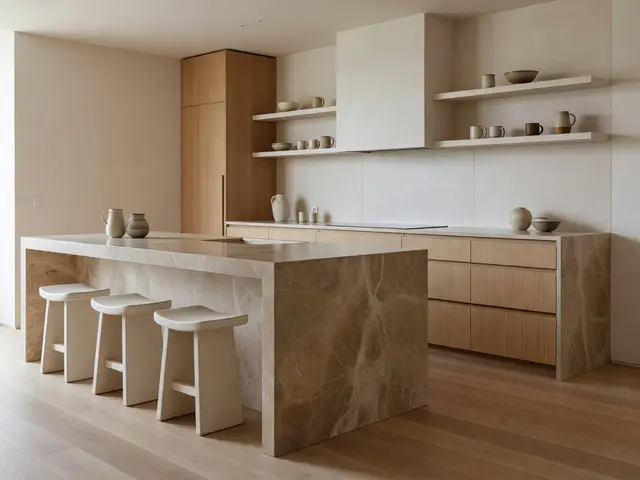
This kitchen centers on a large island with a light stone waterfall edge that extends to the floor on one side. Three low wooden stools tuck beneath the overhang. The perimeter features natural wood cabinetry in warm honey tones, including tall vertical storage and horizontal drawers. Floating open shelves display handmade ceramic cups and bowls. The walls and ceiling are pale off-white, and medium oak flooring runs underfoot. Natural light softens the entire space.
Design this look with your photo ↗Your room photo + this reference. Review the studio allowance before generating.
What stands out
- The waterfall island uses a light stone slab that cascades to the floor, creating a sculptural focal point while providing seating for three on simple, backless stools.
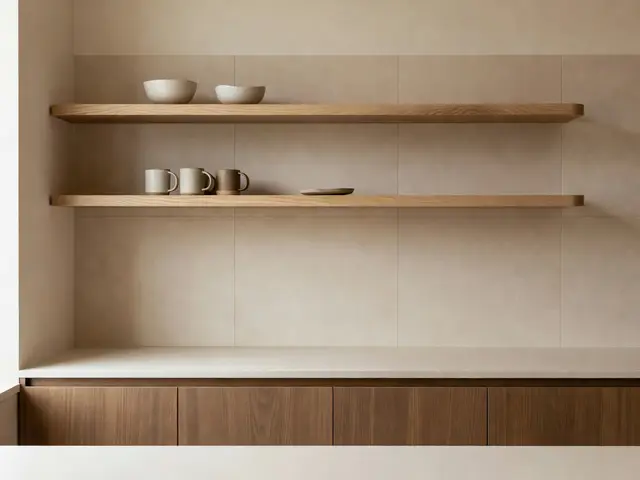
- Floating shelves in matching off-white display ceramic pieces in neutral tones, keeping everyday items accessible while maintaining the uncluttered minimalist aesthetic.
- Natural wood cabinetry with visible grain appears in full-height panels and drawer banks, warming the space without hardware visible on drawer fronts.
- Low wooden stools with rounded seats echo Japanese design principles, offering seating that remains visually light and tucks completely under the island overhang.
Make it work in your space
In a smaller kitchen, use a narrower island or peninsula with the waterfall detail on just one end to preserve the focal feature. Skip the tall cabinets and use only floating shelves to maintain openness. Choose two stools instead of three. On a budget, apply the waterfall edge to a single side using laminate that mimics stone rather than full slab material. Keep wood-look cabinetry but consider veneer over solid wood, and display fewer but carefully chosen ceramic pieces.
Check aisle widths with stools occupied and appliance doors open.
Materials and finishes
- Light stone waterfall slab
- Look for a stone with subtle movement rather than heavy veining. The waterfall application requires book-matched slabs for continuity at the mitered edge.
- Natural grain wood cabinetry
- Choose wood with warm undertones and visible grain pattern. Flat-panel doors without ornament keep the lines clean and the visual weight low.
- White oak flooring
- Medium-toned oak adds warmth without going dark. The natural grain should be visible, and a matte finish prevents the floor from feeling too polished.
- Off-white wall finish
- Select a warm white with slight beige or cream undertones rather than stark white. Matte paint prevents glare and maintains the soft, serene quality.
- Handmade ceramic dishware
- Look for pieces with irregular shapes, visible hand marks, or subtle glaze variations. Neutral earth tones integrate better than pure white or bold colors.
More Japandi Kitchen Ideas
Your questions, answered
How thick should a waterfall island countertop be for a Japandi kitchen?
A thickness between one and one-and-a-half inches works well for the minimalist Japandi aesthetic. Thicker slabs can feel heavy and ornate, which conflicts with the style's preference for light, clean lines. The material itself should have subtle patterning rather than dramatic veining. Ensure the fabricator can miter the edge cleanly so the waterfall appears as one continuous surface wrapping from horizontal to vertical.
How do I try this look in my own space?
Choose Design this look and upload your own photo in the studio. This concept is loaded separately as a reference, and its design direction is included in the editable brief. Review your options before generating.
Can I buy the exact furniture and materials shown?
This is an AI-generated concept, not a catalog of real products. Use the image to compare shapes, colors, and materials, then verify dimensions and finishes with actual suppliers.