A direction for your next space
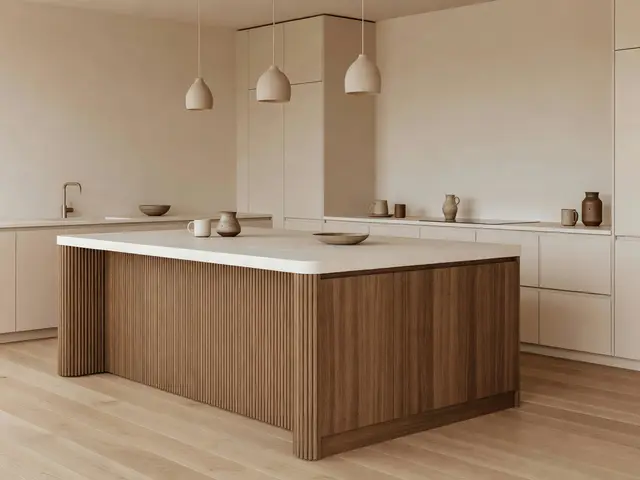
Japandi Kitchen with Fluted Island
About this design
This Japandi kitchen centers on a large island wrapped in finely fluted wood paneling that runs vertically along all sides. The island top is a pale stone or solid surface in warm off-white, matching the perimeter countertops. Floor-to-ceiling flat-panel cabinetry in a soft sand tone lines the walls, creating a calm backdrop. Three rounded pendant lights in cream hang above the island. Light wood flooring and handmade ceramic bowls and vessels in earth tones complete the minimal, natural palette.
Design this look with your photo ↗Your room photo + this reference. Review the studio allowance before generating.
What stands out
- The vertical fluting on the island brings subtle texture and visual interest without adding pattern or color, maintaining the minimalist aesthetic while preventing the large mass from feeling flat.
- Rounded pendant lights with a matte finish echo the soft curves found in the ceramic vessels displayed on the counters, reinforcing the gentle, handcrafted quality central to Japandi design.
- Handleless cabinetry with horizontal reveal lines keeps the walls quiet and uncluttered, allowing the fluted island to remain the primary focus while providing ample concealed storage throughout.
- The warm off-white stone countertop provides a generous work surface that contrasts gently with the wood tones below, defining the island as a functional zone without harsh visual breaks.
Make it work in your space
In a smaller kitchen, skip the full perimeter of fluted paneling and apply it only to the most visible side of the island, using flat panels elsewhere to reduce cost. A narrower island still provides work surface and storage. If an island does not fit, add fluted panels to a single base cabinet run or a pantry door for texture. Keep the handleless cabinetry and matte countertop to maintain the clean lines. Reduce pendant lights to one or two, and use open shelving on one wall to display a few ceramic pieces instead of filling counters.
Consider how grooves will be cleaned, especially near the cooking and eating areas.
Materials and finishes
- Vertical fluted wood paneling
- Look for consistent groove spacing and depth across panels. The wood should have a straight, even grain. Ensure the fluting runs true vertical for a clean, ordered appearance.
- Pale stone countertop
- Choose a stone or engineered surface with minimal veining in warm off-white. A honed or matte finish will read softer and more natural than polished stone in this style.
- Flat-panel cabinet doors
- Select doors without visible hardware or frame details. The finish should be smooth and matte, in a neutral sand or taupe that sits between the wood and white tones.
- Light wood flooring
- Oak or similar hardwood with natural grain variation works well. Avoid high gloss finishes. A matte or satin finish in a medium blonde tone complements the warmer wood elements.
- Ceramic pendant shades
- Look for hand-thrown or molded ceramic with a soft, rounded profile. A matte glaze in cream or off-white diffuses light gently and adds tactile warmth overhead.
More Japandi Kitchen Ideas
Your questions, answered
How do you clean fluted wood paneling on a kitchen island?
Wipe fluted panels with a slightly damp microfiber cloth, working along the grooves rather than across them to avoid catching fibers. For buildup in the grooves, use a soft brush or a dry paintbrush to dislodge dust before wiping. Avoid excess water and harsh cleaners that can damage the wood finish. A wood-safe cleaner applied sparingly will maintain the matte surface without leaving residue in the fluting.
How do I try this look in my own space?
Choose Design this look and upload your own photo in the studio. This concept is loaded separately as a reference, and its design direction is included in the editable brief. Review your options before generating.
Can I buy the exact furniture and materials shown?
This is an AI-generated concept, not a catalog of real products. Use the image to compare shapes, colors, and materials, then verify dimensions and finishes with actual suppliers.